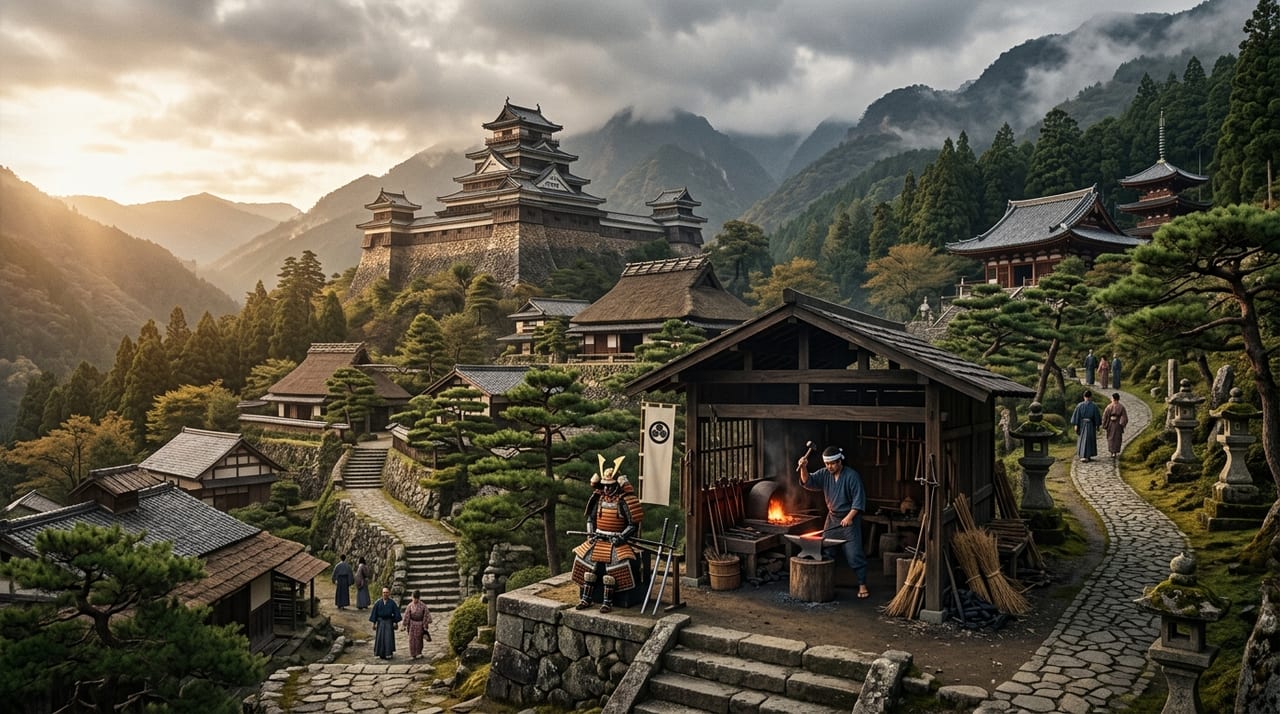
 * Image is for illustrative purposes only.
Toyotomi Hideyoshi's Katanagari and the Institutionalization of the Swordsmith
豊臣秀吉の刀狩と刀工身分保障
In Tenshō 16 (1588), Toyotomi Hideyoshi issued the katanagari (sword hunt) edict, confiscating weapons from peasants, temples, and shrines. Together with the Taikō land survey, it enforced the separation of warrior and farmer and laid the foundation of the fixed status order (shi-nō-kō-shō). While stripping farmers of the right to bear swords, the katanagari positioned the swordsmith as an artisan (kō), a turning point that institutionalized sword-making as a dedicated professional craft.
Description
The Katanagari Edict
In Tenshō 16 (1588), Toyotomi Hideyoshi issued the katanagari edict. Under the ostensible pretext of supplying nails and clamps for a great Buddha statue at Hōkō-ji, it confiscated swords, wakizashi, bows, spears, and firearms from peasants, temples, and shrines. Some 30,000 swords are said to have been gathered from the Shimazu clan and several boatloads of Japanese swords from the Mōri. In practice, however, a degree of weapon possession was tolerated for purposes such as pest control; the aim was not total disarmament but the removal of the farmer's right to bear a sword.
Enforcing the Separation of Warrior and Farmer
The katanagari was not an isolated measure but, together with the Taikō land survey and the status-control edicts, enforced a thorough separation of warrior and farmer. Samurai were gathered into castle towns as professional warriors, while farmers were fixed to the land and bound to pay tribute. Through this separation, the skeleton of the later Edo-period status order of shi-nō-kō-shō was formed.
Positioning the Swordsmith
By disarming farmers and fixing the samurai as professional warriors, this process conversely clarified the social standing of the smiths who made swords. The swordsmith was no longer an off-season sideline worker or a temporary practitioner, but was positioned as a dedicated artisan belonging to the class of "kō" (craftsmen). Demand for swords concentrated in the warrior class, and sword-making was institutionalized as a legitimate profession embedded within the status order.
From Shokuhō to Tokugawa
The separation of warrior and farmer and the status order that Hideyoshi built were inherited intact by the Tokugawa shogunate that arose after the Battle of Sekigahara (1600). The Edo shogunate concentrated smiths in castle towns and developed systems to regulate and protect them, including the shogunal official-smith system and the retained smiths of the various domains. Hideyoshi's katanagari can be placed at the starting point of this early-modern sword-production order.
The Link to Keichō Shintō
Stylistically, this era also marks the transition from Kotō to Shintō. Smiths such as Umetada Myōju and Horikawa Kunihiro worked from Kyoto, preparing the style of the Shintō period that began in the Keichō era (1596–1615). By concentrating sword demand in the warrior class and reorganizing production centers into castle towns, the katanagari and the formation of the status system set the social conditions for the flourishing of the new Shintō sword culture.
Characteristics of This Era
- Confiscation of weapons from peasants, temples, and shrines and the removal of the right to bear swords via the katanagari edict of Tenshō 16 (1588)
- A thorough separation of warrior and farmer, integral with the Taikō land survey and status-control edicts
- Official recognition of the swordsmith's status as a dedicated artisan of the craftsman (kō) class
- The Shokuhō status order inherited into the Tokugawa shogunate's smith regulation and retained-smith systems
- The reorganization of production into castle towns and the concentration of demand in the warrior class preparing the social conditions for Keichō Shintō culture