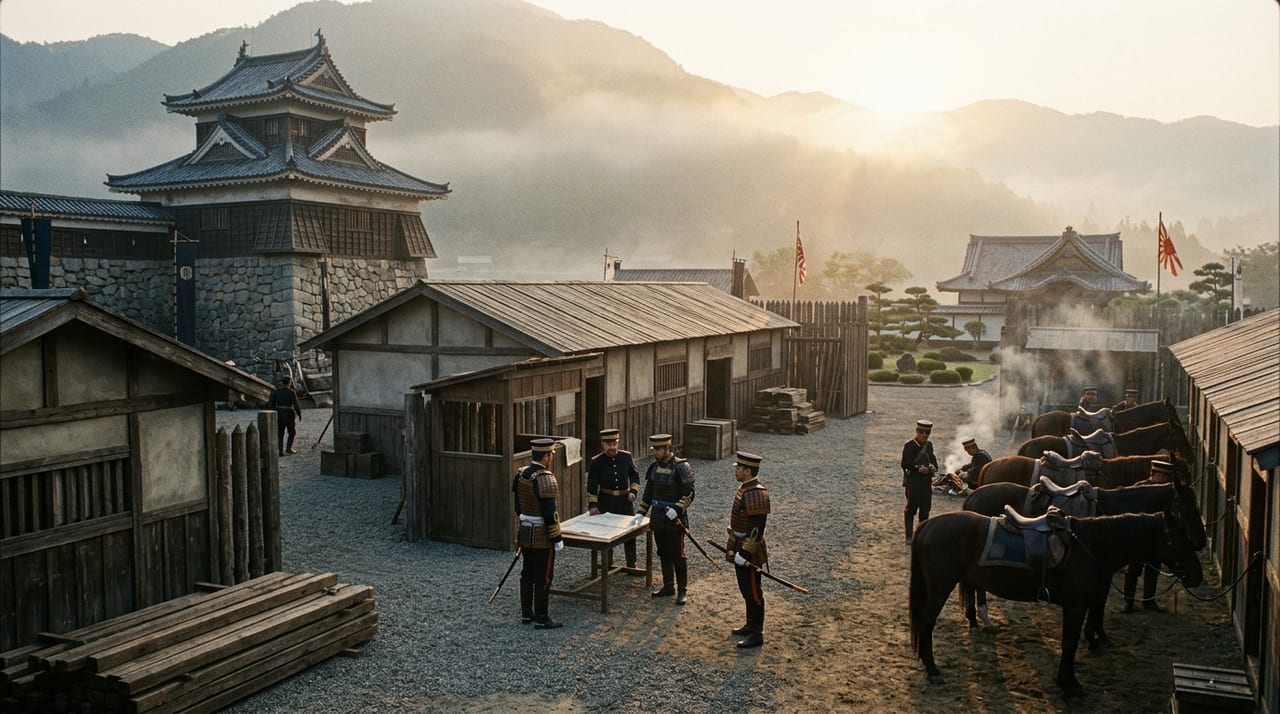
 * Image is for illustrative purposes only.
Army-Commissioned Swordsmith System and Yasukuni Swords
陸軍受命刀工制度と靖国刀
A wartime military sword production system centered on the Nihonto Tanren Kai (Japanese Sword Forging Association), founded at Yasukuni Shrine in 1933, under which the Army formally certified swordsmiths through rigorous trial-blade testing including drop tests and cutting tests; roughly 8,100 'Yasukuni swords' were produced by war's end.
Description
Historical Background
As demand for military swords surged during the Showa era, concerns over mass-produced, low-quality blades led the Army Ministry to establish a formal certification system to guarantee swordsmiths' skill. In 1933, the Nihonto Tanren Kai (Japanese Sword Forging Association) was founded on the grounds of Yasukuni Shrine in Tokyo, with the Army Minister serving as advisor and the Vice Minister of the Army as director, launching a program that applied traditional forging techniques to military sword production. Swords made there were called "Yasukuni-to" (Yasukuni swords), and the smiths who made them were known as "Yasukuni swordsmiths."
Certification of Army-Commissioned Swordsmiths
To be recognized as an Army-Commissioned Swordsmith, a smith had to submit two trial blades and pass rigorous inspections at a designated arsenal, including drop tests and cutting tests. Only smiths who passed this screening were officially permitted to supply blades to the Army, and the standard demanded of them was distinct from that of mass-produced ordinary Showa-era military swords.
Yasukuni Swords and Production Output
At the forge within Yasukuni Shrine, blades were made using traditional tamahagane steel through old-style forging methods, and roughly 8,100 Yasukuni swords are recorded as having been produced by the war's end. Unlike most military swords, these followed the traditional forging process of authentic Japanese swords and are still distinguished today by collectors and researchers as "Yasukuni-to."
Historical Significance
Some smiths who honed their craft under this system later received recognition as Living National Treasures (holders of Important Intangible Cultural Properties) after the war. Miyairi Shohei (later known as Miyairi Yukihira) of Nagano Prefecture, who trained under Kurihara Hikosaburo and forged swords at Army arsenals during the war, was designated a Living National Treasure in 1955. The Army-Commissioned Swordsmith System represents an important transitional chapter in modern sword history, one that allowed the transmission of traditional forging skill to continue even amid wartime mass production.
Characteristics of This Era
- Rigorous Army certification through drop tests and cutting tests
- Yasukuni swords forged with traditional tamahagane steel using old-style methods
- Preservation of traditional craftsmanship distinct from mass-produced military swords