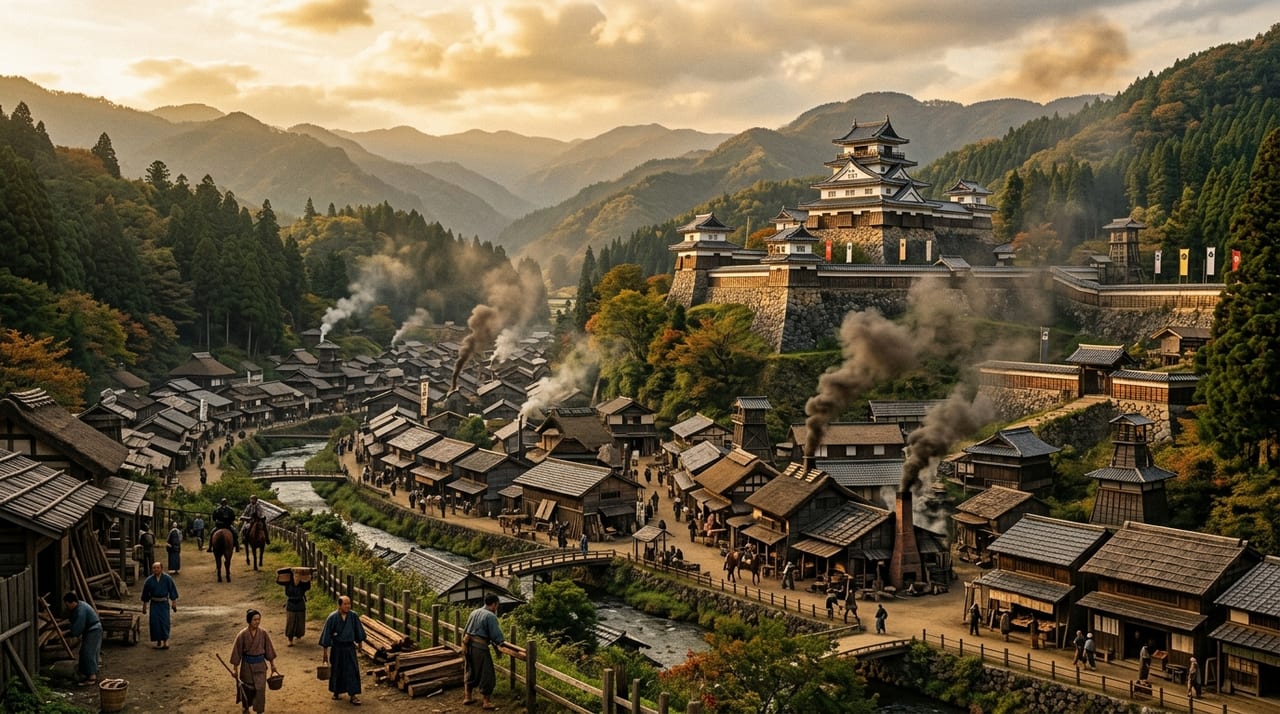
 * Image is for illustrative purposes only.
Ōshū Sword Tradition — Mokusa, Hōju, and the Ancient Blades of Mutsu
奥州の刀剣伝統——舞草・宝寿と陸奥の古刀
The sword tradition of Ōshū (Mutsu Province, present-day Tōhoku region) centers on the Mokusa, Hōju, and Tamatsukuri swordsmith groups that flourished from the late Heian through the Nanbokuchō period. Developing under the patronage of the Ōshū Fujiwara clan, they produced highly effective battle swords.
Description
Historical Background
The sword culture of Ōshū developed alongside the rise of the Ōshū Fujiwara clan, which ruled Mutsu and Dewa (the present-day Tōhoku region) from the end of the 11th century. The three generations of Fujiwara no Kiyohira, Motohira and Hidehira (c. 1100–1189) formed a distinctive cultural sphere centered on Hiraizumi, and encouraged sword production on the basis of abundant gold and iron resources. Mokusa was a representative smiths' group of Ōshū, and Hōju is considered to be one of its branches. The Tamatsukuri smiths are believed to be a group of Mokusa smiths who were relocated to Tamatsukuri District (present-day Ōsaki City, Miyagi Prefecture).
The region where the Mokusa smiths worked is identified as an area extending from the southern part of present-day Iwate Prefecture to the northern part of Miyagi Prefecture. Abundant iron ore resources and forests suitable for charcoal production created favorable conditions for sword forging, and the spiritual and material richness of Hiraizumi culture supported the production of high-quality swords.
Characteristics of the Hōju School
Hōju is the name of a swordsmith lineage of Mutsu Province, and is said to be the only one among the Mokusa smiths whose activity extended from the Heian period to the Muromachi period. Extant works date from the Kamakura period to the Nanboku-chō period.
Extant Hōju blades are few and rare, but the tachi signed Hōju has been designated as an Important Cultural Property.
Later History of Ōshū Smiths
Even after the fall of the Ōshū Fujiwara clan (1189), swords bearing the Hōju signature continued to be made in Ōshū.
Historical Significance
The sword tradition of Ōshū holds an important place in the history of the Japanese sword as a distinctive northern lineage, standing alongside the traditions of central and western Japan. Surviving examples of Hōju works are few, yet for that very reason they have high cultural value and are regarded as an important historical heritage of the Tōhoku region.
Characteristics of This Era
- Development in the late Heian period under the patronage of the Ōshū Fujiwara clan
- Hōju's works, represented by the Important Cultural Property tachi inscribed "Hōju"
- A lineage of very early Japanese swords beginning with the Mokusa smiths, who forged kenukigata-tō