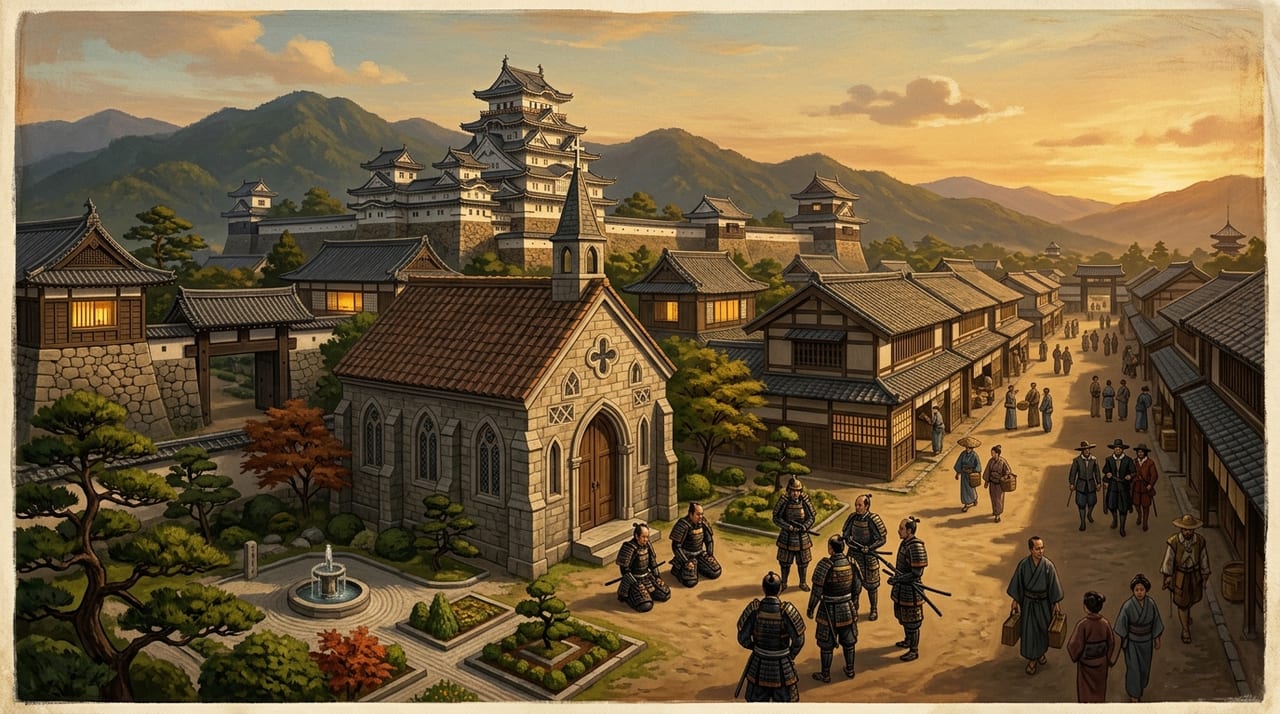
 * Image is for illustrative purposes only.
Kenchō Era
建長(けんちょう)
The era of regent Hojo Tokiyori. Kenchoji temple was founded as Zen and warrior culture merged, while mid-Kamakura swordmaking flourished.
Description
Kenchō ran from 1249 to 1256, under Emperor Go-Fukakusa. In the Kamakura shogunate, the shogun Fujiwara (Kujo) Yoritsugu was succeeded by Prince Munetaka, while Hojo Tokiyori served as regent. In 1253 Kenchoji temple was founded in Kamakura with Rankei Doryu as its first abbot. The warrior government's embrace of Zen influenced the later spiritual culture and sword outlook of the samurai.
In swordmaking, the Fukuoka Ichimonji and Osafune schools of Bizen were active in the mid-Kamakura period, producing tachi with showy choji-midare. Osafune Mitsutada is said to have worked from around this time. Rai Kuniyuki of Yamashiro and Tegai Kanenaga of Yamato are often dated to the Kencho years, as each of the Five Traditions was defining its style.
Socially, Tokiyori advanced judicial reform, including the creation of the hikitsuke council, and the shogunate was stable. Demand to arm retainers (gokenin) supported the growth of smiths in Bizen and elsewhere. Kencho can be seen as the threshold to the golden age of Kamakura swords.
Characteristics of This Era
- Showy choji-midare by Fukuoka Ichimonji and Osafune smiths
- Period when each of the Five Traditions set its style
- Adoption of Zen and its ties to warrior culture
- Growing sword demand under stable regency government