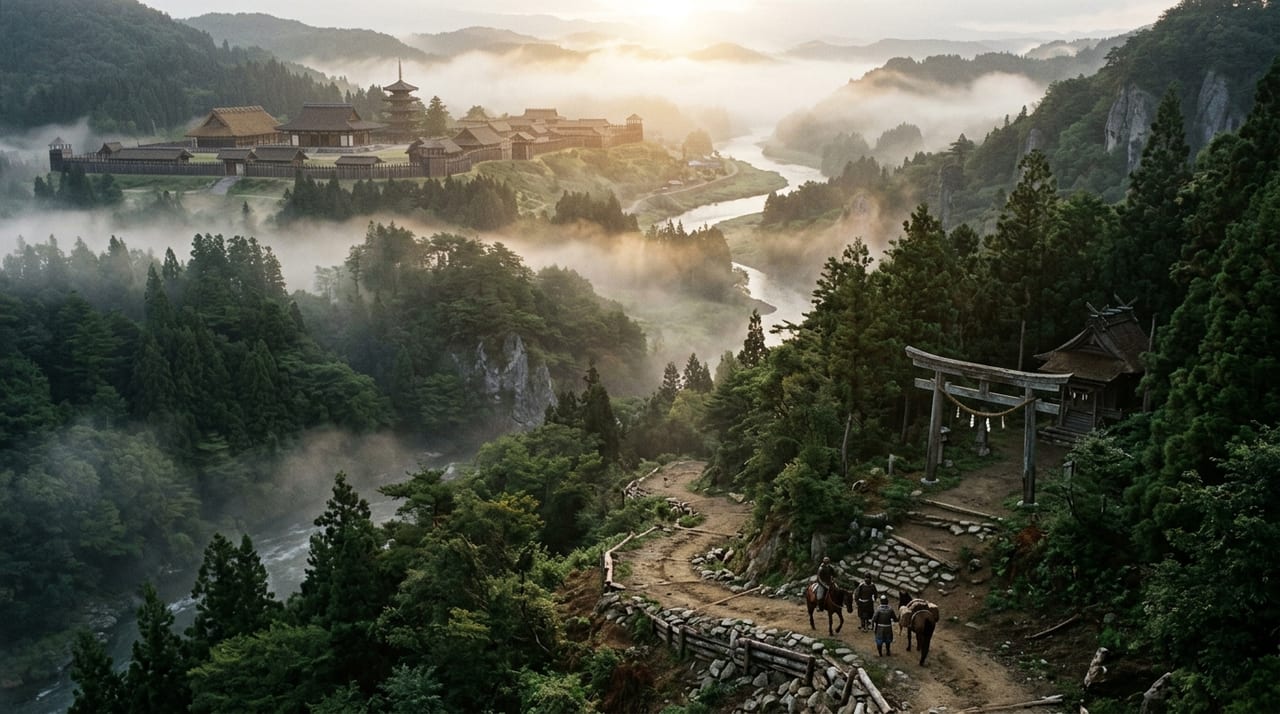
 * Image is for illustrative purposes only.
Swords of the Insei Period and Imperial Symbolism
院政期の刀剣と帝権象徴
The insei period (1086–1185) was the era of rule by retired emperors, begun under Retired Emperor Shirakawa, and swords functioned as material symbols of imperial authority. Swords of this period belong to the maturing phase of koto (old swords). Refinement of hamon and jigane improved dramatically, forming the foundation of a koto culture that continued into the Kamakura-period blades.
Description
Retired Emperor Shirakawa and the Beginning of Insei
Retired Emperor Shirakawa (1053–1129) abdicated the throne in 1086 at the age of 34 and then exercised insei (cloistered rule) for the following 43 years. Reflecting the hollowing out of the ritsuryō system, he embodied the shift of imperial power from aristocratic power exercised through the regents (sesshō and kampaku) to personal rule by the retired emperor.
Imperial Ritual and Swords
Within the imperial household, swords were deeply bound up with ritual, beginning with the Kusanagi no Tsurugi, one of the Three Sacred Treasures (the Imperial Regalia) that symbolize the imperial throne. At the investiture of the crown prince, the Tsubokiri no Gyoken was bestowed upon the heir by the emperor, and this custom traces back to the investiture of Prince Atsuhito (Emperor Daigo) in Kanpyō 5 (893).
The Arrival of the Maturity of Ko-tō
From the perspective of sword-making technique, the insei period was when the form of the curved Japanese sword was completed. Swordsmiths of Yamashiro in Kyoto active during this period include the lineage of Sanjō Munechika and the founders of the Awataguchi school and Ko-Kyō-mono, and their blades are highly rated in later appraisals.
Swords of the insei period established the basic features of ko-tō (narrow mihaba, ko-kissaki, high koshi-zori, and small, dense hamon), while also displaying an exceptionally refined aesthetic perfection. From the late Heian period to the early Kamakura period, the form, performance, and aesthetics of the Japanese sword were completed as a single whole, and this period became the standard for the later definition of "ko-tō."
The Rise of the Warrior Class and the Militarization of Swords
The contemporary background of the insei period includes the rise of provincial warrior bands and the intensification of military conditions through internal conflicts (the Hōgen Rebellion and the Heiji Rebellion). In a situation where imperial authority had no choice but to depend on force, swords displayed imperial authority while also evolving as weapons responding to military reality.
With the armament of warrior bands that served as the prelude to the Genpei War, demand for swords also increased.
From the Insei Period to Kamakura
The Genpei War in the late insei period (1180–1185) brought about the transition from ko-tō culture to a new warrior-style sword culture. However, the swordsmiths of early Kamakura inherited the sword-making techniques of the insei period, and the ko-tō aesthetics of the insei period were further deepened and refined in Kamakura blades.
Characteristics of This Era
- Swords of the insei period (1086–1185) established the tachi form with a narrow mihaba, high koshi-zori, and ko-kissaki, while showing refined aesthetic completeness.
- At the investiture of the crown prince, the emperor bestowed the Tsubokiri no Gyoken on him, so swords were also tied to the rites of imperial succession.
- Blades by Heian-period smiths of Yamashiro and Kyoto, led by Sanjō Munechika, are still highly valued in later sword appraisal and became direct precedents for the techniques of early Kamakura smiths.
- With the intensifying military conflict of the Genpei War (1180–1185), swords had to combine the aesthetic value of symbols of imperial authority with the practicality of military weapons, which brought about a functional evolution of koto.
- The completion of the late-Heian tachi form became the foundation of technical and aesthetic continuity with the tachi of the Kamakura and Nanboku-chō periods, marking an important turning point in the history of Japanese sword culture.