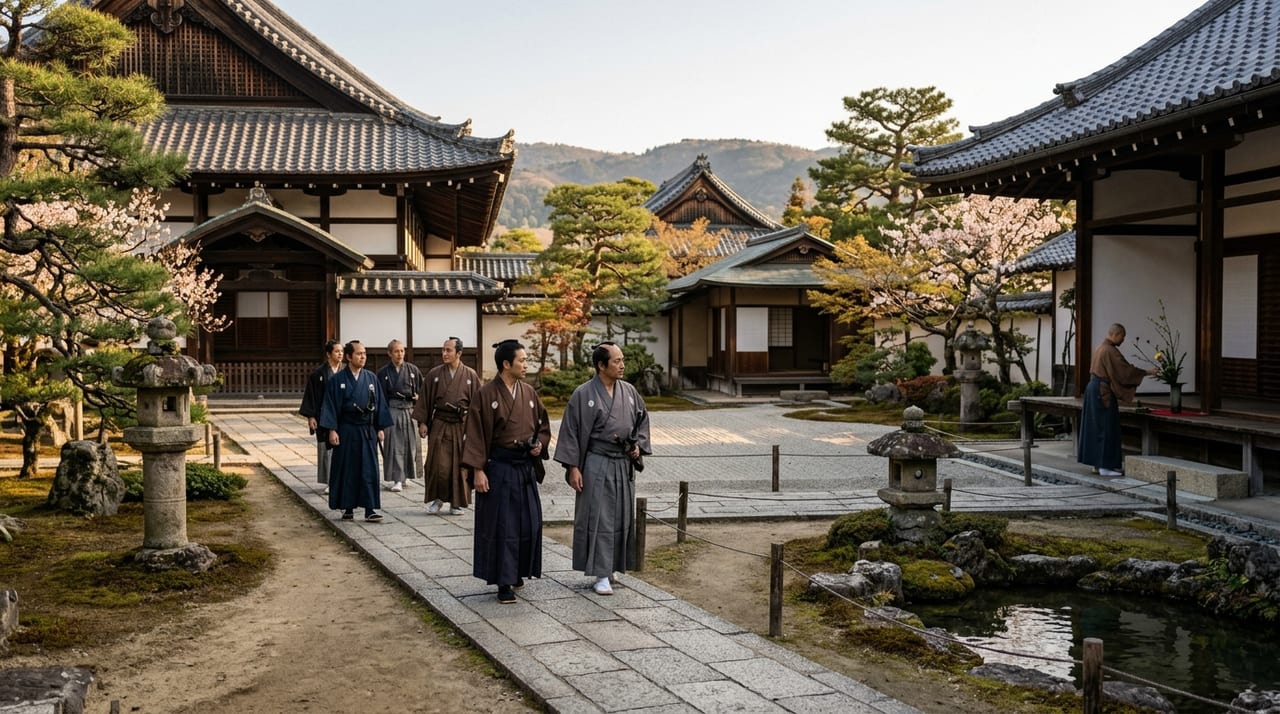
 * Image is for illustrative purposes only.
Genna Era — Pax Genna and the Transformation of Sword Culture
元和(げんな)
The sword culture of the Genna period (1615–1624), which began with the fall of the Toyotomi family in the Summer Siege of Osaka (1615) and the end of warfare that later came to be called Genna Enbu. It was a fundamental turning point in the history of the Japanese sword, where three shifts intersected: the sharp drop in demand after the wars ended, the maturing of the Keichō shintō style, and the start of Tokugawa shogunate control over the warrior class.
Description
In the fifth month of the first year of Genna (1615), Osaka Castle fell, and Toyotomi Hideyori and Yodo-dono took their own lives. The conclusion of this "Summer Siege of Osaka" meant the complete end of the Sengoku age of chaos, which had lasted more than a century. In the seventh month of the same year the era name was changed to Genna, and the end of this large-scale warfare was later called Genna Enbu. The end of this war is a decisive turning point in the history of the Japanese sword, because it announced the end of the age in which swords functioned mainly as "weapons of the battlefield," and the beginning of an age in which they became "status markers of the samurai, objects of art and craft, and spiritual symbols."
The change in sword demand after Genna Enbu was rapid. In the Sengoku period, domains and warlords needed large numbers of swords for actual combat, but with the arrival of peace that demand changed fundamentally in character. The new customer base, made up of the hatamoto of Edo, the retainers (hanshi) of the various domains, and wealthy townsmen (chōnin), valued beauty of form (sugata no utsukushisa), refinement of the jigane (jigane no seichisa), and artistry of the hamon (hamon no geijutsusei) more than practical fighting performance. This change in demand was the main driving force behind the aesthetic refinement of the sword style as it moved from Keichō shintō to the shintō of the Genna and Kan'ei periods.
From a technical standpoint, the Genna period is positioned as "the maturation and beginning of the transformation of the Keichō shintō style." The aesthetic standards of shintō established in the Keichō period (1596–1615) by Iga-no-kami Kanemichi, Echigo-no-kami Kunitomo, and Tanba-no-kami Yoshimichi, namely bright, clear jigane, varied hamon, and well-balanced form, were carried forward into the Genna period. While continuing these standards, the period deepened them further toward refinement to meet the demands of a peaceful society. Disciples of Horikawa Kunihiro continued to work in Kyoto and Osaka during the Genna period and played a role in spreading the shintō style throughout the country.
In the first year of Genna (1615), the Buke Shohatto (the Genna Code), which gathered the norms for the warrior class into thirteen articles, was promulgated. Its first article required devotion to the way of letters, arms, archery and horsemanship. In the second year of Genna (1616), Tokugawa Ieyasu died.
The Genna period was also an age in which meibutsu that had been damaged by the fire at Osaka Castle were re-tempered (saiba). In the intercalary sixth month of the first year of Genna (1615), Echizen Yasutsugu was in charge, at Nijō Castle, of re-tempering meibutsu and famous swords that had been fire-damaged when Osaka Castle fell, and Awataguchi Yoshimitsu's Ichigo Hitofuri was also re-tempered by Yasutsugu at this time. Later, the Hon'ami family compiled the Kyōhō Meibutsuchō at the command of the eighth shōgun, Tokugawa Yoshimune.
The roughly ten years of the Genna era marked the beginning of a process in which sword culture, as "art," filled the void left by the end of war. The shift from tools of practical use to objects of beauty is the most fundamental change in the character of the Japanese sword, and the name Genna is inscribed in the history of the Japanese sword as the starting point of that change.
Characteristics of This Era
- Genna Enbu — the end of fighting after the Summer Siege of Osaka fundamentally changed the social function of the sword
- Sharp change in demand for battle swords and the rise of demand for art swords — a shift in emphasis from battlefield function to the artistry of jigane, hamon and shape
- Maturation and deepening of the Keichō shintō style — refinement for a peaceful society, continued by the successors of the Horikawa school
- Promulgation of the Buke Shohatto (the Genna Code) — the shogunate put the norms for the warrior class into writing, and control of the warrior class began
- Re-tempering of fire-damaged meibutsu — Echizen Yasutsugu re-tempered meibutsu and famous swords that were burned in the fall of Osaka Castle