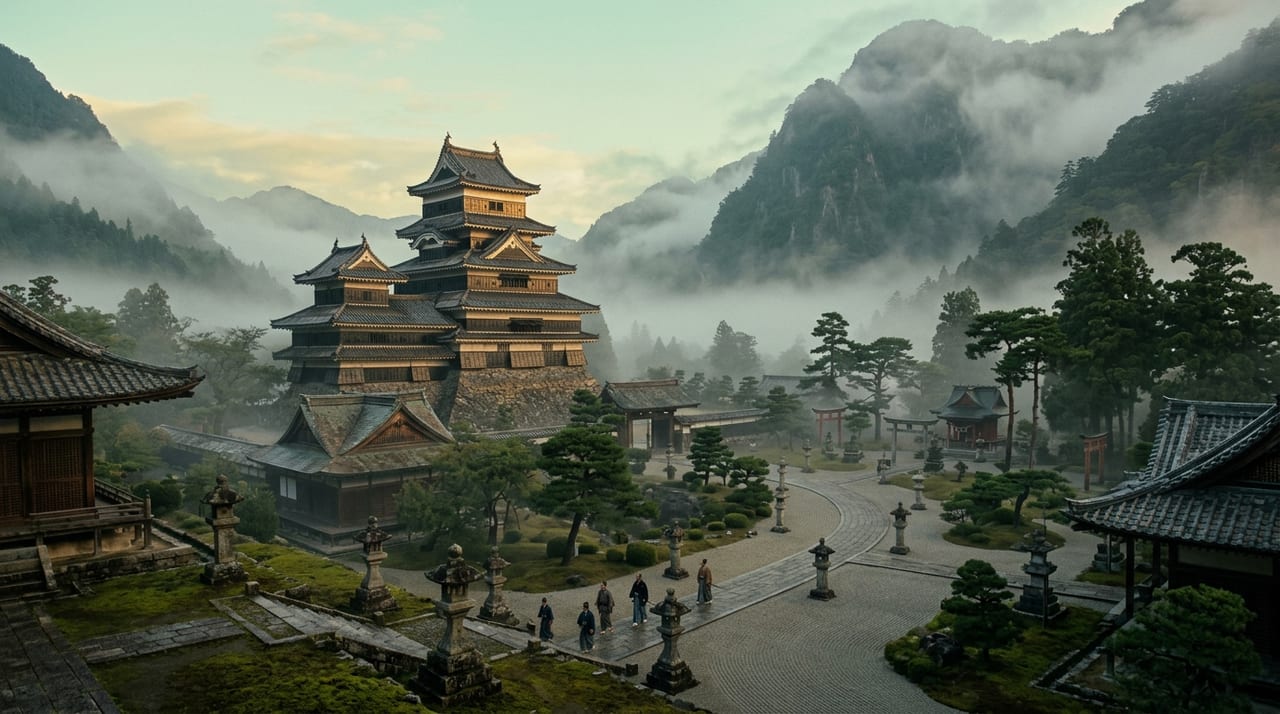
 * Image is for illustrative purposes only.
The Ako Incident and Swords of the Forty-Seven Ronin
赤穂事件と忠臣蔵の刀剣
The Akō Incident, from the night raid on Kira's residence on 30 January 1703 (Genroku 15/12/14) to the seppuku on 20 March 1703 (Genroku 16/2/4), is a historical event in which the essence of the samurai way (bushidō) and the symbolism of the sword intersect. This article discusses the swords left by Ōishi Kuranosuke and the influence that the Chūshingura had on later sword culture.
Description
Historical Background of the Akō Incident
In the third month of 1701 (Genroku 14/3), in the Corridor of Pines in Edo Castle, Asano Takumi-no-kami Naganori, lord of Akō domain, drew his blade against Kira Kōzuke-no-suke Yoshinaka, the kōke kimoiri. This began the Akō Incident. The former retainers of the Asano house, who had been ordered to commit seppuku that same day and saw their domain dissolved, were led by chief karō Ōishi Kuranosuke Yoshio. After a period of about one year and nine months of biding their time, they attacked the Kira residence in Honjo Matsuzaka-chō on 30 January 1703 (Genroku 15/12/14) and successfully avenged their lord.
This incident was more than a simple tale of revenge. It was deeply intertwined with the political context of the Edo shogunate, including the policy of dissolving daimyo houses and the identity crisis faced by samurai under the prohibition on junshi. The actions of the forty-seven retainers drew social attention at the time, and even after the order for seppuku, they won fervent support among commoners.
Swords Used in the Raid
Among the items handed down as belongings of Ōishi Kuranosuke were a tachi (Norinaga, 2 shaku 8 sun, kin-koshirae) and a Bizen Kiyomitsu. These were sold by the abbot of Sengaku-ji and no longer survive. The wakizashi transmitted to the Kumamoto domain have also been dispersed, and the Akō Ōishi Shrine holds a haitō whose signature and provenance are unknown.
The Genroku period (1688–1704) falls in the latter half of the shintō period. The mainstream blades of the time were refined practical swords with chūkissaki and chūzori.
Mythologization of the Sword Culture Born from Chūshingura
Shortly after the seppuku of the forty-seven retainers, the incident was progressively reconstructed in dramatic forms such as kabuki, jōruri, and yomihon. A body of works, beginning with Kanadehon Chūshingura (first performed 1748), took root in popular culture. Along with this, the symbolic discourse of "blades of loyalty" and "blades of bushidō" was woven into sword appreciation culture.
In the late Edo period, as the thought of the Mito school and the sonnō jōi movement grew, the spirit of Chūshingura was summoned once again. A phenomenon emerged in which shishi saw themselves reflected in the Akō rōshi.
Significance for Sword Appraisal
The appraisal of swords associated with the forty-seven Akō retainers presents a typical challenge of provenance (yuisho) appraisal. It requires multifaceted verification: collation with contemporary historical sources; identification of the blade's period (features of Genroku-period shintō, including the shape of the bōshi, the mokume of the jigane, and the nioiguchi of the hamon); period consistency of the saya and koshirae; and the reliability of the documentation held by the institutions that own the swords.
The Akō Incident remains a lasting point of reference in sword research and collecting culture, as the most dramatic example of the fusion of story and blade in Japanese sword culture.
Characteristics of This Era
- Ōishi Kuranosuke's tachi (Norinaga) and Bizen Kiyomitsu were sold off by Sengaku-ji and no longer survive; Akō Ōishi Shrine preserves a worn sword (haitō) whose inscription and provenance are unknown.
- Through the popularization of the Chūshingura, the symbolic discourse of the 'sword of loyalty' became established in sword culture.
- Swords associated with the Akō rōnin are studied as typical cases of difficulty in provenance authentication.