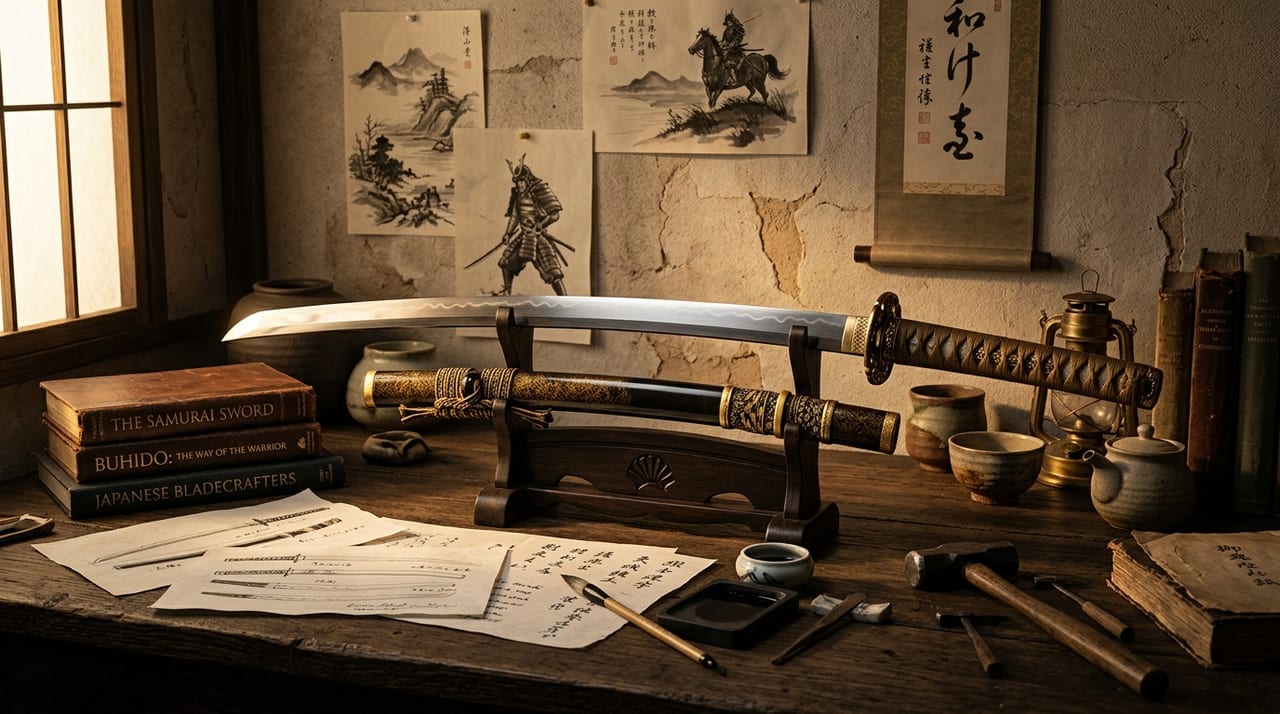
 * Bild nur zu Illustrationszwecken.
Touken Ranbu
刀剣乱舞
Ein großes Medienmix-Werk, das reale berühmte Klingen personifiziert und den Kampf gegen Geschichtsrevisionisten in Form eines Browser-Spiels, Musicals und Animes darstellt. Alle auftretenden Touken Danshi basieren auf real existierenden berühmten Klingen, und das Spiel führte zum Phänomen der "Touken Joshi" (Schwertfrauen), die Museen im ganzen Land besuchten. Die Verdienste, die Kunstwertschätzung japanischer Schwerter dramatisch zu erweitern und eine junge Generation mit Schwertkultur zu verbinden, sind unermesslich.
Beschreibung
Revolutionäres Werk
Touken Ranbu -ONLINE-, 2015 von DMM GAMES veröffentlicht, ist ein Meilensteinwerk, das das gesellschaftliche Interesse an japanischen Schwertern grundlegend verändert hat. Spieler übernehmen die Rolle des „Saniwa" (göttlicher Schiedsrichter) und führen personifizierte Schwertmänner namens „Touken Danshi" in Kämpfe gegen Feinde, die die Geschichte verändern wollen. Die Innovation dieses Spiels liegt darin, dass jeder Charakter auf einem echten japanischen Schwert basiert. Die Zuneigung zu diesen Charakteren wurde auf natürliche Weise in Interesse an echten Schwertern umgewandelt und brachte eine neue, hauptsächlich aus jungen Frauen bestehende Besucherschicht in Museen im ganzen Land.
Kulturelle Auswirkungen
Die kulturellen Auswirkungen waren enorm – lange Schlangen bildeten sich, als das Tokioter Nationalmuseum Mikazuki Munechika zeigte, und die Ausstellung von Heshikiri Hasebe im Fukuoka City Museum erzielte einen Besucherrekord. Im Tokugawa Museum wurde Crowdfunding für das Restaurierungs- und Ausstellungsprojekt des Shichitai-kiri Mitsutada, eines Schwertes, das bei Luftangriffen während des Krieges verbrannt wurde, eingesetzt, was zu einer beispiellosen Situation führte, in der Spenden direkt zum Schutz von Kulturgütern beitrugen. Touken Ranbu überstieg bloße Unterhaltung und brachte wesentliche Veränderungen zum Schutz von japanischen Kulturgütern und zum Museumsbetrieb.
Transmedia-Erweiterung
Die 2,5D-Bühnenadaptationen, einschließlich Musicals und Bühnenstücken von Touken Ranbu, erzielen großen Erfolg, wobei Touken Danshi tatsächliche Choreographie auf der Bühne aufführen und so die Schönheit der Bewegungen japanischer Schwerter dreidimensional ausdrücken. Anime-Serien wie „Touken Ranbu -Hanayamaru-" und „Katsugeki Touken Ranbu" haben durch globale Verbreitung internationale Fans japanischer Schwerter geschaffen und spielen eine Rolle bei der Vermittlung japanischer Schwertkultur an die Welt. Bei Touken-za bieten wir echte Ko-Katana und Shin-Katana an, die mit denselben Schulen und Linien von Schwertschmieden verbunden sind, die diese legendären Schwerter schufen, und helfen Ihnen, die Verbindungen, die Sie mit Schwertern in der Geschichte eingegangen sind, in echte Wertschätzungserlebnisse umzuwandeln.
Vorgestellte echte Schwerter
Mikazuki Munechika
Ranked as the foremost of the Five Legendary Swords of Japan, this Heian-period tachi was forged by Sanjo Munechika and is designated a National Treasure, housed at the Tokyo National Museum. The sword's name derives from the crescent moon-shaped uchi-noke visible on the blade, and its elegant form continues to enchant viewers even after a thousand years. It exemplifies the typical Heian tachi form with slender proportions and deep curvature, and the hamon displays an elegant composition of small irregular patterns with small te. In Touken Ranbu, it boasts overwhelming popularity as the oldest swordsman character and drew crowds of fans to its special exhibition at the Tokyo National Museum. Sanjo school, based in Kyoto, was one of Japan's oldest sword smith collectives, and its aesthetic principles laid the foundation for the later Yamashiro tradition.
Heshikiri Hasebe
A prestigious blade by master smith Hasebe Kunishige of the Nanboku-Cho period, a heavily polished work without a maker's signature. It earned its name "Heshikiri" (crushing cut) from a severe anecdote in which Oda Nobunaga used it to cut through a shelf and the tea attendant hiding beneath. Later granted to Kuroda Kanbei (also known as Josui), it was passed down as a Kuroda family treasure and is now housed at the Fukuoka City Museum as a National Treasure. The hamon, called hitatsura, features burns across the entire blade in a robust composition characteristic of the powerful style of the Nanboku-Cho period. The influence of Touken Ranbu significantly increased museum visitors and greatly contributed to regional cultural tourism.
Shichitai-kiri Mitsutada
A renowned blade attributed to Mitsutada, founder of the Bizen Osafune school. It earned its name from an episode in which Date Masamune severed a retainer along with a candle stand. It passed from the Date family to the Mito Tokugawa family but was damaged during the 1923 Great Kanto Earthquake, becoming a burned blade. For many years it was difficult to display, but a restoration project by the Tokugawa Museum made possible its public presentation in its burned state. Crowdfunding centered on Touken Ranbu fans raised substantial donations, making it a symbolic example of how the game directly contributed to cultural heritage preservation. Mitsutada is known for his ornate toji-ranba hamon and represents the aesthetic sensibilities of the Bizen Osafune school.
Dai-Kurikara
A tachi transmitted through the Date family, featuring on its blade a horimono carving of the Kurikara dragon, an incarnation of Fudo Myoo the Immovable. The Kurikara dragon is depicted as a serpent coiled around a sword, revered among the samurai as a symbol of Fudo Myoo in esoteric Buddhism. Treasured by the Date family and transmitted to Sendai domain, it is believed to have deep connections to Date Masamune. The tradition of horimono carving on Japanese swords developed from the Kamakura period onward, with diverse subjects ranging from Buddhist motifs to natural phenomena inscribed on blades. Horimono was not merely decoration but a spiritual practice through which owners imbued their swords with faith and intention.
Tsurumaru Kuninaga
A tachi by Gojo Kuninaga, a renowned Kyoto smith of the Heian period, now held as imperial regalia under the management of the Imperial Household Agency. It took its name "Tsurumaru" from its elegant form reminiscent of a crane. Its characteristic Heian profile—slender with deep curvature at the hilt—embodies the primordial beauty of the Japanese sword. Its lineage, passing from the Adachi family to Oda Nobunaga and then to Emperor Meiji, epitomizes how Japanese blades were inherited among those in power across the ages. The Gojo school, along with the Sanjo school, represents the apex of Kyoto smithcraft, establishing a refined aesthetic grounded in the capital's courtly culture.
Tonbo-kiri
Counted among the Three Greatest Spears of Japan, this large yari features a wide leaf-shaped point. Famous as the beloved spear of Honda Tadakatsu, one of the Four Heavenly Kings of Tokugawa. It earned its name from the anecdote that a dragonfly landing on the tip was bisected instantly. Honda Tadakatsu, embodying the Mikawa warrior spirit, survived numerous Sengoku battlefield encounters without sustaining a single scratch, according to tradition. Currently held in private collection but entrusted to the Sano Art Museum for periodic public display. Like the Japanese sword, the spear was forged from tamahagane Japanese steel, and the forging techniques shared much in common with sword smithcraft.
Authentische japanische Schwerter ansehen
Authentische japanische Schwerter ansehenDiese Seite dient der Vorstellung der japanischen Schwertkultur und steht in keiner Verbindung zu den genannten Werken.