Die Technik des tsuchioki — der Tonauftrag vor dem yaki-ire, der den hamon bestimmt
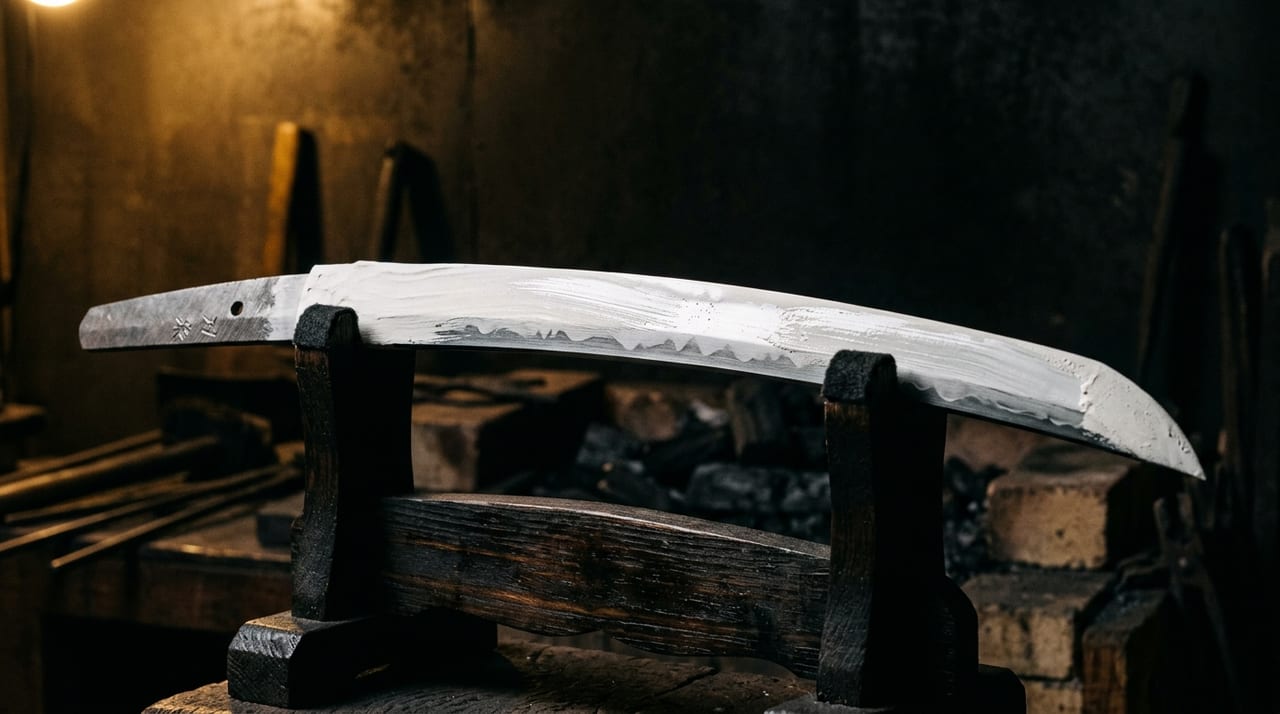 * Bild nur zu Illustrationszwecken.
Inhaltsverzeichnis
Was ist tsuchioki — der wichtigste Arbeitsschritt vor dem yaki-ire
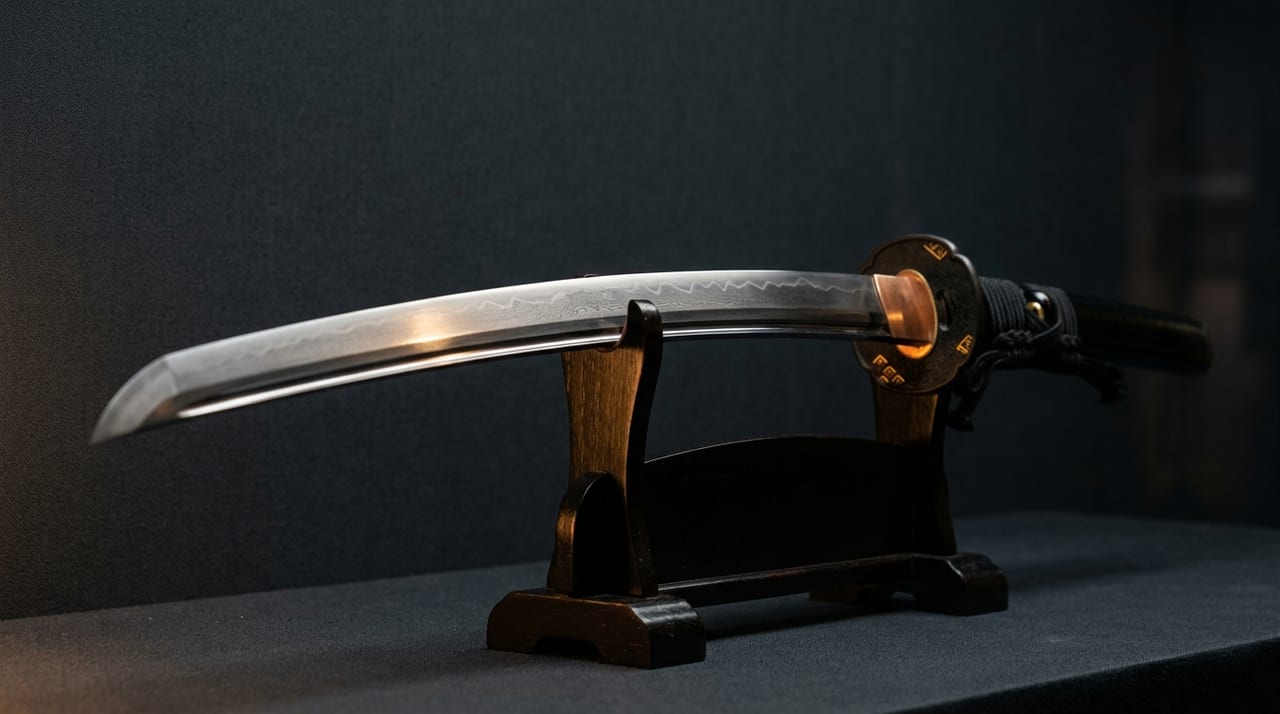
Tsuchioki ist ein Arbeitsschritt im Herstellungsprozess eines japanischen Schwertes, der unmittelbar vor dem yaki-ire durchgeführt wird. Dabei wird ein hitzebeständiger Ton, der als „yakitsuchi" bezeichnet wird, auf bestimmte Bereiche der Klinge aufgetragen. Dieser Schritt bestimmt die endgültige Form und das Muster des hamon der Klinge und gilt als einer der wichtigsten Prozesse, der die künstlerischen Eigenschaften eines japanischen Schwertes formt.
Auf den ersten Blick mag es wie ein schlichter „Tonauftrag" wirken, doch in Wirklichkeit ist es eine Arbeit, in der das über viele Jahre angesammelte Fachwissen und Gespür des tōshō verdichtet ist. Die Zusammensetzung des yakitsuchi, seine Dicke, das Auftragsmuster und der Trocknungszustand — all dies steht in direktem Zusammenhang mit der Schönheit des hamon und der Funktionalität der Klinge.
Die Zusammensetzung des yakitsuchi — Materialien und überlieferte Geheimnisse
Die Zusammensetzung des yakitsuchi variiert von tōshō zu tōshō und wurde oft als „streng gehütetes Geheimnis" weitergegeben. Die wichtigsten Bestandteile sind folgende.
- Nendo (Ton): Der Hauptbestandteil ist hochfeuerfester Ton. Er muss den plötzlichen Temperaturveränderungen beim yaki-ire standhalten und während des Abkühlvorgangs gleichmäßig wirken. Da die Eigenschaften je nach Herkunft und Reinheit variieren, wählen tōshō häufig einen ihnen vertrauten Ton.
- Toishiko (Schleifsteinpulver) und Sumiko (Holzkohlenpulver): Diese werden beigemischt, um die Schrumpfung des Tons zu regulieren und die Wärmeleitfähigkeit zu steuern. Toishiko besteht aus feinen Schleifkörnern, während Sumiko ein organischer Bestandteil ist, der beim yaki-ire verkohlt und einen eigenen Effekt erzeugt.
- Mokutanbai (Holzkohlenaschen): Da die Wärmestabilität je nach verwendeter Holzart variiert, achten manche tōshō sogar auf die Auswahl des Ausgangsmaterials.
Diese Bestandteile werden mit Wasser zu yakitsuchi verknetet. Das Mischungsverhältnis, die Wassermenge und die Konsistenz variieren von tōshō zu tōshō, und selbst ein und derselbe tōshō nimmt je nach Jahreszeit und Luftfeuchtigkeit feine Anpassungen vor.
Der tsuchioki-Prozess — die Gestaltung des hamon
Tsuchioki ist gewissermaßen eine „Gestaltungsarbeit am hamon". Der tōshō stellt sich ein Bild des hamon vor und trägt den Ton auf die fertig geschliffene Klinge (shirouchi) auf.
- Shitanuri (Grundschicht): Eine dünne, gleichmäßige Schicht yakitsuchi wird auf die gesamte Klinge aufgetragen. Sie bildet die Grundlage für eine gleichmäßige Erwärmung der Klinge.
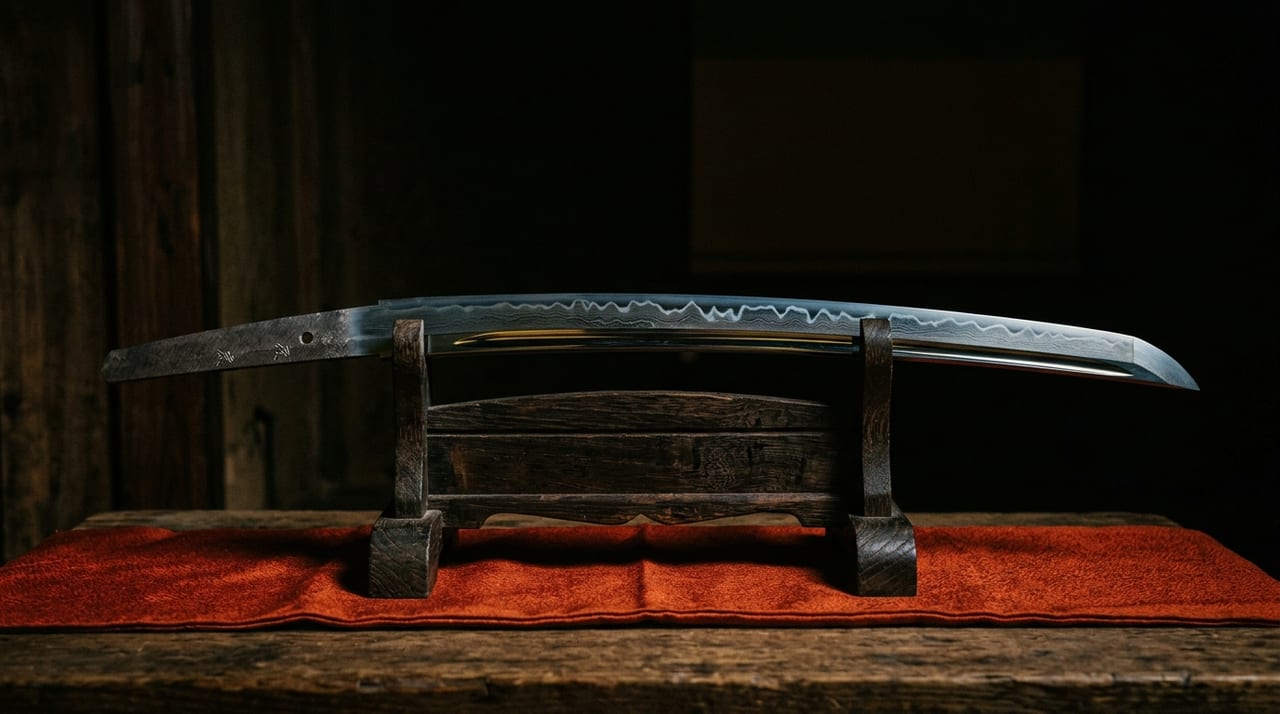
- Hatorinuri (Konturauftrag der Schneide): Der yakitsuchi wird entlang der Kontur des hamon aufgetragen. Dieser Schritt bestimmt die grundlegende Form des hamon. Die für jede Schule charakteristischen hamon-Formen — wie chōji-midare, gunome-midare und suguha — werden durch das tsuchioki-Muster reproduziert.
- Hadayosenuri (Dickauftrag auf der jigane-Seite): Durch das dicke Auftragen von Ton auf den jigane-Bereich wird die Abkühlgeschwindigkeit beim yaki-ire verlangsamt, was einen Gefügeunterschied zur Schneide erzeugt. Dieser Unterschied beeinflusst die Deutlichkeit des hamon und die Darstellung der Oberflächenstruktur des jigane.
- Trocknung und Kontrolle: Nach Abschluss des tsuchioki wird die Klinge angemessen getrocknet. Eine ungleichmäßige Trocknung kann beim yaki-ire zu Rissen oder Verzug führen, weshalb auch dieser Schritt nicht vernachlässigt werden darf.
Die Wissenschaft von tsuchioki und hamon — metallurgische Mechanismen
Der Mechanismus, durch den tsuchioki den hamon erzeugt, lässt sich metallurgisch als „selektive Steuerung der Martensitumwandlung" beschreiben.
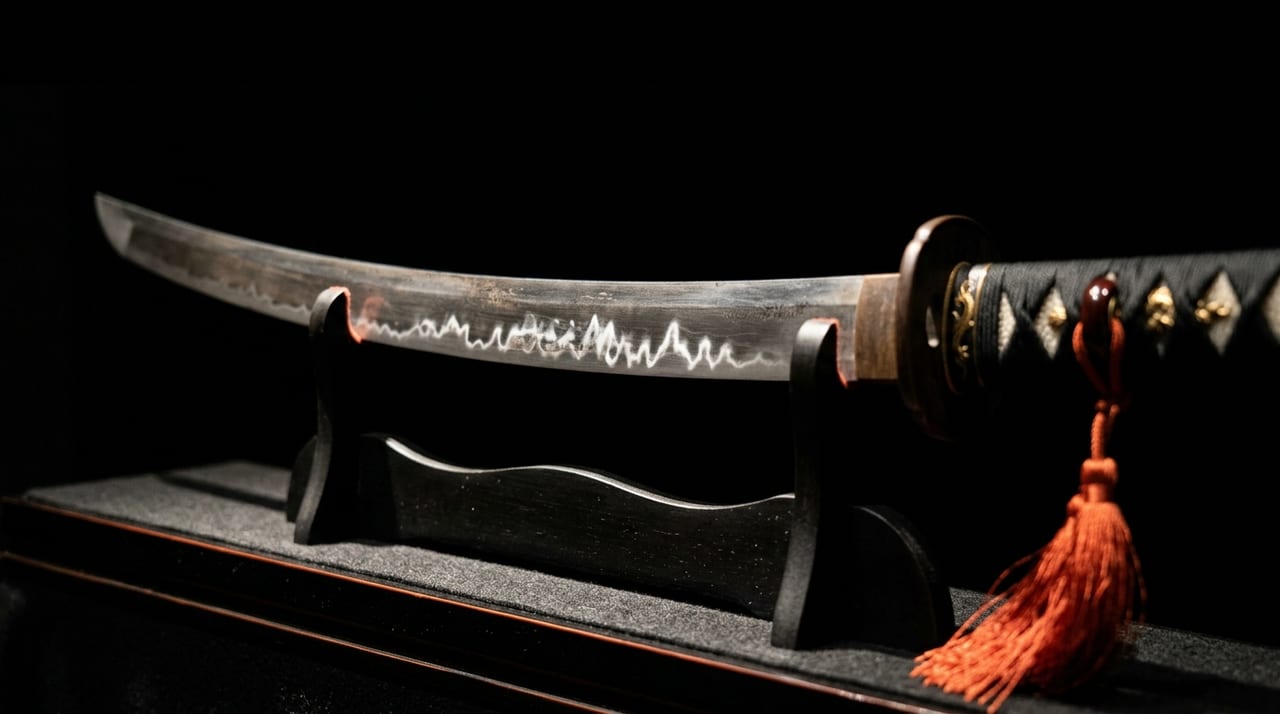
Wird der auf hohe Temperaturen (etwa 800 °C) erhitzte Stahl abgeschreckt, verändert sich die Kristallstruktur, bevor der im Eisen gelöste Kohlenstoff ausscheidet, und es entsteht ein extrem hartes Gefüge namens „Martensit". Dieses bildet den leuchtenden Bereich des hamon.
Der dünn mit Ton beschichtete Schneidenbereich kühlt schnell ab, sodass die Martensitumwandlung aktiv stattfindet. Der dick beschichtete mune-Bereich hingegen kühlt langsamer ab, sodass vergleichsweise weichere Gefüge wie Perlit und Bainit erhalten bleiben. Dieser Härteunterschied wird als „hamon" sichtbar.
Auch der Unterschied zwischen nie und nioi geht auf den tsuchioki zurück. Das körnig erscheinende nie hängt mit der Grobheit der Martensitpartikel durch relativ schnelles Abkühlen zusammen, während das nebelartig erscheinende nioi aus einer Abfolge feinerer Martensitpartikel entsteht. Das Gleichgewicht dieser beiden Elemente bereichert den Ausdruck des hamon und bildet den Kern seines Betrachtungswertes.
Der tsuchioki-Stil der einzelnen Schulen — Tradition und Individualität
Die fünf Überlieferungen (go-ka-den) des japanischen Schwertes — Yamashiro, Yamato, Bizen, Sōshū und Mino — haben jeweils einen charakteristischen hamon-Stil, der die unterschiedlichen tsuchioki-Muster widerspiegelt.
- Bizen-den: Ein komplexer hamon mit chōji-midare als Hauptmerkmal. Da die Form den Blüten des chōji ähnelt, erfordert der tsuchioki eine äußerst feinfühlige Kontrolle. Die von den berühmten Meistern Bizens — allen voran der Osafune-ha — verfeinerte Technik wird auch an heutige tōshō weitergegeben.
- Sōshū-den: Charakteristisch ist ein kraftvoller nie-lastiger hamon mit großen Unregelmäßigkeiten auf hirosuguha-Basis. Der hamon von Masamune und Norishige gilt als Gipfelpunkt der Sōshū-den, und die Kombination aus der Menge des tsuchioki und dem Abschrecken ist einzigartig.
- Yamato-den: Viele Klingen zeigen einen schlichten hamon, der auf suguha basiert. Die Konturen des tsuchioki sind klar definiert, und charakteristisch ist eine karge, kriegerische Schönheit ohne überflüssigen Schmuck.
Auch heutige tōshō fügen der von ihren Meistern geerbten tsuchioki-Technik eigene Verbesserungen hinzu. Tsuchioki ist ein Paradebeispiel für eine Technik, die „einfach aussieht, aber eine große Tiefe besitzt": Es heißt, dass man Jahrzehnte braucht, um einen vollwertigen hamon stabil reproduzieren zu können. Selbst im heutigen Zeitalter fortschreitender wissenschaftlicher Analyse liegt das Wesen dieser Technik in der Ansammlung von Erfahrung und Gespür, und ihr Wert als traditionelle Handwerkskunst ist unerschütterlich.