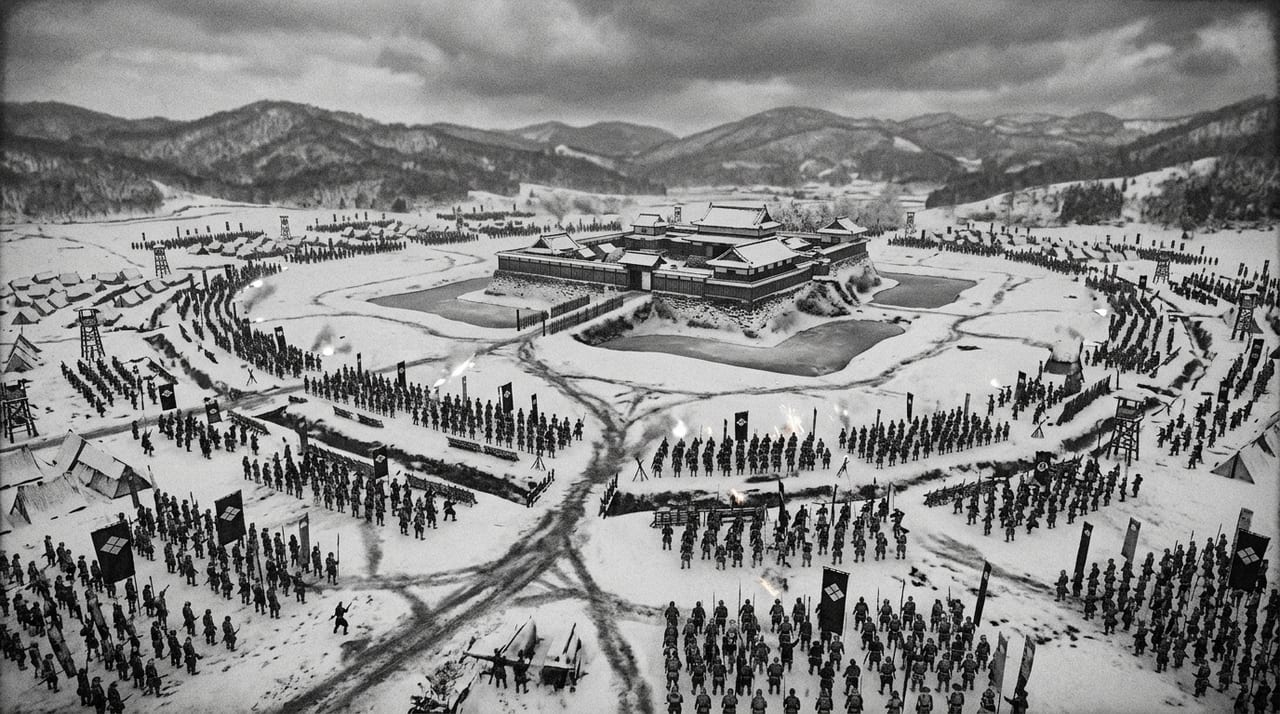
岩屋城之戰
天正14年(1586年)7月14日~27日
筑前國 岩屋城(今福岡縣太宰府市)
- 日期
- 天正14年(1586年)7月14日~27日
- 地點
- 筑前國 岩屋城(今福岡縣太宰府市)
- 結果
- 岩屋城陷落,高橋紹運及全體城兵壯烈玉碎。然而島津軍因此大幅消耗戰力並失去寶貴時機,隨著豐臣軍的到達,其九州統一的夢想最終功虧一簣。
勢力
大友軍(岩屋城守備)
島津軍
約2分鐘閱讀
天正14年(1586年)7月,筑前國的岩屋城(現·福岡縣太宰府市)爆發了岩屋城之戰。這場戰役是即將統一九州的島津氏,與阻擋其進路的大友方武將高橋紹運之間的攻防,以戰國屈指可數的玉碎戰而聞名。
瞄準九州制霸的島津北上
天正年間,薩摩的島津氏自日向的耳川之戰(天正6年)擊敗大友宗麟以來,勢如破竹地席捲九州,將豐後的大友氏逼入絕境。北九州僅剩少數勢力仍以大友方的身分勉強支撐,其中之一是掌管寶滿·岩屋兩城的高橋紹運,以及他的長子、守衛立花城的立花宗茂。天正14年,島津忠長、伊集院忠棟等人率領號稱兩萬乃至五萬的大軍進攻筑前,逐一攻陷大友方的據點。位於其進路上的,正是高橋紹運鎮守的岩屋城。
成為盾牌的決斷
高橋紹運刻意選擇據守防禦不利的岩屋城。雖然有人勸他棄守岩屋城撤退,紹運卻拒絕了這項建議。據傳這是一個捨身的決定:以岩屋城作為盾牌,吸引島津軍的注意,使其無法輕易越過此城,去攻打長子立花宗茂的立花城,以及妻子兒女和非戰鬥人員避難的寶滿城。集結於城中的守城兵僅有763名。
763名的玉碎
7月12日,島津方派遣使者勸降,紹運則斷然拒絕。7月14日,攻擊開始。紹運與守城兵面對數萬大軍,展開了近半個月的慘烈防禦戰。城兵在以刀槍交鋒的白刃戰中,也對島津方造成了重大損失,卻仍一人接一人地倒下。7月27日,即攻擊開始後的第14天,紹運以下城兵全數戰死,岩屋城終於陷落。
落城後,島津方武將島津忠長等人在進行首級辨認(首實檢)時,離開床几,跪坐於地,流淚說道:「我們殺死了一位罕見的名將。若能與紹運成為朋友,該是最好的摯友才對。」據傳當時的武將視佩刀為武勇與尊嚴的象徵,名將壯烈的死,不論敵我,都被視為武人的楷模而代代相傳。
九州統一的挫敗與紹運的遺志
由於紹運的徹底抗戰,島津軍蒙受了不少損失,也耗費了寶貴的時間。在此期間,豐臣秀吉派出的九州征伐先遣軍開始行動,不久秀吉親率的大軍也逼近九州。島津氏被迫撤退,九州統一的夢想就此破滅。岩屋城中紹運所爭取到的時間,最終帶來了決定九州勢力版圖的結果。
紹運之子立花宗茂繼承父親的遺志,以大友方的身分英勇奮戰,後來歷經豐臣、德川之世,成為以大名身分留名青史的罕見名將。父子兩代的忠義與武勇,作為為九州戰國史增添光彩的故事,以及體現武士矜持的軼聞,至今仍廣為流傳。