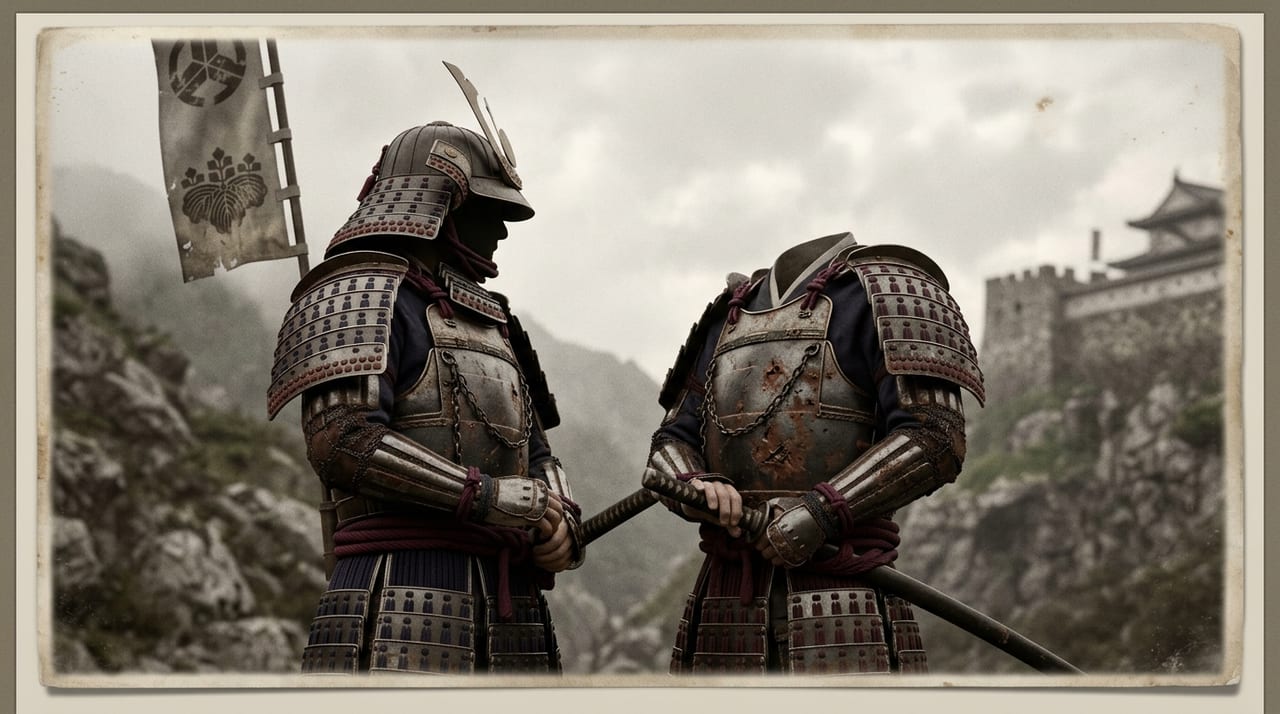
 * Bild nur zu Illustrationszwecken.
Saitō Dōsan
斎藤道三
Die Viper von Mino, Verkörperung des Gekokujo
Beschreibung
Saitō Dōsan (1494?–1556) war ein Kriegsherr der Sengoku-Zeit, der das Gekokujō verkörperte, den Sturz der Oberen durch Untergeordnete. Als Meister der Intrige ist er auch unter dem Beinamen „Viper von Mino“ (mamushi) bekannt, der durch moderne historische Romane verbreitet wurde. Die legendäre Geschichte seines Aufstiegs, der angeblich als Ölhändler begann und ihn bis zum Daimyō der gesamten Provinz Mino führte, wird bis heute als eine der dramatischsten Erfolgsgeschichten erzählt, die die Sengoku-Zeit hervorbrachte.
Neuere Forschungen haben das Bild von Dōsans Herkunft korrigiert. Früher wurde er als jemand dargestellt, der innerhalb einer einzigen Generation die Toki, Shugo von Mino, verdrängte. Heute gilt jedoch die Ansicht als die verbreitetste, dass das Gekokujō mit seinem Vater Nagai Shinzaemon-no-jō (Matsunami Shōgorō) begann und Dōsan als zweite Generation die Herrschaft über Mino vollendete. Wie dem auch sei, bleibt die Bewertung unverändert: Dass Vater und Sohn in zwei Generationen aus dem Gefolge eines Shugo bis zum Rang eines Landesherrn aufstiegen, gilt als Sinnbild der leistungsorientierten Sengoku-Zeit.
Was Dōsan als Kriegsherrn besonders auszeichnet, ist die Verbindung von außergewöhnlicher politischer Klugheit und militärischem Talent. Ab der Generation seines Vaters diente er der Familie Nagai, Gefolgsleuten des Shugo von Mino aus dem Haus Toki. Schließlich nahm er den Familiennamen Saitō an, vertrieb den Shugo Toki Yorinori und brachte Mino unter seine Kontrolle. Auf diesem Weg setzte er die Ränke der Sengoku-Zeit in vollem Umfang ein, darunter Intrigen, Attentate und heimtückische Überfälle.
Das von Dōsan regierte Mino war auch als Zentrum der Schwertherstellung berühmt. Schwerter der Mino-Tradition, zusammenfassend „Mino-mono“ genannt, wurden wegen ihrer robusten, für den Kampf geeigneten Bauweise hoch geschätzt. Die Schwertschmiede Minos entwickelten sich aus Linien, die auf Meister wie Shizu Saburō Kaneuji zurückgingen. Die Techniken der Seki-Schmiede, die in der Muromachi-Zeit als Hersteller der „Seki-Klingen“ an Ansehen gewannen, bilden die Grundlage der Stadt Seki in der Präfektur Gifu, des heutigen Zentrums der Messerindustrie.
Dōsan lieferte sich erbitterte Kämpfe mit Oda Nobuhide, dem Vater Oda Nobunagas, schloss aber schließlich Frieden und gab seine Tochter Kichō (Nōhime) Nobunaga zur Frau. Die Anekdote über ihr Treffen ist berühmt. Ebenso bekannt ist die Bemerkung, die Dōsan danach gemacht haben soll: „Es ist bedauerlich. Meine Söhne werden am Ende ihre Pferde vor dem Tor dieses Narren anbinden müssen (das heißt, seine Gefolgsleute werden).“ Sie gilt als Beleg für die Schärfe seines Urteils über Menschen.
In seinen letzten Jahren verschlechterte sich jedoch sein Verhältnis zu seinem ältesten Sohn Yoshitatsu, und 1556 fand er in der Schlacht von Nagaragawa ein tragisches Ende, indem er von seinem eigenen Sohn getötet wurde. Das Testament, in dem Dōsan angeblich verfügt haben soll, Mino an Nobunaga zu übergeben, ist berühmt (nur Abschriften sind überliefert, und manche halten es für eine Fälschung). Als Nobunaga später Mino befriedete und die Burg Gifu zu seinem Stützpunkt machte, wurde Dōsans Wille indirekt verwirklicht. Als Verkörperung des Gekokujō und als Intrigant, der die Leistungsorientierung konsequent verfolgte, gehört Saitō Dōsan zu den Persönlichkeiten, die das Wesen der Sengoku-Zeit am deutlichsten zeigen.