最新消息 — 最新入荷資訊請查閱商品目錄。 查看 →
February 1874 (Meiji 7)
Saga, Hizen Province (present-day Saga City, Saga Prefecture)
勢力
The rebel army (Seikan-tō and Yūkoku-tō)
The Meiji government army (suppressing side)
約10分鐘閱讀
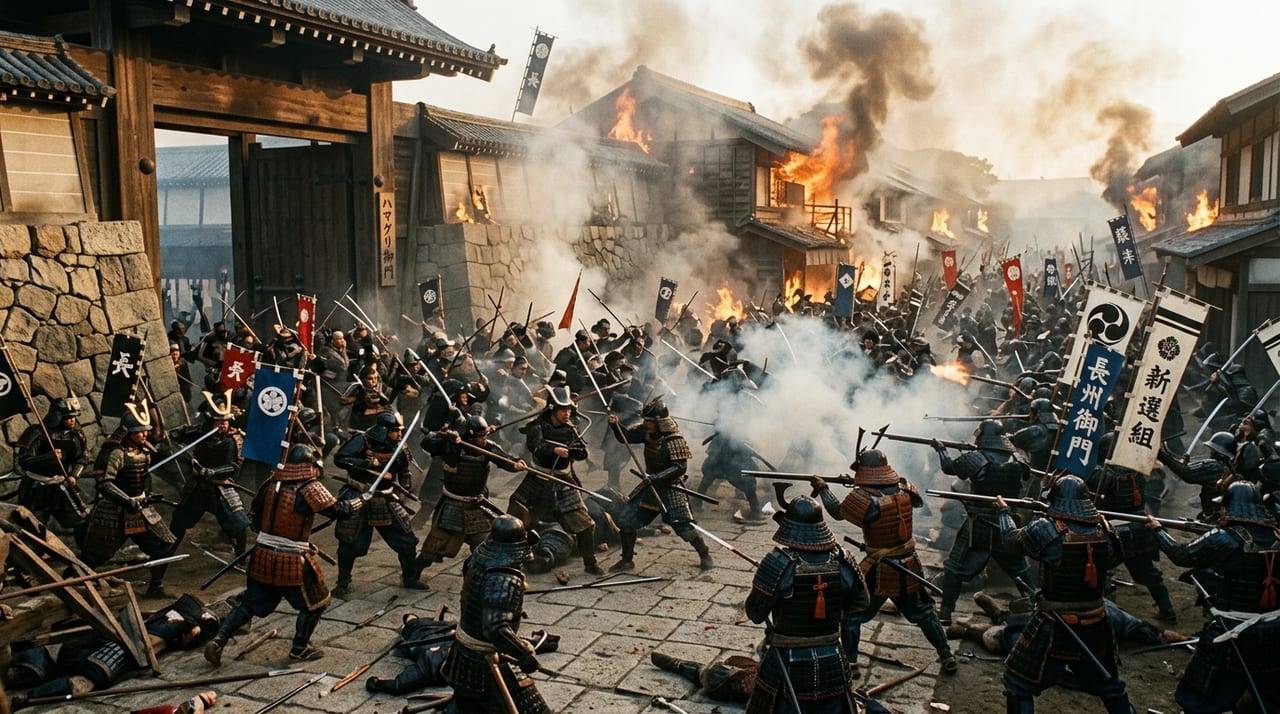
The Saga Rebellion (Saga no Ran) was a shizoku (former-samurai) revolt raised against the Meiji government in February 1874 (Meiji 7) at Saga in Hizen Province (present-day Saga City, Saga Prefecture), led by former state councilor Etō Shinpei and by Shima Yoshitake. In recent years Saga Prefecture has also come to call it the "Saga War," both to avoid the image of Etō as a mere ringleader of rebellion and to reflect the true scale of the fighting. It holds historical importance as the affair that first ignited the succession of large-scale revolts by disaffected shizoku in the early Meiji era.
**Background: The Political Crisis of 1873 and Shizoku Discontent**
The Meiji Restoration was a transformation achieved under the leadership of the samurai (shizoku), yet ironically its very success eroded the foundations of the samurai's own existence. The new government dismantled samurai privileges one after another—introducing conscription, cutting the hereditary stipends, and moving toward the abolition of the sword. As they lost their stipends and saw even the right to wear a sword—the mainstay of their pride—begin to waver, resentment against the government accumulated among the shizoku.
Political tinder was thrown onto this discontent by the "Seikanron Political Crisis (the Political Change of 1873)." After a conflict over whether to dispatch an envoy to, and use force against, Korea, Saigō Takamori, Itagaki Taisuke, Gotō Shōjirō, Soejima Taneomi, and Etō Shinpei resigned their councilor posts and left the government. Having departed the center of power, Etō returned to his home domain of Saga.
**The Seikan-tō and the Yūkoku-tō**
Two anti-government factions were forming in Saga at the time. One was the "Seikan-tō" (Invade-Korea Party), which upheld the seikanron and rallied around the fallen Etō Shinpei. The other was the conservative "Yūkoku-tō" (Patriotic Party), which sought a return to feudalism and the restoration of the old order, led by Shima Yoshitake, the former acting governor of Akita Prefecture. Though the two parties pointed in different directions, they were bound together on the single point of opposition to the government and came to form a combined army.
The government watched this movement warily. In February 1874, when shizoku belonging to the Yūkoku-tō stormed the Ono-gumi, a firm handling public funds, the government took the matter seriously and ordered the garrison troops of Kumamoto to suppress the Saga shizoku.
**The Uprising and Its Course**
Shima Yoshitake, who had returned home at the request of Sanjō Sanetomi to pacify the Saga shizoku, was enraged by the arrogant, contemptuous attitude shown toward the Saga samurai by the newly appointed acting governor Iwamura Takatoshi, with whom he shared passage; on learning that Iwamura intended to enter Saga Castle at the head of troops, he finally resolved to rise in arms. Reconciling with Etō, with whom he had been on poor terms, the two joined forces and made their stand together.
On 15 February 1874, the shizoku of both the Seikan-tō and Yūkoku-tō rose up and attacked the prefectural office (Saga Castle). The rebel army fielded a force of over ten thousand, and in the opening engagements it held the advantage, overwhelming the government's defenders and seizing Saga Castle. However, the broad response they had hoped for from disaffected shizoku in other prefectures never materialized.
The government's response, by contrast, was swift and organized. Councilor Ōkubo Toshimichi personally took command of the suppression and, exploiting the modern infrastructure of telegraph communication and steamship transport of troops and supplies, concentrated garrison forces from Kumamoto and Tokyo toward Saga in a short span of time. Before a government army equipped with a modern chain of command and transport capacity, the rebels were gradually pushed back and were routed and suppressed by early March.
**Outcome: The Execution of Etō and Shima**
The routed Etō Shinpei went into hiding across various regions in an attempt to rally again, seeking to spur Saigō Takamori in Kagoshima and Hayashi Yūzō in Tosa to rise up, but he won no such support and was finally captured. Shima Yoshitake was also taken. Both were sent to Saga, and although Etō had once served as Minister of Justice, he was subjected to only the briefest of proceedings before he and Shima were beheaded and their heads publicly displayed. That Etō himself—who had once labored to build up the judicial system—was executed without being granted a proper trial only sharpens the tragedy of the affair.
**Historical Significance**
The Saga Rebellion was the first large-scale armed revolt by disaffected shizoku. What its suppression demonstrated was that the Meiji government's centralized authority—underpinned by modern technologies such as the telegraph and the steamship—had reached a stage where it surpassed the martial power of the old samurai. It became clear that an armed uprising by shizoku who relied on sword and spear could no longer prevail against the organizational and technological strength of the modern state.
Yet the discontent of the shizoku itself was by no means resolved. The Saga Rebellion became the starting point of a series of shizoku revolts—the Shinpūren, Akizuki, and Hagi rebellions that erupted in the wake of the 1876 Sword Abolition Edict, and finally the Satsuma Rebellion of 1877. How the samurai as a social class, and the sword said to be their soul, came to be left behind by the times amid the torrent of modernization—the Saga Rebellion stands as the symbolic affair positioned at the very head of that process.