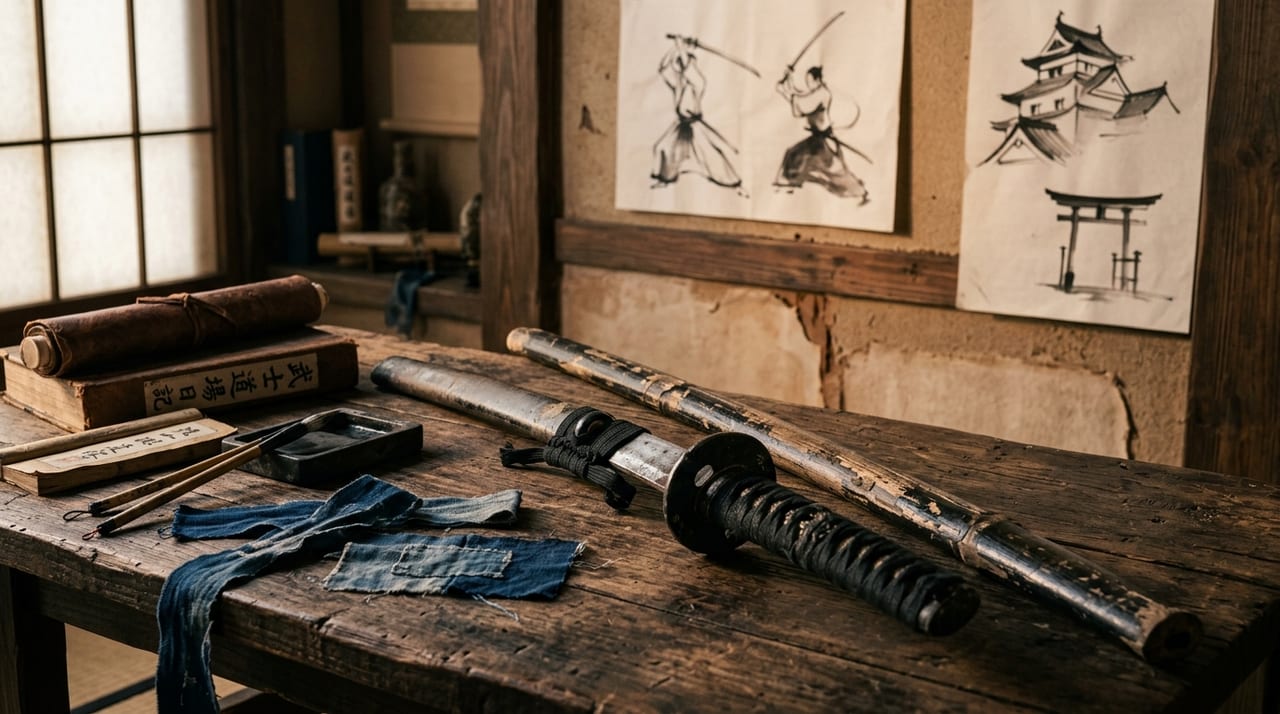
 * Bild nur zu Illustrationszwecken.
Twilight Samurai
たそがれ清兵衛
Ein Meisterwerk von 2002 von Regisseur Yoji Yamada, basierend auf Kurzgeschichten von Shuhei Fujisawa. Er folgt einem niedrig gestellten Samurai der Shōnai-Domäne, der nach dem Tod seiner Frau seine Töchter in Armut aufzieht — ein Film, der die menschliche Wahrheit hinter dem Schwert ehrt, statt sein Schauspiel.
Beschreibung
Twilight Samurai (Tasogare Seibei, 2002) ist ein Meilenstein-Film unter der Regie von Yoji Yamada, basierend auf Kurzgeschichten von Shuhei Fujisawa. Er folgt Iguchi Seibei, einem niedrig gestellten Samurai der Shōnai-Domäne in Nordostjapans finaler Edo-Periode, der den Spitznamen 'Twilight Seibei' verdient, weil er jeden Abend nach Hause eilt, statt mit Kollegen zu verkehren — er ist zu arm, zu belastet von der Pflege seiner Töchter und seiner erkrankten Mutter.
Der Film revolutionierte das jidaigeki (Period-Drama) Genre, indem er die romantisierte Schwertkampf-Ästhetik wegstreifte. Als die Pflicht Seibei in einen lebensbedrohlichen Zweikampf zwingt, nimmt er nicht eine polierte Klinge, sondern ein Bambus-Kern-Trainingsschwert (takezō), wobei er nur auf Überlebensinstinkt vertraut. Diese Wahl kristallisiert Fujisawas literarisches Thema: Es kommt nicht auf die Schönheit des Schwertes an, sondern auf den Menschen, der es hält.
Nominiert für den Academy Award für den besten fremdsprachigen Film 2004, führte Twilight Samurai zu einer globalen Neubewertung des japanischen Period Cinema und startete Yamadas gepriesene Samurai-Trilogie zusammen mit 'The Hidden Blade' (2004) und 'Love and Honor' (2006).
Bei TOUKENZA führen wir Edo-Periode-Schwerter von genau der Art bescheidener, aber würdevoller Samurai-Haushalte, die Twilight Samurai darstellt — praktische, wohlgearbeitete Klingen ohne übermäßigen Schmuck, die die ehrliche Handwerkskunst repräsentieren, die das echte Samurai-Leben unterstützte.
Vorgestellte echte Schwerter
Shōnai Domain Swords (Domain Official Smithy)
The Shōnai Domain (Sakai family, modern Tsuruoka, Yamagata Prefecture) maintained a hereditary line of official swordsmiths to supply practical blades for domain samurai. Swords forged in the Shōnai region typically exhibit unadorned, straightforward craftsmanship, representing the sword lineage most consistent with the lower-class samurai life depicted in *Tasogare Seibei*. The Taidō Museum in Tsuruoka preserves numerous swords and weapons associated with the Shōnai Domain, allowing viewers to confirm the film's cultural background with authentic artifacts. Though unpretentious, Shōnai swords embody sincere craftsmanship and represent the true nature of the Japanese sword.
Hizen Tadayoshi (Early Edo Period)
Hizen Tadayoshi, descended from master smith Hashimoto Tadayoshi the First of Hizen Province (Saga and Nagasaki), represents the archetypal practical samurai sword most widely distributed throughout the Edo period. With refined steel and gentle blade patterns, Hizen swords combined utility with aesthetic appreciation, becoming the standard weapon for middle and lower-rank samurai nationwide. As the quintessential example of "not a famous sword, yet honestly crafted"—precisely the type carried by Seibei in *Tasogare Seibei*—Hizen swords offer the most historically authentic choice. Their abundance makes them accessible to beginning collectors, and they are regularly handled by sword specialists.
Takezō (Bamboo Practice Sword)
Takezō is a wooden training sword fashioned from bamboo, used for practice and as a substitute since the Edo period. In the film *Tasogare Seibei*, the impoverished Seibei sells his long sword and carries a takezō sheathed instead, embodying the historical reality of lower-class samurai poverty. At the climax, the opponent Yago Zenzaemon recognizes the bamboo sword and scorns Seibei; however, Seibei is a master of the short sword (wakizashi) and secures victory through sheer skill in desperate combat. This episode—demonstrating that spiritual strength and short sword mastery transcend the weapon's rank—perfectly visualizes Fujisawa Shūhei's humanistic worldview.
Dewa-no-kami Yoshitsugu (Tōhoku New-Sword School)
Regional domains in northern Honshu likewise maintained recognized smiths, with Dewa Province (modern Yamagata and Akita Prefectures) producing independent new-swords. Though less renowned than works of master craftsmen in major urban centers like Kyoto and Osaka, these swords possessed honest craftsmanship and practicality rooted in the life of local samurai. Within the Tōhoku samurai culture depicted in *Tasogare Seibei*, regional swordsmiths' work represents the most historically authentic sword category. Regional swords are undergoing re-evaluation among scholars and collectors, and sword specialists occasionally handle works from Tōhoku and other provincial smiths.
Minamoto Kiyomaro (Late Edo Mastersmith)
Yamauara Kiyomaro (Minamoto Kiyomaro), originally from Matsushiro Domain in Shinshū, is regarded as the greatest swordsmith of the late Edo period, known for intensely dramatic blade patterns and bold steel. During the late Edo setting of *Tasogare Seibei*, new-new swords in the Kiyomaro style were considered the finest practical blades, particularly favored by combat-oriented swordsmen. As an ideal sword should a capable lower-class samurai like Seibei ever possess a masterwork, Kiyomaro's forged blades represent one of the most fitting examples. Many collectors continue to pursue Kiyomaro works, which occasionally appear in the inventory of sword specialists.
Authentische japanische Schwerter ansehen
Authentische japanische Schwerter ansehenDiese Seite dient der Vorstellung der japanischen Schwertkultur und steht in keiner Verbindung zu den genannten Werken.