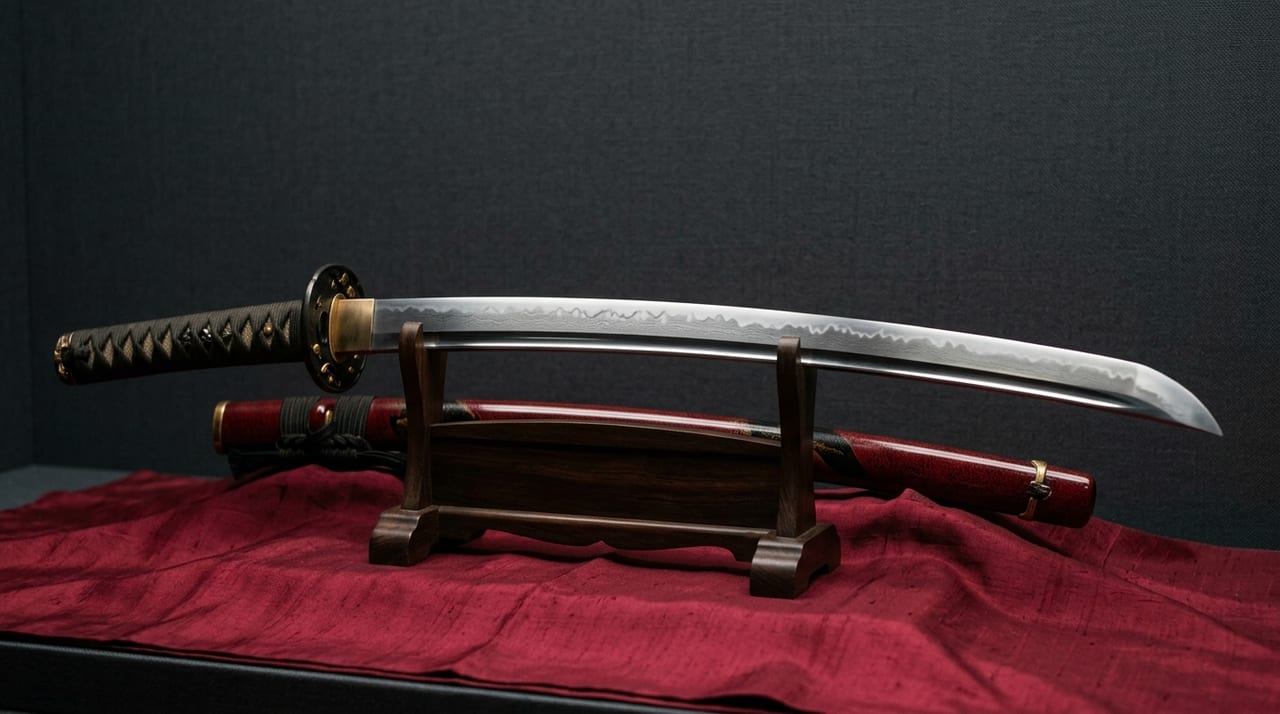
 * Bild nur zu Illustrationszwecken.
Chokutō, unsigniert (bekannt als Suiryūken)
直刀 無銘(号 水龍剣)
Auch bekannt als: Suiryūken; chokutō aus dem Shōsōin überliefert; soll ein Besitz von Kaiser Shōmu gewesen sein; ein Lieblingsschwert von Kaiser Meiji
Beschreibung
Ein Schwert mit gerader Klinge der Nara-Zeit aus dem Shōsōin
Japanische Klingen erhielten ihre charakteristische Krümmung erst ab der mittleren Heian-Zeit; die früheren jōkotō waren Schwerter mit gerader Klinge ohne Krümmung. Abgesehen von den Schätzen des Shōsōin sind nur sehr wenige Schwerter mit gerader Klinge aus der Nara-Zeit erhalten. Dieses gehört zu dieser kleinen Zahl – ein feines Exemplar, mit kräftiger Klinge und in ausgezeichnetem Erhaltungszustand. Es wurde ursprünglich im Shōsōin überliefert, und eine Überlieferung besagt, dass es ein persönlicher Besitz von Kaiser Shōmu war.
Der Name „Suiryūken“
1872 (Meiji 5) wurde das Schwert vom Shōsōin zu Kaiser Meiji gebracht. Im folgenden Jahr, 1873 (Meiji 6), wurden ihm neue Montierungen von Kanō Natsuo angefertigt, einem Meister der Metallziselierung, der für die Metallkunst der späten Edo- und der Meiji-Zeit steht; die Beschläge sind mit einem suiryū-Motiv (Wasserdrache, ein im Wasser lebender Drache) verziert. Der Beiname Suiryūken, „Wasserdrachen-Schwert“, geht auf diese Montierungen zurück. Das Nationalmuseum Tokio verzeichnet das Stück als „Chokutō, unsigniert (bekannt als Suiryūken), mit Wasserdrachen auf birnenhautfarbenem Grund und glückverheißenden Wolken-Schatzschwert-Montierungen“, die amtliche Bezeichnung als Wichtiges Kulturgut lautet jedoch „Chokutō, unsigniert“; auch die Montierungen sind nicht als Zubehör mit ausgezeichnet.
Zwei Epochen in einer Klinge
Dadurch, dass einer Klinge aus der Nara-Zeit durch Metallkunst der Meiji-Zeit ein neues Erscheinungsbild verliehen wurde, trägt das Stück einen doppelten Charakter: Es ist zugleich ein Relikt der frühen Tradition gerader Schwerter (jōkotō) und ein Meisterwerk moderner Metallziselierung. Kanō Natsuo war der führende Ziseleur seiner Zeit, der auch an den Probeprägungen der Meiji-Regierung beteiligt war, und die Montierungen mit ihren Wasserdrachen und glückverheißenden Wolken gelten als Höhepunkt der Metallziselierung der Meiji-Zeit. Als Lieblingsschwert von Kaiser Meiji bekannt, wird es heute vom Nationalmuseum Tokio bewahrt und ist als Wichtiges Kulturgut ausgezeichnet.
Legenden & Geschichten
Ein antikes Schwert mit gerader Klinge, das im Shōsōin überliefert wurde, soll einer Überlieferung zufolge Kaiser Shōmu gehört haben, gelangte nach mehr als tausend Jahren in die Hände von Kaiser Meiji. Der Kaiser ließ Kanō Natsuo neue Montierungen mit Wasser-Drachen-Motiven anfertigen, und von da an wurde die Klinge Suiryūken genannt, das Wasser-Drachen-Schwert.