Neuheiten — Aktuelle Neuzugänge finden Sie in unserem Katalog. Ansehen →
17. Tag des 10. Monats, Bunji 1 (1185)
Minamoto no Yoshitsunes Residenz in Rokujō-Horikawa, Kyoto (das Horikawa-Herrenhaus)
Kräfte
Minamoto no Yoshitsune und seine Haushaltsgefolgsleute in Kyoto (die Verteidiger)
Truppen von Tosabō Shōshun (die Angreifer, im Auftrag Yoritomos)
Etwa 18 Min. Lesedauer
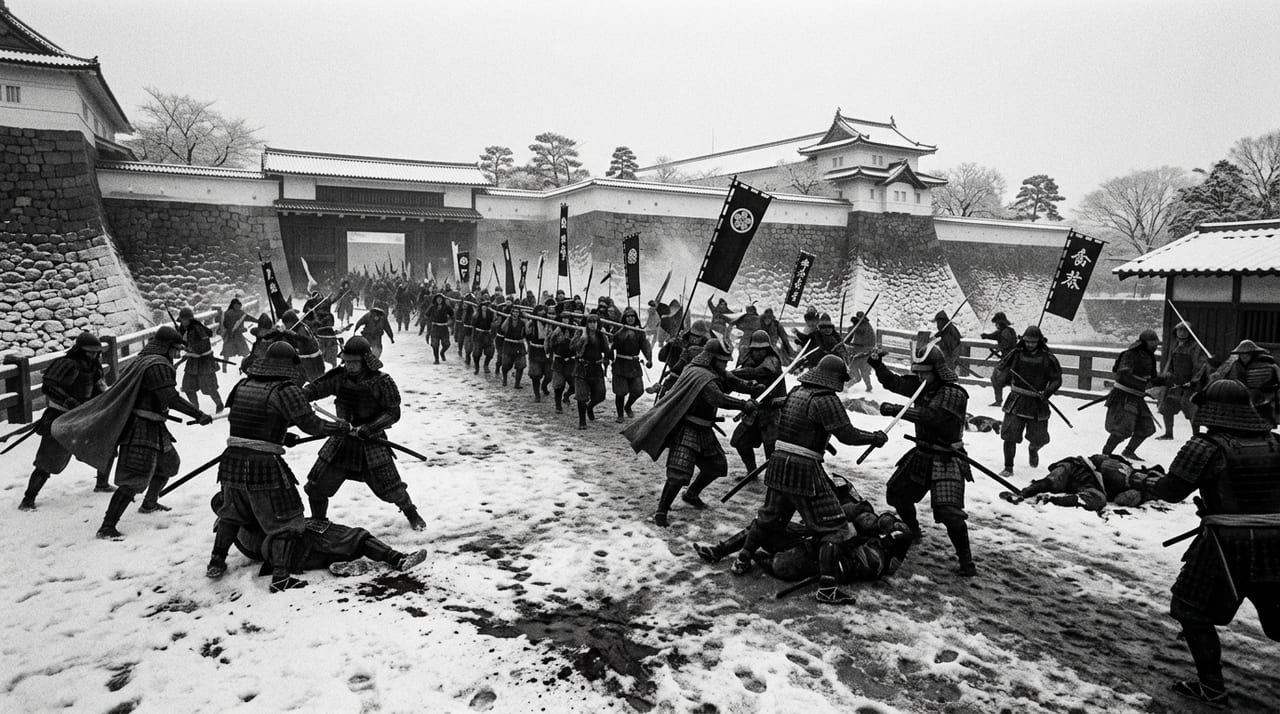
Der Horikawa-Nachtangriff (Horikawa yōchi) war ein Vorfall, bei dem Tosabō Shōshun, der im Auftrag Minamoto no Yoritomos handelte, in der Nacht des 17. Tages des 10. Monats von Bunji 1 (1185) die Residenz Minamoto no Yoshitsunes, die Horikawa-Residenz in Rokujō-Horikawa in Kyōto, angriff. Durch das Scheitern dieses nächtlichen Angriffs und Yoshitsunes anschließende Erlangung eines kaiserlichen Erlasses (senji) zur Verfolgung Yoritomos geriet der Konflikt zwischen den Brüdern Yoritomo und Yoshitsune in ein Stadium, in dem er nicht mehr beizulegen war. Dies wurde zur Wasserscheide, die unmittelbar zu Yoshitsunes Flucht und seinem tragischen Ende führte (der Schlacht am Koromogawa-no-tachi in Bunji 5 (1189)).
Im Jishō-Juei-Krieg (Genpei-Krieg) erwarb sich Minamoto no Yoshitsune in den Schlachten von Ichi-no-Tani, Yashima und Dan-no-ura herausragende Verdienste und war einer der größten Verdienstträger, die den Untergang der Taira herbeiführten. Nach dem Krieg verstärkte Yoritomo jedoch sein Misstrauen gegenüber Yoshitsune, unter anderem weil dieser ohne die Erlaubnis seines älteren Bruders Yoritomo Hofränge vom Kaiserhof annahm und die Nachkriegsangelegenheiten vorantrieb, ohne Yoritomos Zustimmung einzuholen. Hinzu kamen Verleumdungen durch Yoritomos Vertraute, die Yoshitsunes militärische Erfolge beneideten, und das Verhältnis der beiden verschlechterte sich rasch.
Einen weiteren Anlass, der den Bruch endgültig besiegelte, bildete der Vorfall bei Koshigoe im 5. Monat von Bunji 1 (1185). Als Yoshitsune Taira no Munemori und dessen Sohn Kiyomune unter Bewachung von Kyōto nach Kamakura bringen wollte, um als Sieger heimzukehren, ließ Yoritomo ihn aus Misstrauen nicht in Kamakura einziehen, sondern hielt ihn in Koshigoe, einem Vorort von Kamakura, zurück. Von dort soll Yoshitsune einen Brief (den Koshigoe-Brief, Koshigoe-jō) an Yoritomos Vertrauten Ōe no Hiromoto geschickt haben, in dem er seine Gefühle darlegte. Letztlich wurde ihm der Einzug in Kamakura jedoch nicht gestattet, und Yoshitsune musste nur Munemori und dessen Sohn nach Kamakura bringen und nach Kyōto zurückkehren. In neueren Forschungen wird auch der Koshigoe-Brief selbst als späteres gefälschtes Dokument betrachtet. Wie dem auch sei, zu dieser Zeit wurde Yoshitsunes Empfehlung zum Gouverneur von Iyo (Iyo no kami) als Lohn für die Verfolgung der Taira bei gleichzeitigem Verbleib in seinem Amt als kebiishi als direkter Widerspruch zu der von Yoritomo angestrebten neuen Kriegerordnung aufgefasst, und der Riss zwischen beiden hatte, so heißt es, einen kaum noch zu reparierenden Grad erreicht.
Im Jahr Bunji 1 (1185) befahl Yoritomo den Gokenin in Kamakura, Yoshitsune, der sich in Kyōto aufhielt, zu töten und die Verfolgung Yoshitsunes zu übernehmen. Doch niemand meldete sich. Unter ihnen übernahm der Krieger aus Kamakura, Tosabō Shōshun, bereitwillig die Rolle des Verfolgers. Shōshun brach am 9. Tag des 10. Monats mit 83 Reitern, darunter sein jüngerer Bruder Mikami Iesue, aus Kamakura auf und überfiel am 17. Tag des 10. Monats die Residenz Yoshitsunes in Rokujō-Horikawa in Kyōto.
Die meisten Krieger in Yoshitsunes Gefolge waren an diesem Tag ausgerückt und abwesend. Yoshitsune selbst öffnete jedoch das Tor und wehrte sich zusammen mit einigen wenigen Gefolgsleuten, die das Haus bewachten, darunter Satō Tadanobu, und kämpfte tapfer. Als gerade der Onkel Minamoto no Yukiie herbeieilte und Verstärkung brachte, gelang es der Seite Yoshitsunes, Shōshuns Angriff zurückzuschlagen.
Der geschlagene Shōshun flüchtete in das Gebiet des Berges Kurama nahe Kyōto, wurde jedoch von Gefolgsleuten Yoshitsunes gefangen genommen und am 26. Tag des 10. Monats am Rokujō-gawara enthauptet.
Am 18. Tag des 10. Monats, dem Tag nach dem nächtlichen Angriff, erhielt Yoshitsune vom zurückgetretenen Kaiser Go-Shirakawa-hōō einen kaiserlichen Erlass (senji) zur Verfolgung Yoritomos. Yoshitsune, dem die Tatsache vor Augen stand, dass er selbst auf Befehl Yoritomos angegriffen worden war, soll zu dem Schluss gekommen sein, dass eine Wiederherstellung des Verhältnisses zu Yoritomo unmöglich sei, und sich entschlossen haben, selbst gegen Yoritomo zu den Waffen zu greifen. Doch nur sehr wenige Krieger schlossen sich diesem Aufstand an. Yoshitsune versuchte bald darauf, nach Kyūshū zu fliehen, doch die Flotte geriet in einem Sturm in Seenot, und seitdem blieb ihm nur noch, die Hauptstadt zu verlassen und ein Leben auf der Flucht zu führen.
Yoritomo dagegen nutzte den Vorfall als Vorwand, um von Go-Shirakawa-hōō die Einsetzung von shugo und jitō zur Verfolgung Yoshitsunes und Yukiies durchzusetzen, und machte dies zum Sprungbrett für den Aufbau des landesweiten Herrschaftsapparats des Kamakura-Shogunats. Ironischerweise war gerade dieser nächtliche Angriff, der Yoshitsune verfehlt hatte, der unmittelbare Anlass für den Aufbau der landesweiten Herrschaftsordnung der Krieger durch Yoritomo.
Nach dem Bruch mit Yoritomo infolge des Horikawa-Nachtangriffs führte Yoshitsune über etwa vier Jahre hinweg ein Leben auf der Flucht, in dem er wiederholt die Hauptstadt verließ und sich versteckte. Schließlich floh er zu Fujiwara no Hidehira nach Hiraizumi in Ōshū, der ihm zuvor Schutz gewährt hatte. Nach Hidehiras Tod verriet sein Sohn Yasuhira Yoshitsune jedoch, da er dem Druck Yoritomos nachgab. Im Schalt-4. Monat von Bunji 5 (1189) wurde Yoshitsune im Koromogawa-no-tachi zum Selbstmord getrieben. Der Horikawa-Nachtangriff war der erste Wendepunkt, der Yoshitsunes Schicksal bestimmte und zu diesem tragischen Ende führte. Auch Minamoto no Yukiie, der Onkel, der gemeinsam mit Yoshitsune den nächtlichen Angriff abgewehrt und danach weiterhin mit ihm gehandelt hatte, wurde wie Yoshitsune von Yoritomos Seite unablässig verfolgt. Im darauffolgenden Jahr Bunji 2 (1186) wurde er in Izumi-no-kuni gefangen genommen und enthauptet. So fanden viele derjenigen, die sich nach dem Horikawa-Nachtangriff von Yoritomo abgewandt hatten, bald darauf ein unglückliches Ende.
Die Anekdote, wonach Yoshitsune beim Horikawa-Nachtangriff selbst das Schwert ergriff und vor dem Tor kämpfte, wurde in späteren Kriegserzählungen (gunki monogatari), Noh-Stücken (yōkyoku) und Kabuki-Stücken immer wieder aufgegriffen. Zusammen mit der Treue von Gefolgsleuten wie Musashibō Benkei und Satō Tadanobu wurde sie als Szene überliefert, die das Band zwischen Yoshitsune und seinen Gefolgsleuten verkörpert. Dieses Gefecht, in dem man mit wenigen Gefolgsleuten einen unerwarteten nächtlichen Angriff abwehrte, nimmt auch in der Geschichte des japanischen Schwerts und der Kriegerkultur einen wichtigen Platz ein, denn es gilt als Beispiel dafür, dass die Krieger von der späten Heian-Zeit bis zum Beginn der Kamakura-Zeit Schwert und Naginata stets griffbereit hielten und darauf eingestellt waren, auf jeden unvorhergesehenen Überfall sofort zu reagieren.
Tosabō Shōshun, der den Horikawa-Nachtangriff durchführte, ist eine Person, über deren Herkunft mehrere Theorien überliefert sind. Einer Theorie zufolge soll er mit Konnōmaru (Shibuya Konnōmaru), einem Gefolgsmann von Yoritomos Vater Minamoto no Yoshitomo, identisch sein. Beides entbehrt jedoch der Beweise, und Shōshuns genauer Werdegang ist in den historischen Quellen nicht klar belegt. Dass er die schwierige Aufgabe der Verfolgung Yoshitsunes, für die sich niemand gemeldet hatte, freiwillig übernahm, wird im Azuma Kagami als Zeichen seiner großen Treue gegenüber Yoritomo besonders hervorgehoben. Im Ergebnis kostete ihn diese Aufgabe jedoch selbst das Leben. Was die Daten von Shōshuns Abreise aus Kamakura und seiner Ankunft in Kyōto betrifft, so gibt das Azuma Kagami als Abreise den 9. Tag des 10. Monats und als Angriff den 17. Tag an. Eine abweichende Überlieferung im Engyō-bon des Heike Monogatari nennt dagegen als Abreise den 29. Tag des 9. Monats und als Ankunft in Kyōto den 10. Tag des 10. Monats. Die Quellen jener Zeit weichen somit in Einzelheiten voneinander ab.
Nach dem Horikawa-Nachtangriff erhob Yoshitsune die Waffen gegen Yoritomo, doch nur sehr wenige Krieger schlossen sich ihm an. Da er in Kyōto keine militärische Grundlage mehr hatte, versuchte Yoshitsune, im Westen des Landes einen Neuanfang zu machen. Im 11. Monat von Bunji 1 stach Yoshitsune gemeinsam mit Yukiie, Benkei und anderen Vertrauten in See. Er ging in Daimotsu-ura in Settsu (heute Amagasaki, Präfektur Hyōgo) mit einer Flotte in Richtung Kyūshū auf die Reise. Die Flotte geriet jedoch in einen Sturm und ging unter, wobei viele Gefolgsleute ums Leben kamen. Durch dieses „Unglück bei Daimotsu-ura“ scheiterte die Flucht in den Westen. Yoshitsune hielt sich danach wechselweise in Yoshino, Nara und am Berg Hiei auf und lebte fortan im Versteck.
Yoritomo, der Yoshitsune hatte entkommen lassen, nutzte diesen Vorfall in größtmöglichem Maße aus und drängte Go-Shirakawa-hōō nachdrücklich, unter dem Vorwand der Verfolgung Yoshitsunes und Yukiies die Einsetzung von shugo und jitō durchzusetzen. Im 11. Monat von Bunji 1 genehmigte der Hof dies mit einem kaiserlichen Erlass (chokkyo). Den Kamakura-Machthabern wurde damit das Recht übertragen, in den Provinzen shugo und auf den Shōen und Kōryō jitō einzusetzen. Diese Einsetzung von shugo und jitō wurde zur Grundlage der späteren landesweiten Herrschaftsordnung des Kamakura-Shogunats. Dass ein einzelner Vorfall, der Horikawa-Nachtangriff, im Ergebnis die Regierungsstrukturen der Kriegerregierung in Japan erheblich voranbrachte, wird als Ironie der Geschichte häufig hervorgehoben. Dass der Horikawa-Nachtangriff für Yoshitsune persönlich den Ausgangspunkt seiner Tragödie bildete, für Yoritomos Kriegerregierung hingegen eine Gelegenheit war, die landesweite Herrschaft rechtlich zu legitimieren, wird in der japanischen mittelalterlichen Geschichtsforschung immer wieder als Anekdote aufgegriffen. Sie steht sinnbildlich für den Prozess, in dem die japanische Gesellschaft nach dem Jishō-Juei-Krieg durch die innere Auseinandersetzung innerhalb des Minamoto-Clans schließlich einen zentralistischeren Kriegerherrschaftsapparat etablierte.