Neuheiten — Aktuelle Neuzugänge finden Sie in unserem Katalog. Ansehen →
27.–31. Oktober 1876 (Meiji 9)
Akizuki, Präfektur Fukuoka (heutiges Akizuki, Stadt Asakura) und Toyotsu (heutige Gemeinde Miyako, Präfektur Fukuoka)
Kräfte
Akizuki-Partei (ehemalige Shizoku der Lehnsdomäne Akizuki)
Meiji-Regierungstruppen (Garnison Kokura)
Etwa 9 Min. Lesedauer
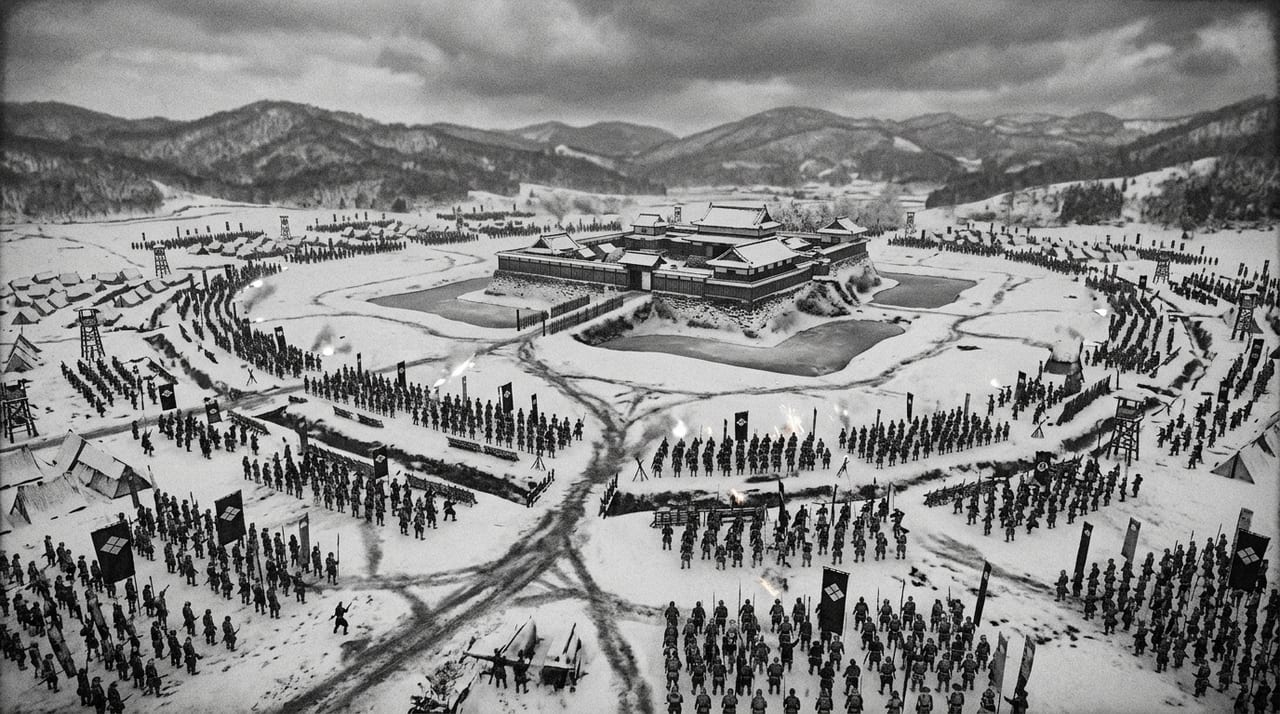
Im Oktober 1876 (Meiji 9) erhoben sich ehemalige Samurai (Shizoku) der alten Akizuki-Domäne in Fukuoka (heutiges Akizuki, Stadt Asakura) in Rebellion gegen die Meiji-Regierung. Im Oktober desselben Jahres brachen der Shinpūren-, der Akizuki- und der Hagi-Aufstand nacheinander aus; zusammen mit dem früheren Saga-Aufstand von 1874 gelten sie als die repräsentativen Shizoku-Aufstände der frühen Meiji-Zeit.
Nach der Meiji-Restauration zog die neue Regierung schrittweise die Privilegien der Samurai-Klasse als Teil ihres Modernisierungsprogramms zurück. Das Edikt zur Schwertabschaffung (Haitōrei), das im März 1876 erlassen wurde, verbot das öffentliche Tragen von Schwertern mit Ausnahme von Personen in Zeremonienkleidung, Militärpersonal und Polizei und verweigerte früheren Samurai das Recht, das Symbol ihres Status offen zu tragen. Im August desselben Jahres hob der Chitsuroku Shobun (Erlass zur Ausgabe von Umwandlungsanleihen) die an Shizoku gezahlten erblichen Stipendien auf und ersetzte sie durch Staatsanleihen von begrenztem Wert. Nachdem sie ihren Lebensunterhalt und den Stolz, der mit ihrem ehemaligen Status verbunden war, verloren hatten, intensivierte sich die Unzufriedenheit unter früheren Samurai in Westjapan schnell.
Am 24. Oktober 1876 erhoben sich die Shinpūren (Keishintō) unter der Führung von Personen wie Ōtaguro Tomoo in Kumamoto und griffen den Kommandanten der Kumamoto-Garnison an. Als Reaktion darauf organisierten sich etwa 400 ehemalige Shizoku der Akizuki-Domäne - darunter Miyazaki Shanosuke, Iso Jun, Tohara Yasuura, Iso Heihachi, Tonami Hankurō, Miyazaki Tetsunosuke, Toki Kiyoshi, Masuda Shizukata und Imamura Hyakuhachirō - drei Tage später, am 27. Oktober, als "Akizuki-Partei" und erhoben sich bewaffnet.
Die Akizuki-Partei tötete zuerst Polizeibeamten Honami Hantarō, der gekommen war, um sie zum Rückzug zu bewegen. Die Akizuki-Shizoku hatten sich zuvor darauf geeinigt, sich gleichzeitig mit Shizoku der benachbarten früheren Toyotsu-Domäne unter Führung von Sugiu Jūrō zu erheben, und marschierten in Richtung Toyotsu.
Am 29. Oktober erreichte die Akizuki-Partei Toyotsu, aber die früheren Toyotsu-Shizoku hatten sich bereits gegen den Aufstand entschieden, und Sugiu und seine Mitverschwörer waren festgenommen worden. Während Verhandlungen im Gange waren, griffen Truppen der Kokura-Garnison unter Nogi Maresuke, von Toyotsu alarmiert, die Akizuki-Partei an, die nach Kämpfen in die Flucht geschlagen wurde.
Am 31. Oktober löste sich die Akizuki-Partei auf. Sieben ihrer führenden Mitglieder, darunter Iso Jun, Miyazaki Shanosuke und Toki Kiyoshi, nahmen sich das Leben. Imamura Hyakuhachirō, der auf fortgesetzten Widerstand bestand, kehrte mit 26 anderen nach Akizuki zurück, griff das in der Akizuki-Grundschule errichtete Unterdrückungshauptquartier an, tötete zwei Präfekturbeamte und brannte ein Sake-Lagerhaus nieder, das zur Gefangenschaft von gefangenen Kameraden genutzt wurde, bevor er sich mit seinen Anhängern zerstreute. Er wurde am 24. November gefangen genommen.
Am 3. Dezember verhängte das provisorische Gericht von Fukuoka Urteile; die Rädelsführer Imamura Hyakuhachirō und Masuda Shizukata wurden am selben Tag enthauptet, während etwa 150 andere Gefängnisstrafen erhielten oder ihren Samurai-Status verloren. Der Akizuki-Aufstand wurde innerhalb von kaum einer Woche nach seinem Ausbruch unterdrückt und wird zusammen mit den Aufständen von Shinpūren, Hagi (unter der Führung von Maebara Isei, ebenfalls im Oktober 1876) und Saga (unter der Führung von Etō Shinpei, 1874) als eine Handlung verzweifelten Widerstands ehemaliger Samurai in Erinnerung behalten, deren Statusgrundlagen durch das Schwertedikt und die Stipendienreformen hinweggefegt worden waren.
Die Welle von Shizoku-Aufständen in Meiji 9, einschließlich Akizuki, wurde direkt durch erbitterten Widerstand gegen das Edikt zur Schwertabschaffung ausgelöst. Für Samurai, denen das gesetzliche Recht verweigert wurde, das Schwert zu tragen, das ihren Status markierte, waren die Aufstände selbst ein letzter Widerstandsakt gegen das Ende der Schwerttragekultur. Dass diese Aufstände eine nach dem anderen von Garnisonstruppen, die hauptsächlich mit Schusswaffen bewaffnet waren, unterdrückt wurden, symbolisierte das entscheidende Ende des auf das Katana zentrierten Samurai-Kampfstils angesichts eines modernen Militärsystems. Im darauffolgenden Jahr, im Satsuma-Aufstand (Seinan-Krieg) von 1877, kämpften einige von Saigō Takamori's Kräften noch mit Schwertern und Speeren, wurden aber letztendlich von Regierungstruppen, die mit modernen Waffen ausgerüstet waren, besiegt und brachten das Zeitalter der Samurai zu einem endgültigen Abschluss.