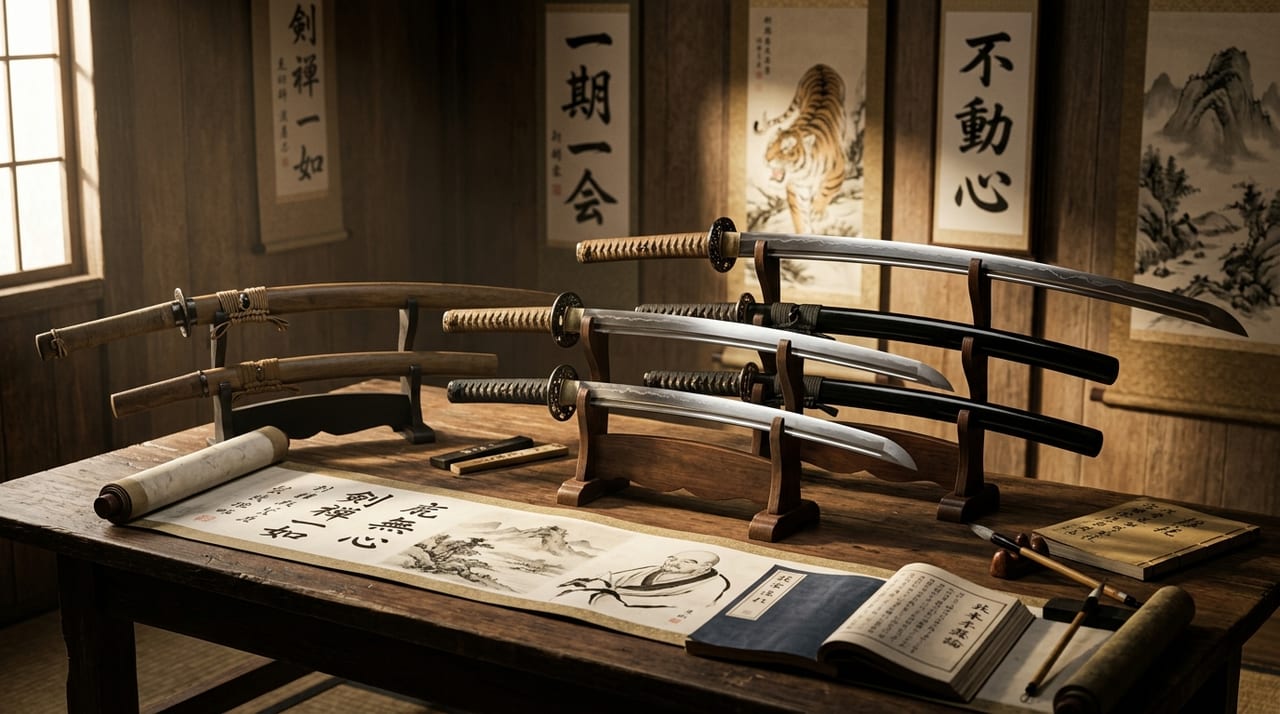
 ※圖片為示意圖。
巴卡邦德
バガボンド
由井上雄彦描繪的宮本武蔵一代記漫畫。以吉川英治的小說《宮本武蔵》為原作,以壓倒性的畫力描繪劍豪的青春與精神性成長。自1998年起在《周刊Morning》(講談社)開始連載,累計發行部數超過8,200萬部。其對劍與劍技描寫中的寫實性與藝術性的高度,作為以日本刀為題材的漫畫最高峰而被世界各地讀者認知。
解說
作品の概要
Vagabond是由井上雄彦以吉川英治的小說《宮本武蔵》為原案所創作的歷史漫畫。1998年起在講談社的《週刊Morning》上開始連載,累計發行部數超過8,200萬部,成為國民級作品。主人公宮本武蔵(幼名:武藏,本姓藤原,諱玄信)在追求無雙劍豪的同時流浪於諸國,持續追問精神的成熟與「力量究竟是什麼」。吉岡道場、佐々木小次郎、柳生一族、澤庵和尚等史實中的劍豪與人物次第登場,通過徹底的時代考證與心理描寫,立體地再現了江戶初期的刀劍世界。
剣技描写の革新
Vagabond對日本刀文化所產生的影響中,最重要的是其劍技描寫的革新性。在傳統劍豪漫畫多用程式化、誇張戰鬥表現的同時,Vagabond通過將實際的劍術理論、身體軸線、間距、先機爭奪等要素投入畫面中,開拓了逼近劍術本質的表現手法。井上雄彦將在運動漫畫《SLAM DUNK》中培養的逼真身體表現應用於刀劍世界,成功地在紙上以親身體驗的方式表現了刀的軌跡、斬擊的重量感與防守瞬間的緊張感。這種劍技表現獲得了劍道家與武術家的評價,他們感受到了「真正的劍理」,被認可為超越漫畫框架、具有劍術價值的作品。
日本刀の美の表現
Vagabond中對日本刀的描寫不只是凶器或記號,而是被描繪為與持有者精神合為一體的生命體。武蔵通過刀所展現的、經過鍛鍊的身體與靈魂的表現方式,視覺上體現了「刀是武士的靈魂」這一日本傳統價值觀。此外,作中登場的刀基於實存的刀劍樣式,慶長・元和期的刀劍形態被細心地描繪下來。武蔵所使用樣式的變化(大太刀→二刀流→最終的開悟)與劍士的精神成長完全相連,作為深入挖掘日本刀與使用者精神關係的表現,獲得了高度評價。
佐々木小次郎の描き方
Vagabond中對佐々木小次郎的描寫特別值得關注。在史實中作為神秘眾多的劍豪為人所知的小次郎,井上刻意將其描繪為聾唖者,將其塑造為不依靠語言,僅以刀與感覺與世界對話的純粹劍的化身。這種解釋與史實無關,但作為探求「即使沒有語言也能以劍與世界對話」這一劍的本質意義的哲學嘗試,引起了眾多讀者與劍術家的共鳴。小次郎的代稱「物干し竿」(長刀)的描寫也基於實際長寸刀的特性,長刀的間距與掌握的困難性作為劍法的戰略要素被準確地描繪出來。
登場的真實刀劍
Musashi's Nito-ryū (Two-Sword Style) and Ōdachi
Musashi's evolving sword philosophy — from massive ōdachi to the simultaneous two-sword Niten Ichi-ryū — is depicted with genuine philosophical grounding. Real swords associated with Musashi are held at the Sano Art Museum and Kumamoto Prefectural Museum of Art, and their forms are consistent with Keichō–Kan'ei period styles featuring notare and gunome hamon.
Sasaki Kojirō's "Clothes-Drying Pole" (Long-Bladed Tachi)
The historical Kojirō's oversized blade (3+ shaku in length) is depicted with accuracy: the enormous reach advantage offset by weight and maneuverability challenges. The famous Tsubame-gaeshi (Swallow Return) technique exploits the long blade's wide arc for a reverse-angle cut. Long-bladed tachi of this type survive in collections such as the Kikkawa family archive at Iwakuni and in various museum ōdachi holdings.
Yagyū Shinkage-ryū Sword Aesthetics
The Yagyū clan's kenjutsu in Vagabond embodies the Shinkage-ryū philosophy of katsujinken — the sword used to give life rather than take it. This doctrine, central to the Tokugawa shōguns' fencing instructors, defined the cultural shift of the sword from killing tool to instrument of spiritual cultivation. Yagyū-related swords and documents can be seen at the Yagyū Historical Museum in Yamato-Yagyū, Nara Prefecture.
Keichō–Genna Period Sword Forms (1596–1624)
Vagabond is set during the transition from Sengoku warfare to early Edo peace — the era of the Battle of Sekigahara (1600) and the Osaka campaigns (1615). Swords of this transitional period shift from purely functional Sengoku blades toward artistic and ceremonial forms, the beginning of the Shintō (New Sword) era. Representative blades of this period are held in major Japanese museums nationwide.
瀏覽真正的日本刀
瀏覽真正的日本刀本頁旨在介紹日本刀文化,與各作品的著作權持有者無關。