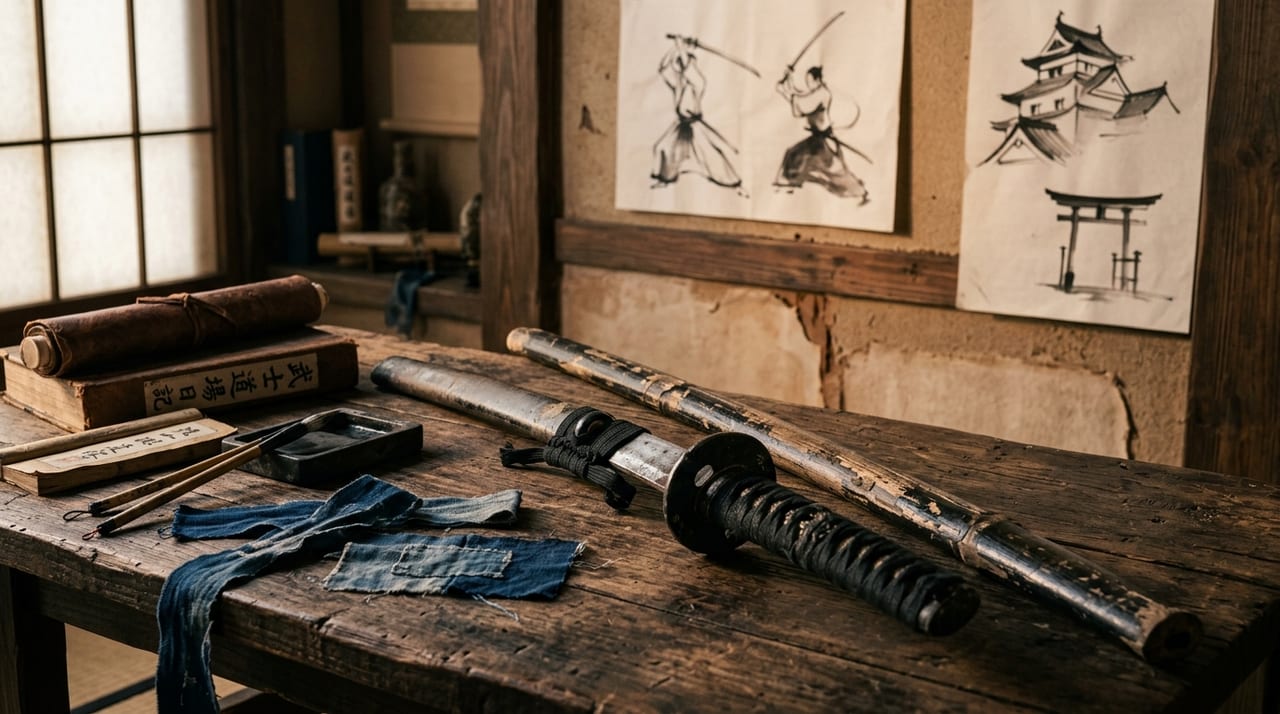
 ※圖片為示意圖。
黃昏清兵衛
たそがれ清兵衛
藤沢周平的短篇小說原著,由山田洋次導演於2002年改編成電影的傑作時代劇。講述庄內藩下級武士井口清兵衛在妻子去世、生活困頓的困境中,仍堅持撫養兩個女兒並保持人的尊嚴與氣節的故事。相比劍技的華彩炫目,這部作品以細膩筆觸刻畫了持劍者的內心世界和真實生活,獲得了高度評價。
解說
藤澤周平與庄內藩的世界
《黄昏清兵衛》是以出身自山形縣鶴岡市的時代小說作家藤澤周平的《黄昏清兵衛》《祝人助八》《竹光始末》等短編為原著,由山田洋次導演於2002年製作的時代劇電影。舞台為江戶時代末期的東北·庄內藩(現今山形縣鶴岡市周邊)。主人公井口清兵衛(真田廣之飾)是祿高五十石的貧困下級藩士,妻子死於結核,獨自扶養年邁的母親與幼小的兩個女兒,日日為生計所迫。因為每到傍晚都率先謝絕同僚邀約而急忙返家,被冠以「黄昏清兵衛」之名的他,過著靜謐而高尚的人生,本作細緻描繪了這樣的生活。藤澤周平多年來持續以庄內藩士的日常為題材創作短編,將劍與生活相連的市井武士形象深植日本文學中。其文體簡潔而富有情感,將武士的悲哀與尊嚴刻畫得恰到好處,被譽為名家妙筆,獲得高度評價。
寫實劍術表現的革新
本作作為時代劇電影之所以具有革新性,在於它徹底剔除了對劍技的美化與華麗化,呈現出赤裸裸的寫實主義。清兵衛所用之劍不是華麗的殺陣,而是帶著泥土氣息、為了生存而必死的劍。在被藩主命令參加死命相搏的場景中,他拿出的不是磨得閃亮的銘刀,而是「竹光」——即用竹子製成的刀的仿製品——在絕望的情況下用一把劍延續生命的人類氣節被描繪了出來。這種「竹光」的使用不是問劍的美,而是問劍士的精神,這是對藤澤文學核心的視覺化呈現,為日本時代劇帶來了全新的倫理視角。劍戟場景簡短而深入,比起長鏡頭的殺陣表演,更著重於捕捉恐懼與覺悟交混的人物表情。這種手法將本作定位為不是動作片式的時代劇,而是以劍為生存條件的人類故事。
作為時代見證的刀——下級武士的現實
在電影所描繪的江戶末期,對於下級武士而言,刀在成為藝術品或精神象徵之前,首先是一件需要保養與研磨、成本高昂的「工具」。清兵衛所用之刀是注重實用性的樸素之物,他生活在與豪華拵飾和銘刀無緣的世界裡。實際上,江戶時代的藩士大多為刀的研磨費用而窮困,只有極少數富裕的上士·大名家臣才有能力持有銘刀。當時大多數武士日常佩戴的是世代相傳的古刀或廉價新刀,而如今在博物館展出的傑作只與極少數上層武士有緣。《黄昏清兵衛》細緻而誠實地描繪了這樣的歷史現實。對於熱愛日本刀之美的人而言,這部電影靜靜地示現了一個真理:銘刀的誕生背後,也寄藏著許多無名武士的貧困現實。
山田洋次武士三部曲與劍的人文學
山田洋次導演以《男はつらいよ》系列電影著稱,擅長描繪平民的喜怒哀樂,但在《黄昏清兵衛》中,他的視線仍然更注重於人物而非劍。清兵衛的劍不是力量的展示,而是為了活下去的拚命,這樣的描繪深深打動了觀眾的心。本作獲得奧斯卡金像獎外語片獎提名(2004年),成為日本時代劇獲得世界關注的先驅。隨後的《隱劍 鬼之爪》(2004年)和《武士之一分》(2006年)進一步深化了藤澤周平的作品世界,「山田洋次武士三部曲」成為日本電影史上的重要篇章。三部曲所描繪的是持有劍的沉重和那些在生活中堅持著劍的無名武士的尊嚴。
庄內刀與東北的刀劍文化
《黄昏清兵衛》的舞台·庄內地方既是最上川流域肥沃的農業地帶,同時也是庄內藩酒井家培育出獨有武藝和刀劍文化的地方。庄內藩是幕末時期「敵討」文化依然濃厚的東北主要藩之一,存在眾多實用武術道場。電影所描繪的下級藩士生活文化由現今鶴岡市博物館·致道博物館(舊西田川郡役所)所保存的庄內藩文物所佐證。刀劍座銷售具有東北·庄內士族文化背景的江戶後期至幕末時期的刀劍,希望您能通過實物刀劍親身體驗《黄昏清兵衛》所映照的人生活與時代氛圍。華麗的銘刀並非日本刀的全部——樸素的實用刀中同樣寄寓著佩刀武士的尊嚴與生活歷史。
劍術流派與清兵衛所用的劍技
電影中清兵衛的劍技深受東北繁榮的實用流派影響。幕末的東北存在著心形刀流·鹿島神道流·疋田陰流等眾多實戰流派,庄內藩也有藩認定的道場訓練藩士子弟。清兵衛所習得的劍術是重視一擊必殺的實用性而非型之美的「殺人之劍」,這給了電影高潮——僅用竹光打敗強敵——以說服力。實際的江戶末期劍術保持著劍道(撓競技)整備之前生猛的武術面貌,與現代競技劍道有著迥然不同的駭人威力。《黄昏清兵衛》細緻地呈現了以日本刀作為武器實際駕馭的技術與精神深度,作為罕見的時代劇將被後世長久銘記。
登場的真實刀劍
Shōnai Domain Swords (Domain Official Smithy)
The Shōnai Domain (Sakai family, modern Tsuruoka, Yamagata Prefecture) maintained a hereditary line of official swordsmiths to supply practical blades for domain samurai. Swords forged in the Shōnai region typically exhibit unadorned, straightforward craftsmanship, representing the sword lineage most consistent with the lower-class samurai life depicted in *Tasogare Seibei*. The Taidō Museum in Tsuruoka preserves numerous swords and weapons associated with the Shōnai Domain, allowing viewers to confirm the film's cultural background with authentic artifacts. Though unpretentious, Shōnai swords embody sincere craftsmanship and represent the true nature of the Japanese sword.
Hizen Tadayoshi (Early Edo Period)
Hizen Tadayoshi, descended from master smith Hashimoto Tadayoshi the First of Hizen Province (Saga and Nagasaki), represents the archetypal practical samurai sword most widely distributed throughout the Edo period. With refined steel and gentle blade patterns, Hizen swords combined utility with aesthetic appreciation, becoming the standard weapon for middle and lower-rank samurai nationwide. As the quintessential example of "not a famous sword, yet honestly crafted"—precisely the type carried by Seibei in *Tasogare Seibei*—Hizen swords offer the most historically authentic choice. Their abundance makes them accessible to beginning collectors, and they are regularly handled by sword specialists.
Takezō (Bamboo Practice Sword)
Takezō is a wooden training sword fashioned from bamboo, used for practice and as a substitute since the Edo period. In the film *Tasogare Seibei*, the impoverished Seibei sells his long sword and carries a takezō sheathed instead, embodying the historical reality of lower-class samurai poverty. At the climax, the opponent Yago Zenzaemon recognizes the bamboo sword and scorns Seibei; however, Seibei is a master of the short sword (wakizashi) and secures victory through sheer skill in desperate combat. This episode—demonstrating that spiritual strength and short sword mastery transcend the weapon's rank—perfectly visualizes Fujisawa Shūhei's humanistic worldview.
Dewa-no-kami Yoshitsugu (Tōhoku New-Sword School)
Regional domains in northern Honshu likewise maintained recognized smiths, with Dewa Province (modern Yamagata and Akita Prefectures) producing independent new-swords. Though less renowned than works of master craftsmen in major urban centers like Kyoto and Osaka, these swords possessed honest craftsmanship and practicality rooted in the life of local samurai. Within the Tōhoku samurai culture depicted in *Tasogare Seibei*, regional swordsmiths' work represents the most historically authentic sword category. Regional swords are undergoing re-evaluation among scholars and collectors, and sword specialists occasionally handle works from Tōhoku and other provincial smiths.
Minamoto Kiyomaro (Late Edo Mastersmith)
Yamauara Kiyomaro (Minamoto Kiyomaro), originally from Matsushiro Domain in Shinshū, is regarded as the greatest swordsmith of the late Edo period, known for intensely dramatic blade patterns and bold steel. During the late Edo setting of *Tasogare Seibei*, new-new swords in the Kiyomaro style were considered the finest practical blades, particularly favored by combat-oriented swordsmen. As an ideal sword should a capable lower-class samurai like Seibei ever possess a masterwork, Kiyomaro's forged blades represent one of the most fitting examples. Many collectors continue to pursue Kiyomaro works, which occasionally appear in the inventory of sword specialists.
瀏覽真正的日本刀
瀏覽真正的日本刀本頁旨在介紹日本刀文化,與各作品的著作權持有者無關。