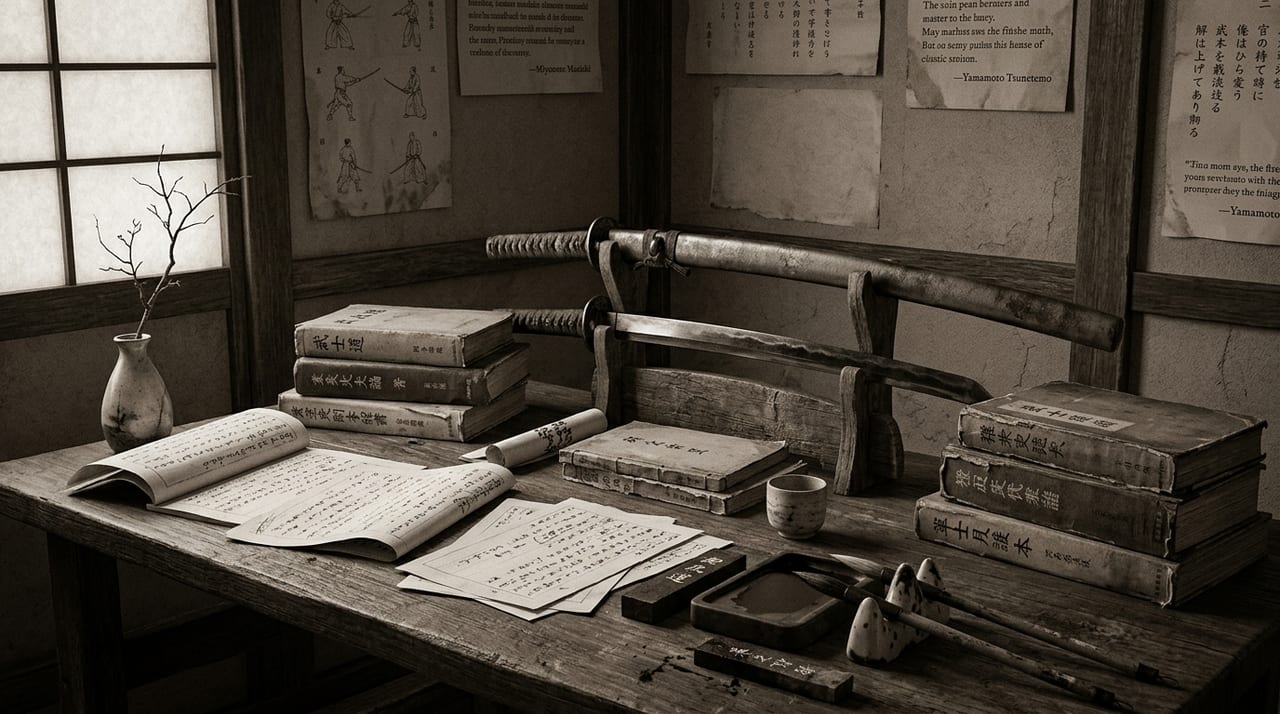
 ※圖片為示意圖。
大菩薩峠
大菩薩峠
以中里介山未完的大作小說(1913〜1941年連載)為原作,由岡本喜八導演、仲代達矢主演,於1966年改編成的電影傑作。以雖為劍術天才卻無良心的虛無劍客機龍之助為主人公,同時刻畫了劍技的極致與精神荒廢的罕見作品。「劍之道是死之道」這一主題,同時不斷地追問日本刀之美與人之業的深度。
解說
中里介山與未完的大河史詩
大菩薩峠的原作是中里介山從1913年到1941年在報紙上連載的日本最長的未完小說之一。全41卷、超過1萬頁的宏大故事因作者去世而以未完狀態結束,但作為劍豪小說的格調和哲學深度至今仍被高度評價。主人公・機龍之助是劍術天才無雙,但卻被描繪為既無生的欲望也無死的恐懼的「虛無的劍客」。他的劍不是為了殺死對手,而是彷彿揮劍本身就是其存在理由,體現了「劍的極致是虛無」這一逆論的哲學。中里介山從無政府主義思想立場出發,試圖相對化武力(劍)本身,大菩薩峠雖然具有劍豪小說的外殼,但其內部隱含著強烈的反暴力・反武士道信息,是一部問題作。未完成的故事形式本身產生了強化「劍之道無終點」這一主題的效果。
岡本喜八導演與仲代達矢的「狂氣之劍」
1966年的電影版由岡本喜八導演執導,仲代達矢飾演機龍之助。仲代詮釋的龍之助在劍術動作中具有完美的美感,但其眼中閃爍的是沒有任何人性情感的「死光」。電影的劍戟場景超越了傳統日本電影殺陣的形式,追求了人被斬殺死亡的現實性視覺呈現,是革新性的。作為稻垣浩・內田吐夢描繪的武藏像的對照「劍的光與影」,大菩薩峠的仲代龍之助形成了日本電影史中劍豪像的最暗部分。電影只將原作小說的一部分影像化,至今仍無法在影像中看到龍之助故事的全貌,但這反而突出了電影的片段化完成度。
幕末的劍術與天然理心流・神道無念流的世界
大菩薩峠的舞台是幕末,龍之助等劍客修習的是以當時實存的流派為模型的劍術。幕末各流派的對立・興衰激烈,道場破與真劍勝負日常進行。天然理心流(新選組的官方流派)、神道無念流(練兵館)、鏡新明智流(士學館)等代表當時的流派道場集中在東京(江戶),全國的劍術高手紛紛聚集。龍之助體得的「音無的構」被描繪為不拘泥於特定流派的獨特劍法,象徵了「超越型的劍」這一武道的終極境地。
劍的美與惡——日本刀所象徵的
大菩薩峠在日本刀文化中最重要的提問是「劍的美與惡能否分離」這一問題。龍之助的劍在外形上是美的、完美的,但其美根植於純粹的殺意和虛無。日本刀本來是以「美與機能的統一」為理想的工藝品,但決定刀價值的是使用者精神的質量這一逆論,大菩薩峠以極端形式提出。刀匠一把刀中傾注的美意識與技術,不能與使用者的精神分離來考慮這一命題,通過這部作品被銳利地質疑。對於從事日本刀收集・鑑賞的人來說,大菩薩峠成為了「刀是什麼」的深刻鏡鑑。「劍即心」這一武道格言被龍之助的反例最清晰地照亮——擁有完美之劍卻無心的人的最後,這部作品靜靜而無情地描繪。作為持有名刀的收集家審視自己「心的所在」的契機,大菩薩峠是最好的教材。
世界的評價與日本電影的劍豪像
大菩薩峠1966年版也受到歐美電影評論家的極高評價,被定位為「世界上最徹底的虛無劍士的影像化」為電影史上一席之地。昆汀・塔倫蒂諾和吉姆・賈姆施等海外著名導演表示了對本作的敬意,大菩薩峠作為日本劍豪電影的代表經典至今仍為世界所知。
世界的評價與日本電影的遺產
大菩薩峠1966年版也受到歐美電影評論家的極高評價,被定位為「世界上最徹底的虛無劍士的影像化」為電影史上一席之地。昆汀・塔倫蒂諾和吉姆・賈姆施等海外著名導演表示了敬意,大菩薩峠作為日本劍豪電影的代表經典至今仍為世界所知。
刀劍座與劍的哲學
大菩薩峠所提起的「劍的哲學」包含了在鑑賞・收集日本刀時無法迴避的問題。刀劍座在尊重刀為「人類創造的最高工藝品」的同時,也包含並介紹其背後的劍的文化・哲學。如同機龍之助這樣的虛無劍士以極端形式體現的那樣,日本刀也是持有者精神的鏡子。被大菩薩峠的世界吸引的各位,若能親手持握實際幕末的刀劍,通過刀所具有的靜謐的厚重感與美感來自己向「劍是什麼」這一提問面對,我們將感到幸運。
登場的真實刀劍
Sōshū-den Ōdachi (Nanboku-chō Period)
As a sword befitting the nihilistic swordsman depicted in Daibosatsu Toge, the magnificent ōdachi of the Sōshū tradition stands as one of the most symbolic choices. The ōdachi forged by master smiths of Sōshū such as Masamune, Sadamune, and Hiromitsu are characterized by hamon of overwhelming presence and dread, embodying an aesthetic of 'swords that overwhelm the beholder.' Many ōdachi from the Nanboku-chō period underwent reworking and remained in practical use in subsequent eras; thus, the scenario of late-Edo-period swordsmen wielding 'unnamed old blades for practical use' possesses historical authenticity.
Nagasone Kotetsu (Late-Edo Cutting Excellence)
The blades of Nagasone Kotetsu, a master smith of the early Edo period, were among the most difficult to obtain and valued by serious practitioners during the late Edo period. In the late-Edo setting of Daibosatsu Toge, Kotetsu blades transcended mere weapons to become symbols of 'the pinnacle of swordsmanship,' functioning as proof of the sword-rank of their bearers. Indeed, an anecdote of Kondō Isami boasting of his Kotetsu remains among Shinsengumi lore, demonstrating Kotetsu's status in late-Edo swordsman society. As a blade befitting an absolute swordsman such as Tsukue Ryūnosuke, Kotetsu represents one of the most fitting choices.
Katayama Munetsugu (Saijō Ōbizakubutsu Masterwork)
The blades of Katayama Munetsugu, a master smith representing late-Edo Edo, were ranked as 'saijō ōbizakubutsu' (最上大業物), the highest classification in Edo-period blade grading. The worldview of devastating cutting power—striking down an opponent in a single blow—as depicted in Daibosatsu Toge possesses a certain historical foundation in the actual cutting efficiency of masterworks such as Munetsugu's. In the world of late-Edo combat swordsmanship, obtaining a blade by Munetsugu was among a swordsman's supreme aspirations.
Suishinshi Masahide (Theoretical Pioneer of Shinshintō)
Suishinshi Masahide was a master smith and sword theorist of the late Edo period, pioneering the shinshintō (new-new-sword) movement that advocated for 'a return to ancient-blade techniques.' In the late-Edo swordsman society setting of Daibosatsu Toge, Suishinshi's theories profoundly influenced standards for blade production and evaluation, offering one answer to the question 'What makes a fine sword?' His blades are highly regarded for the balance between beautiful jigane and effective hamon; they represent an existence that evokes paradoxical resonance with the figure of Tsukue Ryūnosuke pursuing nihilistic perfection—'perfect yet lacking vitality.'
Bizen Ichimonji School (Kamakura Period Apex)
The Ichimonji school of Bizen in the Kamakura period, inheriting the legacy of the ōban-kajishi (imperial smiths) commissioned by Emperor Gotoba, represents the apex of sword-crafting tradition. Their blades, marked by magnificent chōji-midare hamon and superior jigane, rank among the finest in Japanese sword history. As a sword symbolizing the 'absolute blade' depicted in Daibosatsu Toge, the masterworks of the Ichimonji school hold the most appropriate historical position. The majority of surviving Ichimonji blades are designated as National Treasures or Important Cultural Properties, and their rarity and beauty amplify the mythic image of 'a perfect blade beyond reach.'
瀏覽真正的日本刀
瀏覽真正的日本刀本頁旨在介紹日本刀文化,與各作品的著作權持有者無關。