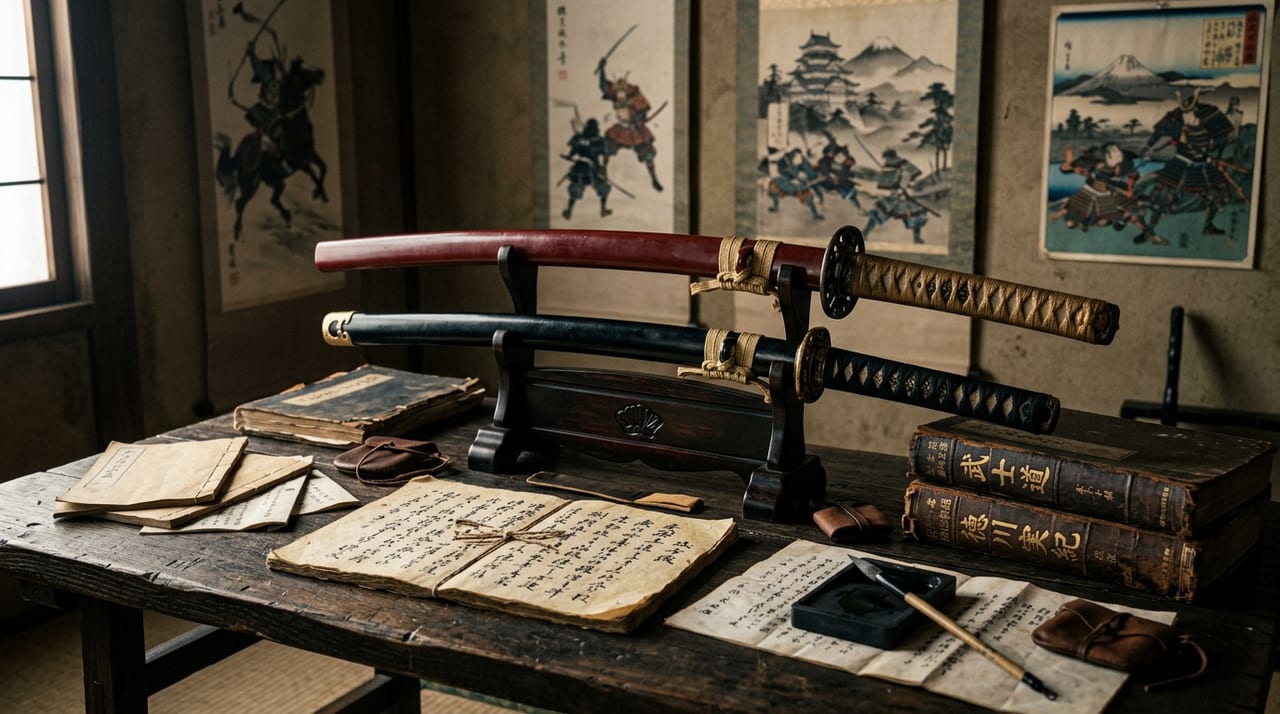
 ※圖片為示意圖。
SHOGUN 將軍(FX / Hulu)
SHOGUN 将軍(FX / Hulu)
詹姆斯·克拉維爾的小說《將軍》(1975年)改編的FX/Hulu歷史劇集(2024年、全10話)。該劇描繪在關原前夜漂著到日本的英國人航海士安東尼·布萊克桑(威廉·亞當斯為原型)與戰國大名吉井虎永(德川家康為原型)的政治與人文關係。於第76屆艾美獎中獲得戲劇部門作品獎、主演男優獎、主演女優獎等共計18個部門的獎項,創下非英語圈作品史上最多受獎的紀錄。該劇因日本刀與武士文化描寫的高質感在全球獲得高度評價。
解說
2024年の現象
2024年的FX/Hulu版《SHOGUN 将軍》是在電視劇史上開創新頁的歷史性作品。在第76屆艾美獎中,作為非英語圈作品創造歷史性地獲得最多的18個獎項,並獨占了作品獎、主演男優獎(真田廣之)、主演女優獎(Anna Sawai)等主要獎項。這次獲獎是一個劃時代的事件,實證了日本文化和歷史的本格描寫能夠被全球觀眾接受,大幅推進了日本時代劇文化的國際認知。
日本刀與武士文化的描寫
本作在日本刀和武士文化的描寫方面,作為好萊塢制作的日本歷史劇達成了過往最高水準的考證水平。兼任主演和制片人的真田廣之作為日本時代劇演員強力主導了時代考證的徹底性,從刀的佩戴方式、禮儀、武家的舉止到語言的運用,堅持細節的準確性。刀不僅僅是道具,而是作為表現登場人物身分、心理、關係性的文化符號而發揮作用,每個場景的佩刀方式(大小刀的組合、打造的格式)雄辯地訴說人物的處境。
威廉·亞當斯與「外樣的劍士」
實在人物威廉·亞當斯(三浦按針)是1600年漂流到日本的英國航海士,獲得了德川家康的信任,成為日本首位西方武士。按針從家康那裡被賦予相當於大名格(旗本)的地位,獲得了佩刀的許可,按針的真實經歷是日本刀不僅僅是武器,而是社會地位和身份認同表象的鮮明例證。劇中布萊克索恩接受刀並逐漸學會武士的舉止的過程,作為從外國人視角逼近日本刀文化核心的設定而發揮作用。
關原前夜的時代背景
故事背景的慶長4~5年(1599~1600年)是豐臣政權分裂、關原之戰的助跑期間,在日本刀的歷史中也處於轉折點。這個時代的刀劍是慶長新刀的鼎盛時期,堀川國廣、埋忠明壽、越前康繼等形成其後江戶刀劍文化的刀工們活躍於此時。電視劇的服裝、道具中使用的刀劍是基於這個時代的準確樣式,從刀劍愛好家的角度也獲得了高度評價。
文化的影響
《SHOGUN 将軍》放映後,歐美對日本刀和日本文化的關心顯著提高。日本各地博物館的外國遊客增加、日本刀相關書籍銷售增加、刀劍體驗旅遊需求增加等,電視劇對觀光和文化產業產生的波及效應很大。刀劍座在本作放映後來自歐美的諮詢也增加了,受到了世界範圍日本刀熱潮的東風。
登場的真實刀劍
Keicho shin-to (New Swords)—Horikawa Kunihiro and Tsuchime Akehisa
The drama is set during the Keicho years (1596-1615), the golden age of Keicho shin-to. Based in Horikawa, Kyoto, Horikawa Kunihiro trained numerous apprentices and laid the foundation for later Edo-period sword culture. Kunihiro's works are characterized by their gunome and ō-gunome temper lines and flowing itame grain pattern, with their majestic appearance embodying the era's transition from Sengoku chaos to peaceful times. Tsuchime Akehisa was a master craftsman of the same period, also renowned for the precision of his carvings. Works by both are held in institutions like the Tokyo National Museum and Osaka Museum of Art, where one can confirm the historical period depicted in *Shogun* through actual examples.
William Adams (Miura Anjin) and the Meaning of Wearing a Sword
Miura Anjin (William Adams) was the first Western samurai, granted a rank equivalent to hatamoto by Tokugawa Ieyasu and permitted to wear swords and ride horses. In the Edo period, wearing a sword was not merely a martial practice but a legal and cultural declaration of belonging to the samurai class. Anjin's birthplace (the site of Miura Anjin's residence in Yokosuka, Kanagawa Prefecture) and Sagami Province (Kanagawa Prefecture) contain historical sites related to Anjin and have high value as historical tourism destinations. While the swords Anjin is said to have used have not survived, blades from the Keicho to Genna era in which he lived can be seen in museums throughout Japan.
Dai-shō—The Culture of Two Swords Worn Together
What is particularly striking about *Shogun's* visual representation is the careful depiction of how dai and shō (the pairing of a long sword and short sword) are worn and the social meaning this conveys. The dai-shō, two swords worn as the mark of a samurai, became the exclusive province of the samurai class in the Edo period and was forbidden to other social ranks as a result of the Sword Hunt policy. An important aspect of Japanese sword culture—how the quality of the koshirae (mounts), the material of the tsuba (handguard), and the design of the habaki ornament all signal a samurai's family rank and individuality—is presented here in visually clear terms, making this work an ideal introduction for foreign viewers seeking to understand Japanese sword culture.
Swords Associated with Tokugawa Ieyasu
Swords associated with Tokugawa Ieyasu, which served as models for the type of blades owned by Yoshii Toraei (modeled on Tokugawa Ieyasu), are held in large numbers in institutions such as the Nikko Tōshō-gū Treasure House, the Tokugawa Art Museum, and the Nagoya City Museum. Ieyasu's aesthetic sensibility reflected the practical values of a Mikawa samurai while gradually shifting toward a perspective that valued the formal dignity of a ruler of all Japan. The sword policies of the Edo shogunate that Ieyasu developed—the formalization of the Sword Hunt, the protection of sword smiths, and the regulation of sword-wearing—were among the most significant policy factors in shaping Japanese sword culture in the early modern period.
瀏覽真正的日本刀
瀏覽真正的日本刀本頁旨在介紹日本刀文化,與各作品的著作權持有者無關。