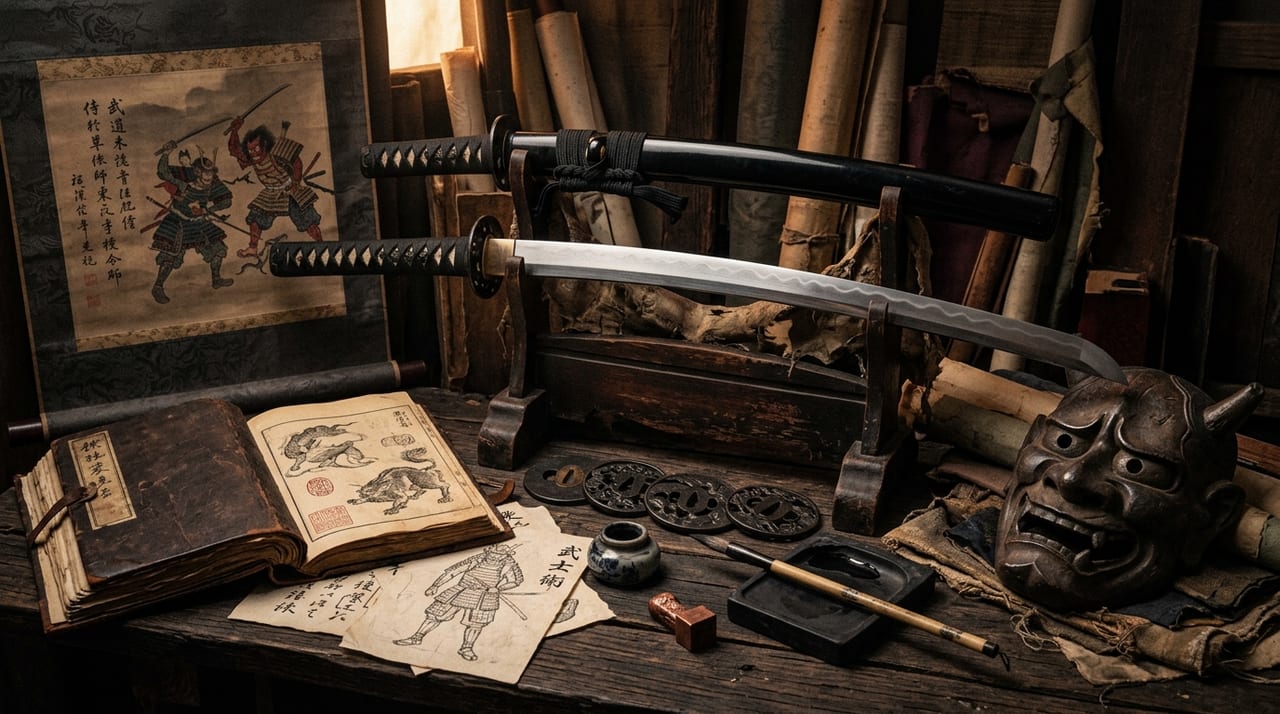
 ※圖片為示意圖。
鬼武者(卡普空)
鬼武者(カプコン)
Capcom於2001年發售的動作冒險遊戲(PlayStation 2)。以戰國時代為舞台,擁有鬼族力量的武將·明智左馬介作為鬼武者與妖怪·鬼·惡靈對戰。系列累計銷售本數約800萬本。明智左馬介的原型是實在的武將·明智左馬助光春,擁有鬼的手臂「鬼手」。作為和風黑暗奇幻類遊戲的先驅,將日本刀·甲冑·戰國文化推廣到全世界遊戲玩家的開創之作。
解說
作品と歴史的背景
鬼武者是2001年由卡普空為PlayStation 2平台發行的動作冒險遊戲,作為和風黑暗奇幻類型的先驅作品獲得了高度評價。系列累計銷售本數達到約800萬本,日本遊戲在向世界市場推廣戰國時代、日本刀、甲冑等日本武家文化方面發揮了重要作用。主人公明智左馬介(さまのすけ)以實在的武將明智左馬助光春為參考,故事舞台安土城和織田信長也是基於實際的歷史。但是,以鬼族、幻魔等虛構存在為中心的黑暗奇幻設定是偏離史實很大的創意解釋。
日本刀と戰國武具の表現
鬼武者系列中日本刀、甲冑、武具的表現是基於當時遊戲中較高水準的考證。明智左馬介使用的「必殺之刀」登場了太刀、打刀、大太刀等多種類型,各自的形狀和用途的差異體現在遊戲的戰鬥系統中。甲冑設計以桃山時代的當世具足(とうせいぐそく)為參考,是模擬實際戰國武將穿著的鐵製防具的造型。通過這樣精確的武具表現,為玩家提供了對實際戰國時代武器和防具產生興趣的機會。
鬼手と日本の妖怪文化
鬼武者的象徵性要素「鬼手(きしゅ)」是寄宿了鬼族力量的左臂義手,利用吸魂石吸收擊敗的妖怪、鬼的力量,發揮各種特殊能力。這個設定創造了日本鬼、妖怪文化與武士道融合的獨特世界觀。「鬼」在日本神話、民話中是恐怖和力量的象徵,武將吸取鬼的力量(變身為鬼神(きしん))這一概念與實際戰國武將的頭盔使用鬼的紋樣這一事實文化上產生共鳴。加藤清正和福島正則的頭盔上可以看到的鬼面、鍬形、立物等,實際的戰國甲冑的紋樣也是鬼武者世界觀的背景。
シリーズ展開と國際的影響
鬼武者系列推出了第1至3作及「鬼武者 Soul」等衍生作品,基於第1作的世界觀在Netflix上改編為動畫(2023年播放,宮本武蔵主演的新作),獲得了國際重新評價。通過系列向世界發信日本戰國時代、妖怪、武士文化的角色,可以說是後續的「仁王」系列(Tecmo Koei)、「Ghost of Tsushima」(Sucker Punch Productions)等以日本刀、侍為題材的遊戲系譜的原點。鬼武者在世界遊戲迷中植入的「持日本刀的武將之戰」這一意象,對日本刀的國際認知與關心的擴大做出了巨大貢獻。
登場的真實刀劍
Uchigatana and Tachi — The Principal Swords of the Sengoku Era
The Azuchi-Momoyama period (circa 1568–1600), which serves as the stage for Onimusha, was an era in which the transition from tachi to uchigatana was nearly complete. Tachi were swords hung from the waist with the blade facing downward, suited to mounted warfare of the Heian through Muromachi periods, while uchigatana were the early modern sword style worn with the blade facing upward. During the age of Nobunaga, Hideyoshi, and Tokugawa Ieyasu, the uchigatana dominated, and the sword style wielded by Akechi Samanosuke aligns with the historical accuracy of the era. Many masterworks of the "Keichō-shintō" period remain from this time, and works by master smiths such as Horikawa Kunihiro, Echizen Yasushige, and Shizu Saburō Kanetoshi are housed in museums throughout Japan.
Oda Nobunaga and His Sword Collection
Oda Nobunaga, an important character in the game, was historically renowned as an avid sword collector. Among the swords Nobunaga possessed and bestowed were numerous celebrated blades including "Heshikiri Hasebe" (currently housed in the Fukuoka City Museum) and "Fudō Yukimitsu." Through the collection and bestowal of swords, he demonstrated the authority of a conquerer of the realm. The sword "Ichigo Hitofuri" (forged by Awataguchi Yoshimitsu, currently an Imperial Regalia under the administration of the Imperial Household Agency), known as a favorite sword of Toyotomi Hideyoshi, is also one of the celebrated swords associated with a conquerer. Nobunaga's view of swords combined practicality and ceremonial dignity, which aligns with the depiction of the Oda regime in the world of Onimusha. Swords associated with Nobunaga can be viewed in museums throughout the nation, serving as reference points for understanding the historical background of Onimusha.
Momoyama-Period Tōsei Gusoku (Contemporary Armor)
The tōsei gusoku, which forms the basis for the armor design in Onimusha, is a uniquely Japanese iron-made armor system developed during the Sengoku through Momoyama periods. Unlike traditional armor assembled from kozane (small iron scales) laced with cord, tōsei gusoku employed plate armor construction, an innovative defense structure that developed in response to the proliferation of firearms. Numerous tōsei gusoku associated with Sengoku warlords are housed in major institutions such as the Tokugawa Art Museum in Nagoya, Osaka Castle Keep in Osaka, and the Tokyo National Museum, where the visual sources of Onimusha's design can be confirmed in their original forms. Examples such as the grandly decorated armor traditionally attributed to Katō Kiyomasa and featuring the legendary tiger-slaying episode demonstrate how the individuality and martial identity of actual warlords were crystallized in their armor.
Oni Iconography in Actual Sengoku Helmets
The core concept of Onimusha—"warlords possessed by the power of oni"—resonates deeply with the oni-face iconography found in actual Sengoku helmets. The helmets of Sengoku warlords often featured terrifying motifs such as oni faces (oni-men), large ornamental crests (ōtatemono), and flame ornaments (kaen-tatemono) designed to intimidate enemies. These were not merely decorative; they served as psychological tactics to demoralize the enemy and inspire allies. Examples such as the deer-antler crest (shikatsuno-maedachi) of Honda Tadakatsu, the crescent-moon crest (mikazuki-maedachi) and black single-eye helmet (kurogane hitomi-kabuto) of Date Masamune, demonstrate how warlords expressed their identity and terror through their helmets. Original examples of these helmets are preserved in museums and among the former possessions of daimyo throughout the nation.
瀏覽真正的日本刀
瀏覽真正的日本刀本頁旨在介紹日本刀文化,與各作品的著作權持有者無關。