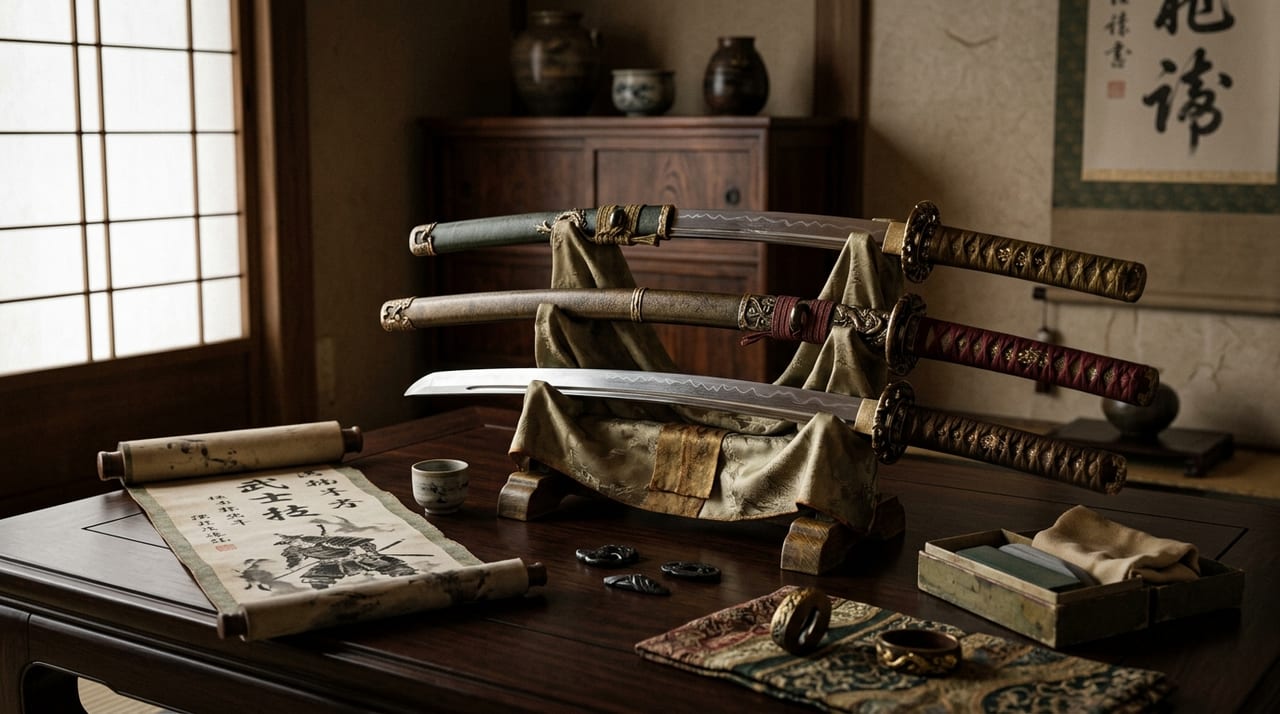
※圖片為示意圖。一件
ワンピース
由尾田榮一郎創作的全球累計發行冊數五億部以上的大海賊漫畫。以羅羅諾亞·索隆的三刀流為中心,出現了和道一文字·閻魔·秋水·鬼徹等個性豐富的名刀。刀的等級分類(最上大業物·大業物·良業物·業物)基於實際存在的日本刀評級系統。在瓦諾國篇中,日本刀的鍛造文化被詳細地描繪,向全世界的粉絲傳達了日本刀的深奧之處。
解說
世界的影響力
尾田榮一郎創作的漫畫《ONE PIECE》以超過五億冊的發行量成為歷史鉅著,並透過羅羅亞·索隆這一角色在全世界範圍內傳播了日本刀文化。索隆的三刀流劍術風格雖是完全的創作,但其根底流淌著日本二刀流的傳統和日本刀文化的精髓——將刀冠以名號,視每一把刀為獨一無二的存在。
業物位列的設定
作品中刀的等級分類系統以實存的「業物位列」為基礎。江戶時代,山田淺右衛門家透過對罪人遺體進行的試斬(據え物斬り)來實證檢驗刀的切味,並按照最上大業物·大業物·良業物·業物四個等級進行分類。此位列被記載在《懷寶劍尺》等刀劍書中,至今仍是日本刀評價的重要參考資料。《ONE PIECE》巧妙地將此實存的分級系統轉用至故事世界,使刀本身成為具有身份和敘事性的存在。
刀的命名
索隆愛刀的命名亦可窺見其對日本刀文化的深刻造詣。和道一文字的名號令人聯想起鎌倉時代的備前一文字派,一文字派以福岡一文字·吉岡一文字著稱,以華麗的丁子亂刃刃紋在日本刀史上綻放不朽光彩,是一支傑出的刀工集團。特別是稱為重花丁子的豪華絢爛刃紋乃一文字派的真髓,許多被指定為國寶·重要文化財的名品。閻魔源自佛教冥界的審判官閻魔大王,反映了日本傳統中為刀賦予宗教·靈性名號的做法。實際的日本刀中,如「鬼丸」「童子切」「鬼切」「蜘蛛切」等帶有超自然存在相關號名的名刀不勝枚舉。秋水之名意為「秋之水」,即澄清如清流般的刀刃之美,乃象徵日本刀美意識的詩意命名。鬼徹為「徹底鬼道」之意,深刻反映了以村正為代表的妖刀傳說。
和之國篇的描寫
和之國篇詳細描繪了刀鍛冶的文化與封閉的武家社會,向海外讀者以通俗易懂的方式改編了日本的歷史與刀劍文化。刀劍座中,備有以一文字派為首的備前傳真古刀,乃至各時代各流派的名品,應有盡有。
登場的真實刀劍
Bizen Ichimonji School
A swordsmith collective representing Bizen Province (present-day Okayama) during the Kamakura period, and one of the schools that produced the most brilliant hamon (blade patterns) in Japanese sword history. Noritsune is said to be the founder, and the school flourished through multiple lineages including the Fukuoka Ichimonji, Yoshioka Ichimonji, and Katayama Ichimonji. The most distinctive characteristic is the ornate togii (heavy clove-pattern), a lavish clove-random hamon featuring abundant ashii (secondary ridges) and ha-yo (leaves) within the blade, displaying an elegant style without loss of dignity. The National Treasure "Yamatorige" is renowned as one of the Ichimonji School's masterpieces; Setouchi City purchased and preserves it as a regional treasure. The influence of the Ichimonji School extended widely to later Bizen swordsmiths, establishing the concept of "elegance" in Japanese swordcraft.
Wazamono Iretsu (Wazamono Ranking)
A grading system based on cutting ability established during the Edo period. The Yamada Asaemon family, serving as official sword-testers (tameshigiri practitioners), conducted seated-body cutting tests on executed prisoners' remains to empirically verify each swordsmith's cutting ability, and ranked them in four tiers: Saijo-Oowazamono (highest), Oowazamono, Ryo-wazamono, and Wazamono. This ranking was recorded in sword texts such as Kaihō Kensakku and Kokon Kajironsō, and remains an important reference material in blade evaluation today. Among the Saijo-Oowazamono were Osafune Kanemistu, Nagasone Kotetsu, and Tatara Nagayoshi, whose blades continue to receive the highest valuations in the contemporary sword market.
Bizen Tradition (Bizen-den)
One of the Five Great Schools (Gokaiden), and the tradition of the largest sword production center in Japanese sword history, centered on Bizen Province (present-day Okayama). Blessed with high-quality iron sand and water, Bizen produced an immense number of celebrated blades over a thousand years from the Heian period through the Edo period. Its forte lay in nio-dekii (scent emergence), characterized by hamon of rich variation such as togii-midare (clove-random) and gumo-no-me midare (comb-eye random). Diverse schools flourished including Ko-Bizen, Ichimonji, Osafune, Hatada, and Yoshii, overwhelming all other traditions in both quality and quantity. "Bizen-mono" (Bizen blades) are fundamental to Japanese sword appreciation, and many sword enthusiasts' first blade is from the Bizen school.
Cursed Blade Legends
Legends of blades reputed to bring calamity to their owners represent one aspect of sword culture broadly distributed throughout Japan. The most famous "cursed blade" legend of Muramasa derives from its connection with the Tokugawa family, but similar tales appear with many celebrated blades such as Onimaru Kunitsuna, Nikkari Aoe, and Murasame-maru. These legends reflect the Japanese spiritual worldview that attributed supernatural power to blades, demonstrating that swords were revered not merely as tools but as spiritual entities worthy of awe. The One Piece concept of Oni Tetsu (鬼徹) selecting its owner perfectly encapsulates the essence of this cursed blade legend within its narrative.
瀏覽真正的日本刀
瀏覽真正的日本刀本頁旨在介紹日本刀文化,與各作品的著作權持有者無關。