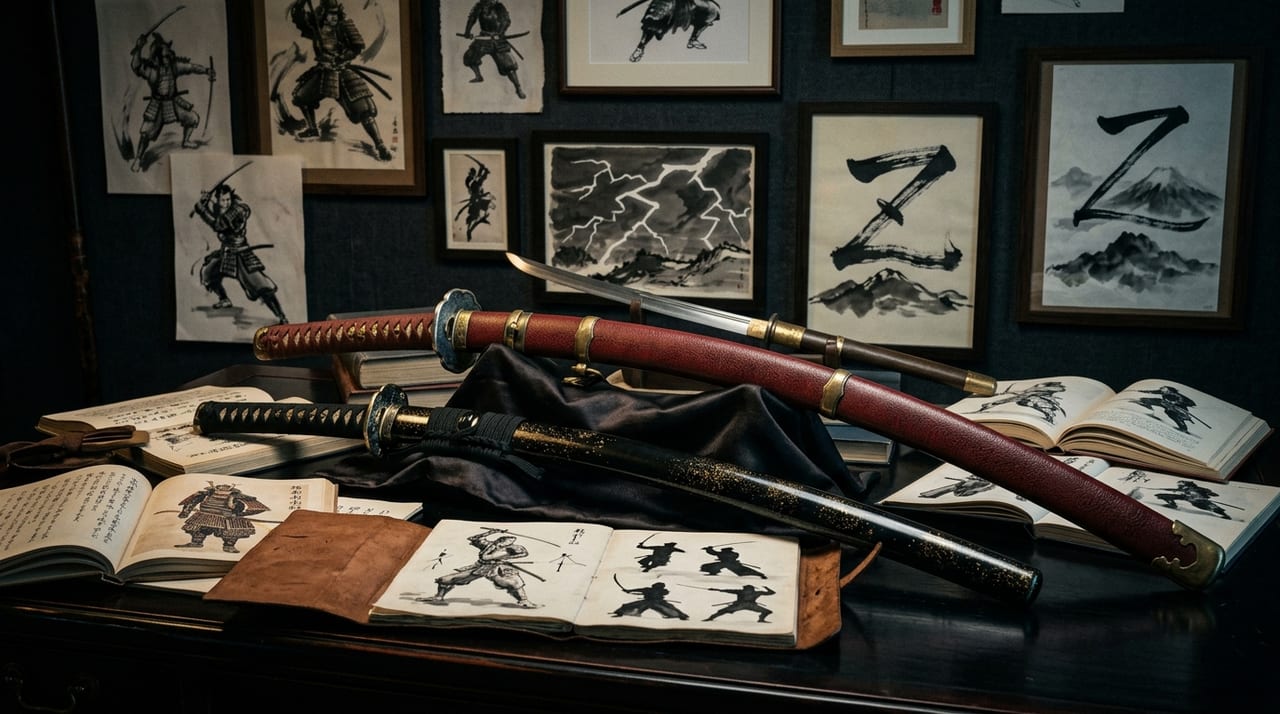
 ※圖片為示意圖。
NARUTO -鳴門-
NARUTO -ナルト-
岸本齊史創作的忍者漫畫頂峰之作。大蛇丸的草薙劍源自三種神器之一——天叢雲劍,霧隱的七人忍刀衆的大刀群在忍者世界中重新詮釋了日本刀多樣的形態。佐助的「千鳥」與卡卡西的「雷切」源自實際存在的名刀——立花道雪的愛刀。通過忍者這個濾鏡向世界傳播日本神話與武器文化的功績極其重大。
解說
日本的神話與刀劍
由岸本齋史創作的《火影忍者》(NARUTO)是一部將忍者這一日本特有的文化圖標傳向世界的作品,而在其故事的深層中,日本的神話和刀劍文化脈脈相承。作中最具象徵性的刀劍是大蛇丸操控的草薙劍,這直接源於日本神話中三種神器之一・天叢雲劍(あまのむらくものつるぎ)。天叢雲劍是據說在素戔鳴尊討伐八岐大蛇時從其尾部出現的神話之劍,後來日本武尊(ヤマトタケルノミコト)在東征時用此劍薙平草叢以逃脫火攻,因而得到「草薙劍」的別名。現在作為御神體祀奉於名古屋的熱田神宮,在天皇即位禮中也起著皇位繼承證明的重要作用。
七人的忍刀衆
霧隱村的七人忍刀衆使用的七把大刀,是在忍者世界中對日本武器文化多樣性的秀逸詮釋設定。斷刀・首斬包丁的巨大刀身令人聯想南北朝時代流行的大太刀,鮫肌般的鱗狀刃聯想實際採用鮫皮的刀裝具文化,大刀・鐵聯想鈍器金碎棒。實際的日本武器不止於太刀・打刀,還包括薙刀・槍・長巻・金碎棒・鐵扇・十手等極為多彩的種類,《火影忍者》巧妙地將這種多樣性融入了忍者的世界觀。
立花道雪的聯動
宇智波佐助的「千鳥」和旗木卡卡西的「雷切」這些招式名字源自戰國時代武將立花道雪(戶次鑑連)的愛刀。道雪是豐後大名大友宗麟的重臣,某日在大樹下被雷擊中時,用隨身帶著的刀斬斷了雷,由此壯烈的傳說,那把刀得到了「雷切」的號名。原刀名是「千鳥」,《火影忍者》直接採用了這把實在名刀的兩個名字作為招式名稱。道雪因這次落雷導致下半身障礙,但仍乘輿馳騁戰場,留下了生涯三十七戰不敗的傳說,是一位猛將。
大太刀與薙刀
南北朝時代流行的大太刀是刃長達三尺(約90厘米)以上的豪壯太刀,在戰場上利用其威嚇效果和長大的攻擊距離進行戰鬥。薙刀是在長柄先端裝有彎曲刀刃的長柄武器,從平安末期到鎌倉時代是武士的主力武器之一。源義經是薙刀高手的傳承頗為有名,到了後來的時代,薙刀也被武家女性廣泛修練作為自衛武藝。在刀劍座,我們提供了那些成為神話和傳說源泉的實際日本刀,不分時代和流派。
登場的真實刀劍
Ama no Murakumo no Tsurugi (Kusanagi)
One of three imperial regalia symbolizing the imperial throne of Japan, and a sacred sword at the spiritual heart of Japanese sword culture. According to the Kojiki and Nihon Shoki, it emerged from the tail of the eight-headed great serpent Yamata no Orochi when Susanoo no Mikoto defeated it in Izumo. Later, when Yamato Takeru found himself under enemy fire attack in Suruga, he wielded this sword to sweep away grass and escape—thus earning the additional name "Kusanagi" (Grass-Cutting Sword). Today it is enshrined as the sacred treasure at Atsuta Shrine in Nagoya and remains hidden from public view. The three regalia are proof of imperial succession, and the Ama no Murakumo no Tsurugi represents martial prowess, standing alongside the Yata no Kagami (symbol of wisdom) and Yasakani no Magatama (symbol of benevolence). The Japanese understanding that the sword is not merely a weapon but a sacred entity fundamental to the state traces its roots to this myth.
Raikiri (Lightning-Cutting Sword)
The beloved blade of Tachibana Dōsetsu, a fierce warlord of the Sengoku period (also known as Bekki Kagetsura). Originally named "Chidori" (Thousand Birds), it earned the name "Raikiri" when Dōsetsu, resting beneath a large tree, was struck by lightning and instinctively swung this sword to cut the bolt. Despite suffering lower-body disability from that lightning strike, Dōsetsu continued to command the front lines from a palanquin and achieved the remarkable record of 37 consecutive victories without defeat. A devoted retainer of Ōtomo Sorin of Bungo, he was feared as the "Avatar of the Thunder God." This legend exemplifies Japanese belief in the supernatural power of the sword, and it became globally renowned through NARUTO's adoption of the concept for Hatake Kakashi's advanced technique, with Sasuke's related technique also called "Chidori."
Ōdachi (Great Sword)
A large tachi with a blade exceeding three shaku (approximately 90 cm), most prevalent during the Namboku-chō period (1336–1392). This was an age of turmoil when the imperial house split into Northern and Southern courts, and nationwide warfare continued. To meet battlefield demands for intimidation and extended reach, tachi proportions grew progressively larger. The "Hashaya no Otachi" enshrined at Kumano Shrine, with a blade of approximately 2.2 meters, is known as the largest existing Japanese ōdachi. In actual combat, mounted warriors wielded these from horseback to break enemy formations, and the great sword also served a symbolic role in rallying troops at the front lines. The majestic form of the ōdachi embodies the spirit of the Namboku-chō period, and swords from this age are unmatched in their combination of power and dynamic beauty.
Naginata
A Japanese-unique polearm with a long shaft (typically 120–150 cm) fitted with a curved blade (30–60 cm). It flourished as a primary weapon of the samurai from the late Heian period through the Kamakura period, and is remembered as one of the Seven Tools of Benkei during the Genpei War era. The tactic of using overwhelming reach to sweep the feet of mounted warriors was highly effective, and the very action of "nagu" (sweeping) is the source of its name. After the Sengoku period, it yielded its place as a primary weapon to the spear, but it became widely practiced among samurai women as a martial art for self-defense. In the late Edo period, the female warrior Nakano Takeko is remembered for wielding the naginata in battle. Today it continues to be transmitted as a competitive martial art under the auspices of the All Japan Naginata Federation.
瀏覽真正的日本刀
瀏覽真正的日本刀本頁旨在介紹日本刀文化,與各作品的著作權持有者無關。