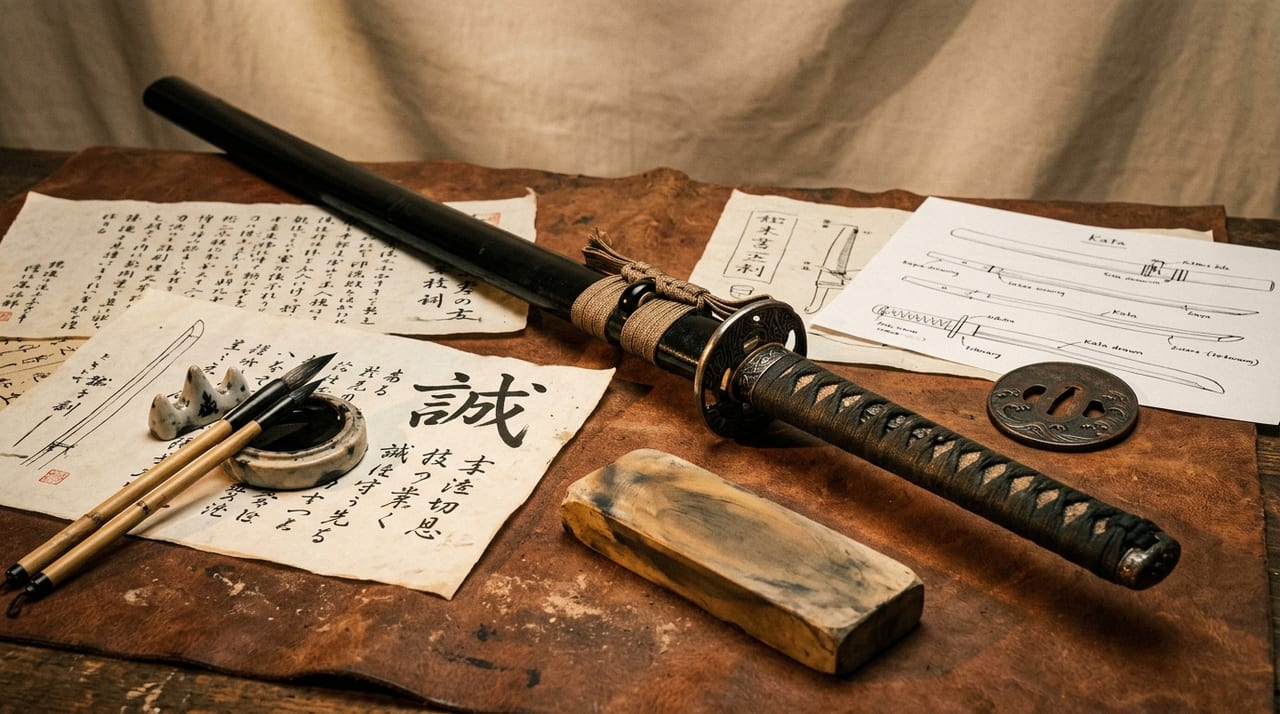
 ※圖片為示意圖。
劍客商賣
剣客商売
由池波正太郎自1972年起連載的時代小說的金字塔。以江戶劍客秋山小兵衛與其子大治郎為主人公,講述已屆老境的劍術大家灑脫地以劍謀生,同時揭示人情機微的故事。本作以「劍、食、人情」為三大支柱,在日本時代小說中尤其因劍術與日本刀描寫的精緻而為人所知。
解說
池波正太郎和劍客商人的誕生
劍客商人作為與《鬼平犯科帳》《仕掛人·藤枝梅安》並列的池波正太郎代表三部作之一,從1972年至1990年在雜誌《小說新潮》上連載。主人公秋山小兵衛既是江戶的劍客,又處於隱居之身,然其劍術水平一流。兒子大治郎為人認真,專注於劍術,是年輕的劍士,這種對照鮮明的父子組合為故事賦予了豐富的人性深度。池波本身具有劍道經驗,其知識和感覺支撐了劍技描寫的真實性。他對江戶的食文化·風俗也有深入的造詣,《劍客商人》以「劍·食·人情」為三大支柱構建了獨特的世界觀。
劍術流派與無外流的世界
在《劍客商人》中,父親小兵衛和兒子大治郎修習的是「無外流」的劍術。無外流是以辻月丹為開祖的江戶初期名流,成為了後世許多流派的源流。作品以此流派為背景,用緊張感描繪了使用真劍的「辻斬」和「仕合(比賽)」場景。特別值得注意的是,以劍術為業的劍客們的經濟現實被細致地描繪了出來。道場經營的辛勞、招收門徒的競爭、以劍謀生的困難等主題與劍的美學並行,支撐著故事的發展。這也體現在「劍客商人」的題名中——劍術既是浪漫也是生意,這種冷酷的認識流淌在作品的底層。
江戶的刀劍文化與町人社會
以江戶時代中後期為舞台的《劍客商人》,生動描繪了不僅有武士,還有町人、劍客、博徒混雜的江戶市井風俗。在這一時代的江戶,武士階級雖然以配刀為義務,但實戰經驗日益缺乏,而以劍術本領謀生的「劍客」這樣的特殊職業人卻應運而生。他們不侍奉藩主,而是以劍術本領從事道場經營、保鏢、比賽等營生。作品中登場的刀不需要是名刀,但必須是能經受實戰考驗、值得信賴的一把。池波筆下的刀作為「反映持有者生活方式的工具」而發揮作用,刀超越了簡單的道具,成為映照人物內心的鏡子。
電視劇的歷史與對文化的貢獻
《劍客商人》從1973年富士電視版(主演·加藤剛)開始,到1998年富士電視版(主演·藤田真琴)止,被多次改編成影像。尤其是藤田真琴主演的版本實現了系列化,長期持續放映,創造了高收視率。藤田真琴飾演的秋山小兵衛,既飄逸又凶悍的劍客風采,在許多觀眾心中深深烙下了「理想的劍客形象」。劇中的殺陣指導由一流的殺陣師參與,反映了基於江戶時期實際劍術的動作研究。《劍客商人》因此對日本大眾文化中「正統的江戶劍術形象」的形成做出了重大貢獻。
無外流與江戶的劍術文化史
構成《劍客商人》背景的江戶劍術文化,處於在德川幕府的和平中,從「實戰」向「修道·精神修養」轉變重心的過程。以無外流為首的各流派,在江戶時期完成了將技術精致和精神修練統一起來的體系。這一時代確立的劍術理念——「劍是心的問題」這一思想——在現代劍道中得以繼承。池波正太郎通過重疊劍術的精神側面與以劍為生的世俗現實,鮮明地描繪出了日本文化中劍的二重性。
對日本刀收藏家的啟示與刀劍座
《劍客商人》中登場的刀不需要是特定的名刀,但隱含著必須具有「實用的刀」的品質這一前提。在江戶中後期被稱為「新刀」「新々刀」的刀工群中,存在著許多能經受這樣實用、高度可信的刀。刀劍座備有與《劍客商人》描繪的江戶劍客世界相配的江戶時期打刀·脇差的豐富庫存。對於尋求「不一定是名刀,只要值得信賴的一把」的人,我們推薦肥前刀·美濃刀·和泉守兼定系的穩定實用刀。如果您能手持真刀,去追體驗池波正太郎在文章中生動描繪的劍與人情的世界,我們將感到榮幸。
小兵衛的劍與「老邁的大師」這一理想形象
《劍客商人》在日本時代小說中突出的原因之一是,主人公小兵衛不是「年輕的英雄」而是「老邁的大師」。雖然已過六十,但劍的鋒利並未衰退,反而因加入了人生經驗和洞察力而成為更加令人敬畏的劍士。這種「老年劍客」的形象體現了日本武道哲學長期傳承的「劍的道路是一生修行」的理念。在使用真劍進行劍術修行中,技藝和精神隨年齡而成熟的概念,在現代劍道·居合道的世界中也被尊為共同的價值觀。小兵衛的生活方式向讀者提出了持日本刀、走劍的道路的本質意義——不是力量而是精神的深化——的問題。刀劍座所重視的與日本刀的面對方式,與這種精神也深深共鳴。
登場的真實刀劍
Mugai-ryū Uchigatana (Early to Mid-Edo Period)
The father and son swordmasters featured in "Kenkaku Shōbai," Akiyama Shobei and Jiro, practice the Mugai-ryū (無外流), a school founded by Tsujigetttan. Mugai-ryū is a martial arts style that emerged in the early Edo period, with a system balancing technical refinement and spiritual cultivation. The uchigatana favored by its practitioners were typically practical and easy to handle, ranging from 2.2 to 2.4 shaku in length, with Hizen and Mino blades being common—swords chosen for reliability over ornamentation in their hamon patterns. The "plain yet functional blade" wielded by Shobei exemplifies these practical Edo-period uchigatana.
Izumi-no-kami Kanetada (Tenshō to Early Edo Period)
Izumi-no-kami Kanetada (also written Shitesada), a master craftsman of Mino, was immortalized during the Sengoku period as the beloved blade of warriors like Hijikata Toshizo. His lineage continued throughout the Edo period. Mino-tradition blades that prioritized sharpness and practicality were an ideal choice for the combat-focused swordsmen depicted in "Kenkaku Shōbai," representing one of the most fitting traditions for the work's sword aesthetic. Even today, many sword enthusiasts appreciate Mino-tradition blades as "functional swords," and Tōkenjō regularly handles Edo-period Mino-school swords.
Hizen Tadahiro (Early to Mid-Edo Period)
Tadahiro, the second-generation Hizen blade maker (Hashimoto Tadahiro), son of the founder Tadayoshi, produced numerous practical blades of consistent quality. His swords are characterized by the transparency of their jigane and calm, flowing hamon patterns, making them the quintessential example of the "blade of trust" that spread widely throughout samurai society. Among the swords worn by the swordsmen in "Kenkaku Shōbai," Hizen blades represent one of the choices with the greatest historical authenticity. Tōkenjō handles multiple fine examples.
Yamato-no-kami Yasushige (Early to Mid-Edo Period)
Yamato-no-kami Yasushige, a sword maker of Musashi (Edo), was known as an official smith for the Edo shogunate. His work spread widely throughout Edo samurai society. In the streets of Edo, which serve as the setting for "Kenkaku Shōbai," Yasushige's swords represent one of the most likely candidates for blades actually worn by swordsmen. Many of his uchigatana offer stable quality and ease of handling, making him a fitting smith for "Kenkaku Shōbai's" theme of the sword as a "tool of trade."
Katayama Munetsugu (Bakumatsu Shinshintō)
Katayama Munetsugu was one of the representative sword makers of late Edo (Bakumatsu), and his blades earned the highest rating among Shinshintō smiths under the "Gyōmono" (registered masterwork) classification. With beautiful jigane and functional hamon combining practical and aesthetic excellence, Munetsugu stands at the forefront of late-Edo swordsmen's aspirations in "Kenkaku Shōbai" when dreaming "if one could own a good blade." Tōkenjō occasionally acquires his works, highly prized by collectors.
瀏覽真正的日本刀
瀏覽真正的日本刀本頁旨在介紹日本刀文化,與各作品的著作權持有者無關。