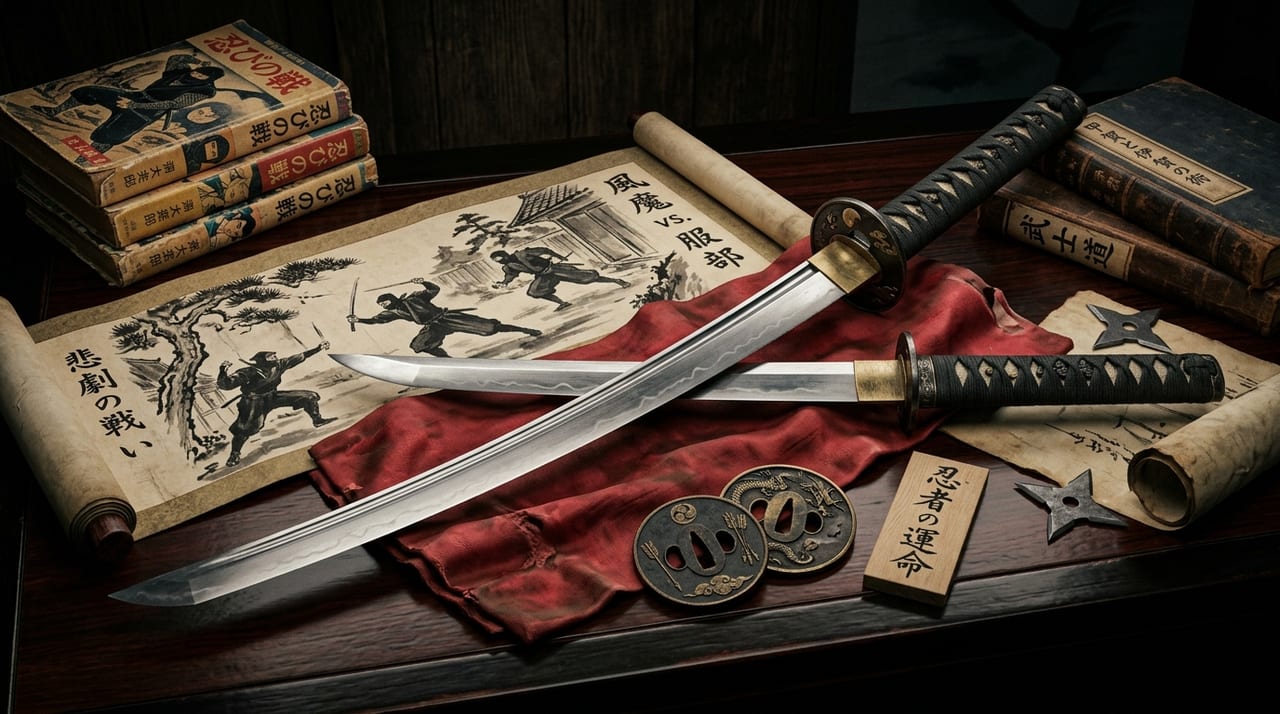
 ※圖片為示意圖。
巴西利斯克〜甲賀忍法帖〜
バジリスク〜甲賀忍法帖〜
以山田風太郎的《忍法帖》系列為原作,由瀬川正己漫畫化(2003~2004年),於2005年動畫化的作品。在德川將軍繼承的爭奪中,伊賀與甲賀的忍者集團對決之際,使用日本刀的忍者們的超絕劍技被詳細描繪。以日本刀與忍者秘技融合的獨特世界觀,對現代忍者・劍士形象產生了重大影響。
解說
山田風太郎與忍法帖的世界
《巴吉利斯克》的原作是山田風太郎在1958年發表的忍法帖系列第一部作品《甲賀忍法帖》。山田風太郎在昭和30~40年代發表了眾多忍法帖系列作品,將忍者重新描繪為不僅是暗殺者,而是擁有超人般特殊能力的「武術終極體」。各忍者持有的獨特「忍法」(具有超能力般的特殊技法)是基於對日本武術文化深刻理解,將實際忍術・武術技法誇張與昇華而成。甲賀的弦之介與伊賀的朧這對命運拆散的戀人的悲劇故事,雖具有令人聯想起羅密歐與朱麗葉的古典悲劇結構,卻以獨有的日本美學色彩點綴其中。山田風太郎的忍法帖系列自《甲賀忍法帖》開始,陸續發表了《忍びの卍》《魔界轉生》《柳生忍法帖》等作品,在日本娛樂小說中確立了「忍者物」的文類。這些作品可謂後來漫畫・動畫・遊戲中忍者描寫的一切源流,山田風太郎的想像力深深刻在現代娛樂文化的骨架上。特別是將劍術與忍術結合的表現,創造了日本刀文化與忍術文化融合的獨特類型。
瀨川昌樹的漫畫與刀劍描寫
瀨川昌樹的漫畫版(2003~2004年,連載於Young Magazine Uppers)在忠於山田風太郎原作的同時,以壓倒性的畫力和精密的動作描寫增添了新的魅力。特別是使用日本刀的忍者們的劍技描寫,同時表現了刀的動作美感與殺傷力,吸引了眾多日本刀愛好者。瀨川所描繪的刀劍準確把握了實際的打刀・脇差・短刀的形狀,對應劍的動作的風切音・斬擊軌跡的表現極為逼真。2005年的動畫版也由GONZO製作,擁有高水準的品質,並在海外也獲得了眾多粉絲。
忍者與日本刀的歷史關係
在實際的歷史忍術中,忍者如何使用日本刀是個有趣的研究課題。據傳忍者所用的刀比通常武士的打刀更短(稱為忍刀),具有接近直刃的刃文與角形的鍔,是功能優先的武器。短而直線的忍刀設計重視在狹窄空間中的易操作性,以及將刀鞘用作台階攀爬補助工具的「登爬補助」等多用途性。《巴吉利斯克》所描繪各忍者的獨特劍技雖是基於實際忍術・劍術技法的誇張虛構,卻激發了對日本武術所持有的多樣技術體系的想像力。甲賀・伊賀的地區(現今的滋賀・三重縣)至今仍存在忍術・武術的道場,實際的忍術系譜被傳承下去。
德川將軍繼承與幕初的政治背景
故事背景中的德川將軍繼承問題在實際歷史中也確實存在,特別是在二代目・三代目將軍時期有激烈的權力鬥爭。伊賀・甲賀忍者集團被用作幕府權力鬥爭棋子的設定,基於實際忍者集團為各大名・幕府效力、從事情報蒐集・暗殺任務的歷史事實。特別是伊賀忍者因德川家康在伊賀越(1582年)時冒生命危險保護而與德川家建立了特殊的聯繫,在江戶幕府中也被組織為「伊賀同心」。甲賀忍者在戰國~江戶初期也為眾多大名家效力,實際伊賀・甲賀忍者們的歷史遠比想像中更加戲劇性。《巴吉利斯克》將這些政治現實納入故事的骨架,為超能力般的忍法描寫提供了歷史現實的基礎。江戶初期的刀劍文化是新刀期刀工們開花結實新美學與技術的時代,也是製作了許多與《巴吉利斯克》舞台相符的刀劍的時期。堀川國廣・越前康繼等當時名工所創製的刀,也流入伊賀・甲賀忍者們活動的地區統治者手中流通的時代。
對現代的影響與刀劍座
《巴吉利斯克》對《火影忍者》《死神》等後續忍者・劍士漫畫動畫的影響深遠,被定位為現代漫畫中忍術・劍技表現的標準樣板之一。此外,2018年續篇《巴吉利斯克~櫻花忍法帖~》被改編成動畫,該系列在現代仍不斷開拓新粉絲。刀劍座取扱許多成為《巴吉利斯克》舞台背景的江戶初期(慶長~寬永期)的刀劍,為對忍者・劍士文化歷史背景感興趣的人士提供真正時代的刀劍。刀劍座也有時取扱類似忍刀的短實用刀與直刃脇差等,為熟悉《巴吉利斯克》世界觀的收藏初學者提供親切易接近的收藏。刀劍遠超武器,是文化遺產,刀劍座的使命是為通過《巴吉利斯克》接觸日本刀世界的人士傳遞實物的美感與歷史的沈甸甸。
登場的真實刀劍
Shinobito / Short Uchidao (Early Edo-Period Ninja Blade)
The "shinobito" appearing in authentic ninjutsu treatises is a function-focused blade with a short blade length of two shaku or less (under 60 cm) and either a straight edge or shallow wavy hamon. The scabbard was made proportionally long and reportedly served as an auxiliary tool for ascending footholds and underwater movement. The blades wielded by shinobi in Basilisk are based on the shinobito tradition, lending historical grounding to depictions of the blade's multifunctional use in actual ninjutsu practice. Tōkenza handles numerous fine examples of tantō and wakizashi from the early Edo period, offering patrons the opportunity to view authentic artifacts approximating the shinobito concept.
Echizen Yasutsugi (Master Blade of the Tokugawa Shogun's Official Smith)
Echizen Yasutsugi was a celebrated smith of the Keichō–Genna period authorized by Tokugawa Ieyasu to use the aoi mon (hollyhock crest), a contemporary of the early Tokugawa shogunate that forms the backdrop to Basilisk's narrative. Yasutsugi's blades—coveted by the most formidable figures of the era, whether shinobi or professional sword masters, as the finest available—embody the sword culture of Basilisk's setting. Displaying robust hamon influenced by the Soshu tradition and practical proportions, his works command high regard among modern collectors.
Horikawa Kunihiro (Pioneer of the Shinkatsu Period)
Horikawa Kunihiro, active during the Tenshō–Keichō period, is revered as the founder of the shinkatsu (new-sword) tradition, with his students forming the core of the sword world in early Edo. The Kyoto of the Keichō–Genna years, Basilisk's setting, was precisely the era and location where Kunihiro and his disciples were active, and the cultural center of Kansai sword craftsmanship where Iga and Kouga shinobi operated. While inheriting the techniques of koto (old-sword) smithing, Kunihiro's blades embody the aesthetic sensibilities of a new age; extant examples command premium prices in the blade market, representing masterworks throughout.
Tantō and Wakizashi (Practical Weapons of the Shinobi)
Among the weapons actually employed by shinobi, tantō and wakizashi were the most critical bladed instruments. The tantō, easily concealed within clothing, was ideal for assassination and self-defense, while the wakizashi was adapted by shinobi from the two-sword configuration that samurai habitually carried alongside the nodachi. Numerous fine examples of tantō and wakizashi crafted by celebrated smiths survive from early Edo; as a category of blade retaining aspects of authentic historical ninja weaponry, they are essential artifacts for understanding the shinobi world depicted in Basilisk.
Suishinshi Masahide (Theoretical Perfection of Swordsmanship and Blade)
Suishinshi Masahide, a celebrated late-Edo smith and sword theorist, was the leader of the shinshintō (new-new-sword) movement advocating "revival of koto aesthetics." Though he postdates Basilisk's era, his works and theories redefined the historical evaluation criteria for katana, reconsidering the aesthetic and functional ideals of Japanese swords broadly, including shinobito. The "simple, functional beauty" of the shinobi's blade depicted in Basilisk resonates with the "direct, unadorned beauty of koto blades" that Masahide championed.
瀏覽真正的日本刀
瀏覽真正的日本刀本頁旨在介紹日本刀文化,與各作品的著作權持有者無關。